Disclosure: This page contains affiliate links. As an Amazon Associate, Yard Foundry earns from qualifying purchases.
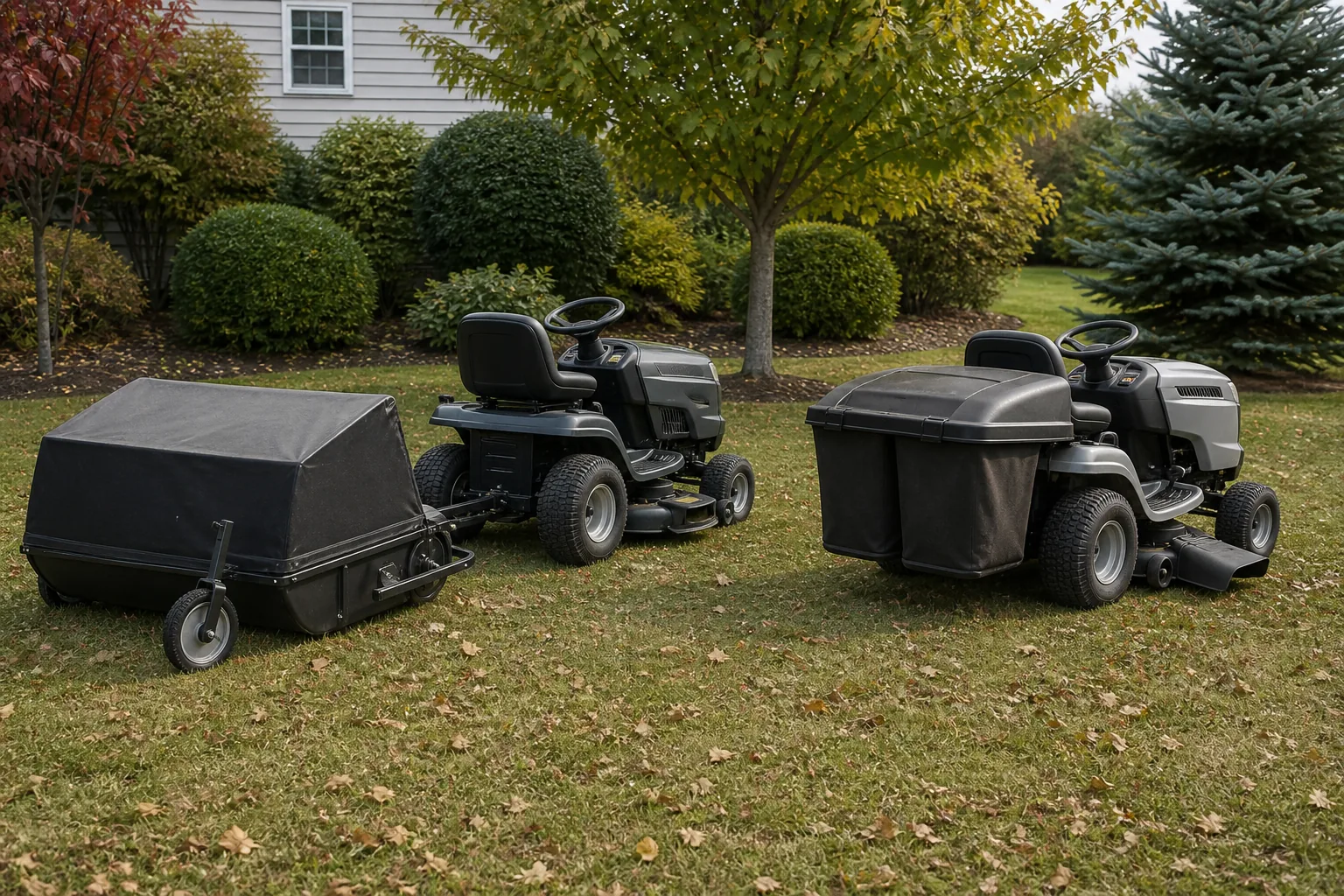
In a lawn sweeper vs bagger decision, choose a bagger when you want to collect clippings and chopped leaves during the mowing pass and an exact system fits the mower deck. Choose a tow-behind sweeper when you want a separate cleanup pass for dry, loose debris and prefer an attachment that is not part of the deck’s airflow path. Neither is the automatic answer for routine grass clippings, which can often stay on a healthy lawn.
This is a research-based comparison, not a hands-on product test. Yard Foundry has not operated the collection systems discussed here. Compatibility, weight, slope, speed, shutdown, and debris limits must be verified in the manuals for the exact mower and attachment.
Lawn sweeper vs bagger: the practical difference
| Question | Tow-behind sweeper | Mower bagger |
|---|---|---|
| When does collection happen? | In a separate pass, before or after mowing | During mowing |
| What moves material? | Ground-driven brushes | Deck airflow, sometimes with a powered blower |
| Best starting material | Dry, loose leaves and surface debris | Fresh clippings and leaves processed by the deck |
| Main compatibility check | Tow vehicle, hitch, load, and route | Exact tractor, deck, chute, blades, and bagger system |
| Main nuisance | Extra pass, turning room, fabric hamper storage | Bag emptying, chute clogs, added rear bulk |
| Can it remove rooted thatch? | No | No |
The two systems overlap on dry leaves but reach them differently. That is why capacity alone is a poor comparison. A 24-cubic-foot sweeper and a 7-bushel bagger do not perform the same task at the same time.
How a lawn sweeper collects debris
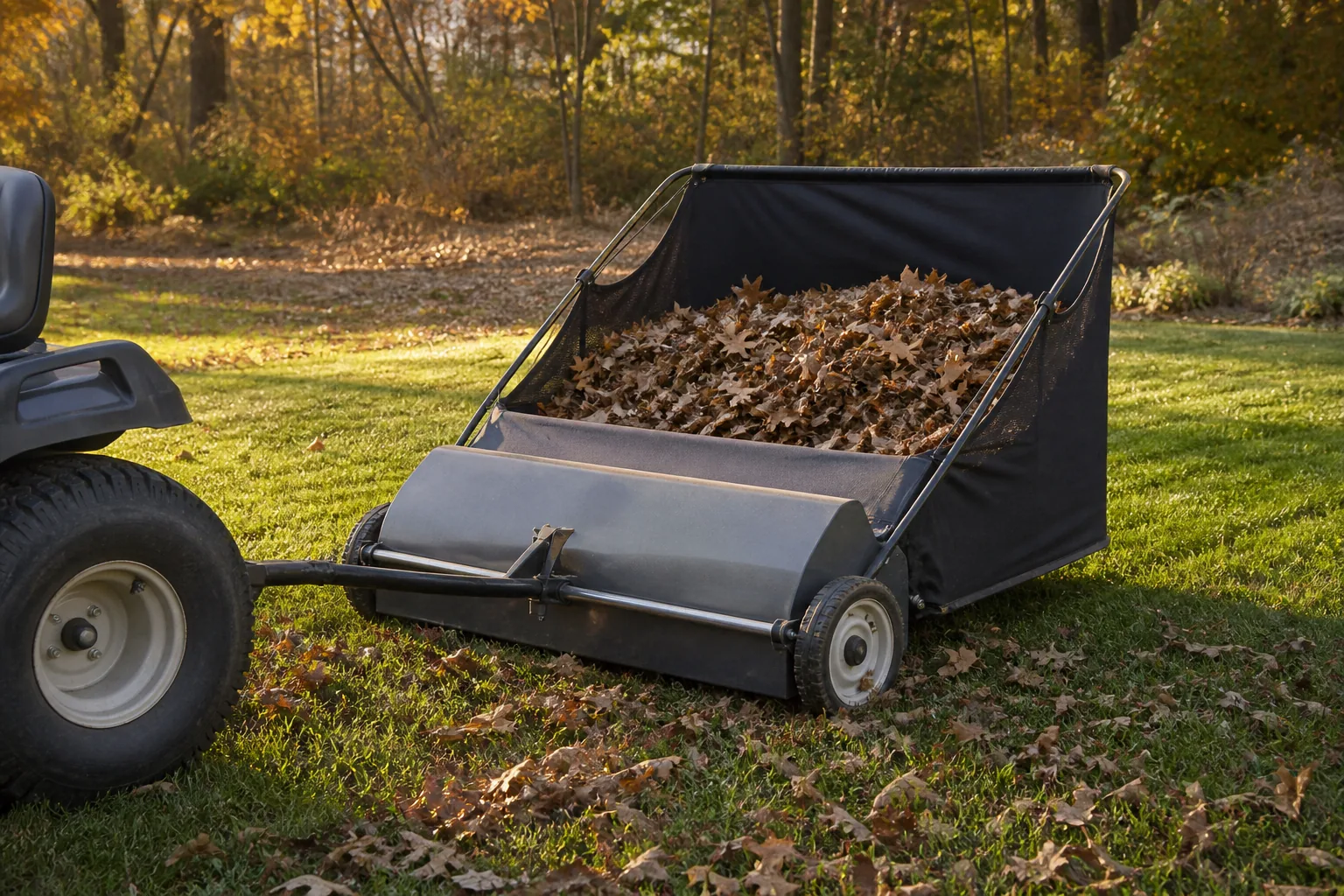
A tow-behind sweeper rolls behind a riding mower or lawn tractor. Its wheels drive rotating brushes, and those brushes lift loose material into a fabric hamper. The sweeper does not depend on mower-deck suction. It can make a cleanup pass even when the mower blades are disengaged, subject to the tow vehicle and sweeper manuals.
This independence is useful after windy weather or tree pruning. Dry leaves, loose clippings, small cones, and light twigs can be collected without running the deck through every area. A sweeper may also work behind more than one compatible tow vehicle, while a bagger is usually tied to a narrower mower and deck combination.
The tradeoff is another pass and a longer turning envelope. A sweeper needs dry enough conditions for its wheels to drive the brushes and for debris to lift cleanly. Brinly’s lawn sweeper manual notes that moist material is heavier and harder to dump, and it states that a sweeper cannot pull embedded thatch, needles, or leaves from the grass. If the layer is rooted or matted, the aerator versus dethatcher comparison covers the right tool distinction.
How a mower bagger collects material
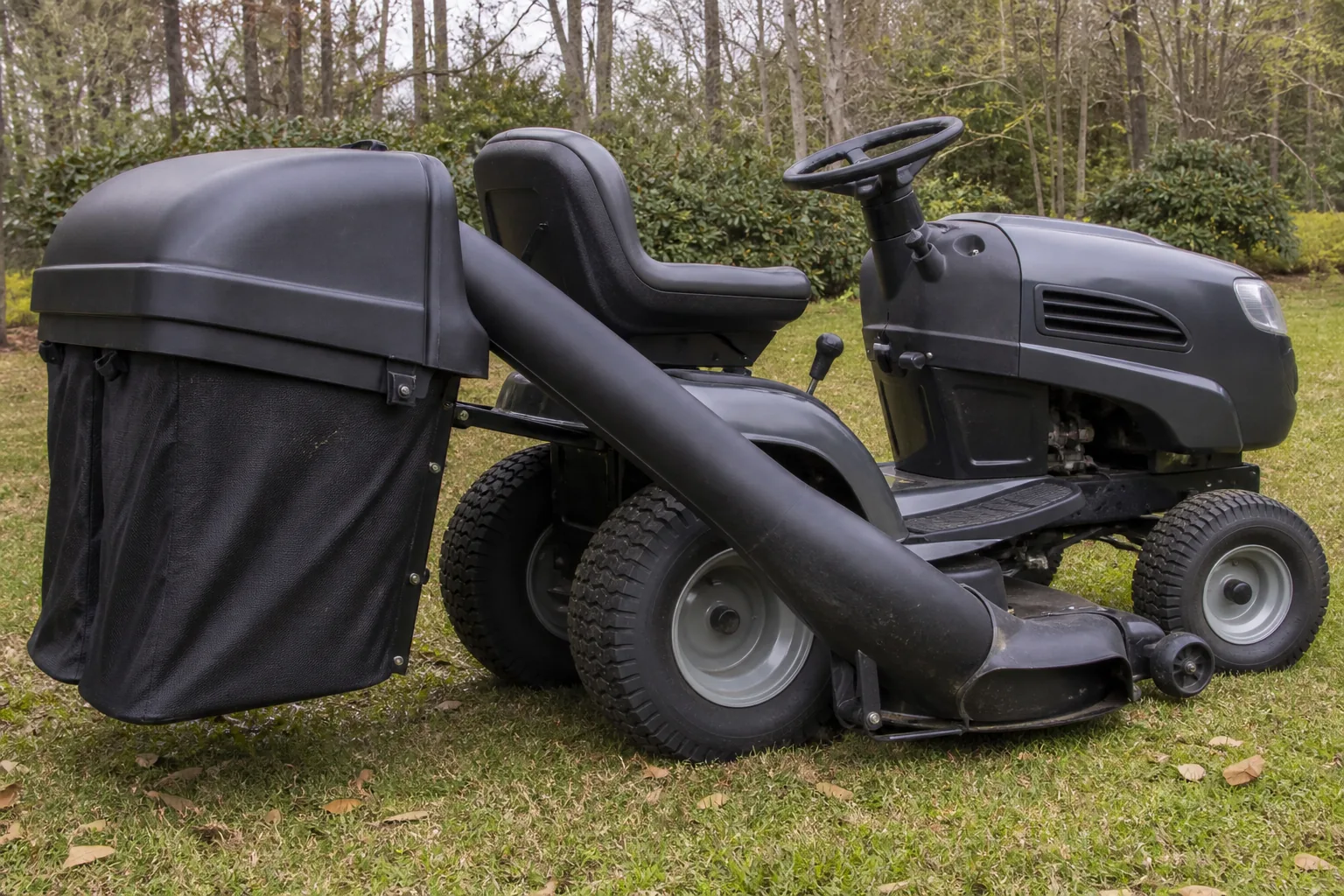
A bagger uses airflow created by the rotating mower blades to carry cut grass and chopped leaves from the deck through a chute into rear bags or bins. Some systems add a powered blower. Deck shell, blades, discharge opening, chute, belt, blower, rear frame, ballast, and bags may all be part of the approved combination.
Compatibility is exact, not approximate. John Deere’s current material-collection listings, such as its 48A Power Flow system, name specific machine families, deck sizes, blower parts, and capacity. Another John Deere two-bag attachment carries a different compatibility list. A rear frame that appears to bolt on is not proof that the deck can move material through it safely.
A bagger’s advantage is workflow. Mow once, collect once, and empty as needed. Its weakness is the same airflow path. Wet grass, overly tall growth, dull or incorrect blades, a full bag, and a restricted chute can reduce transport. The operator may see a trail of clippings or material blowing from the side before realizing the path is blocked.
Choose by the debris you actually need to remove
Routine grass clippings
Bagging every mowing is usually unnecessary when the lawn is cut at an appropriate interval and the clippings are short enough to disappear into the canopy. Penn State’s turfgrass clipping guidance says normal clippings return nutrients and do not cause thatch. Iowa State gives the same basic recommendation in its clipping-management advice.
A bagger still earns its place when grass has grown too tall and leaves heavy clumps, when a clean collection pass is needed before an event, or when diseased material must be managed according to local extension guidance. A sweeper can collect clippings after mowing, but light pieces may settle into the turf or blow away before the second pass.
Dry autumn leaves
Both systems can handle dry leaves. The bagger chops and collects during mowing. The sweeper gathers loose leaves in a later pass and can avoid running the deck in an area that does not need cutting. Leaf depth matters. A deep blanket may overwhelm bags quickly, while a very light scattering may not justify towing a large hamper.
Mulching is often the first option. The University of Minnesota’s leaf-mulching guidance recommends mowing dry leaves when coverage remains manageable, then moving to bagging or off-site composting when too much leaf material remains. A collection system is most useful after the lawn has exceeded what a mulching pass can return neatly.
Pine needles, cones, and twigs
Loose cones and light twigs may enter a sweeper hamper, but the exact brush and ground conditions decide how well. Embedded needles are harder. A bagger may collect some material after the deck agitates it, but sticks can damage blades, chute parts, and blowers. Remove large debris by hand before either machine enters the area.
Rooted thatch and compacted soil
Neither system treats the cause. A bagger may catch debris loosened by a separate dethatcher, and a sweeper may pick it up afterward, but the collector does not pull the layer free. Soil compaction is a different issue again. The tow-behind aerator guide explains the attachment features that matter there, and when to aerate a lawn helps with timing.
Compare time across the full job
A bagger saves a separate collection pass, but frequent stops can erase that advantage. Small bags fill quickly in heavy grass or leaves. Each stop involves shutting down as required, leaving the seat, removing bags, carrying them, emptying them, and reinstalling them. A blower-equipped system adds inspection and service points.
A sweeper generally carries more fluffy material per load, but it asks for another circuit of the yard. It also needs space to approach the dump location. The best choice depends on how many mower passes, collection stops, disposal trips, and attachment changes the whole property requires.
Walk the route on paper. Note the area that truly needs collection, disposal point, gates, slopes, turnarounds, and storage. If only a few shaded corners accumulate leaves, a smaller method may beat either large attachment.
Compatibility and handling
For a sweeper, confirm pin hitch, hitch height, tow rating, loaded weight, speed, slope guidance, assembled width, and braking behavior. For a bagger, confirm tractor model, deck family and width, required blades or baffles, chute or blower kit, rear mounting frame, ballast, and any limit on slopes or towing.
Both attachments add length. A full bagger adds weight high and behind the rear axle. A full sweeper adds a trailing load that can push during braking. Neither should carry riders. Slow before turns and slopes, and use only the configuration approved by the manufacturer.
A robotic mower changes the calculation. These machines are designed around frequent mowing and fine clippings rather than rear collection. The robotic lawn mower buying guide explains that workflow, while the robot mower maintenance guide covers the routine needed to keep it working.
Clogs and shutdown discipline
A bagger’s chute can contain fast-moving debris while the blades run. Never reach into it. John Deere’s bagger operator instructions tell the operator to stop the engine, remove the key, and wait for all moving parts before unplugging the chute. Follow the exact mower and bagger manual, including any blower belt shutdown steps.
A sweeper has rotating brushes and wheel gears even though it lacks an engine. Keep the dump rope secured away from wheels and moving parts. Stop, set the brake, remove the key, and wait before removing wrapped vegetation or debris. Do not use hands to clear a mechanism that can move as the tractor rolls.
Storage and seasonal changes
A bagger may be compact when its bags and chute are removed, but the pieces still need a dry wall or shelf. Some rear frames stay on the tractor and can interfere with other attachments. A sweeper’s hamper is wide and awkward, though certain models fold or store upright.
Measure both systems as stored, not only as used. Note which tools are required to install or remove them. A system that takes an hour to assemble may remain in the shed during the two weeks when it would have saved time.
Decision rules that hold up
- Choose a bagger when collecting clippings during mowing is the main task, the manufacturer offers an exact deck-specific system, and the property makes frequent emptying manageable.
- Choose a sweeper when loose dry leaves and surface debris drive the purchase, a separate pass is acceptable, and the tractor can tow and stop the loaded attachment.
- Choose mulching first when routine clippings or a light layer of dry leaves can be returned to the lawn cleanly.
- Choose neither for embedded thatch, saturated debris, large sticks, compacted soil, or a property without safe towing space.
Compare tow-behind lawn sweepers on Amazon (paid link). For a bagger, start with the mower manufacturer’s parts catalog rather than a general marketplace search because deck compatibility is exact.
The better system is the one that fits the cleanup sequence. A bagger integrates collection with mowing. A sweeper separates collection from mowing. If neither sequence solves the real problem, the answer may be mulching, dethatching, hand pickup, or changing when the work is done.