Disclosure: This page contains affiliate links. As an Amazon Associate, Yard Foundry earns from qualifying purchases.
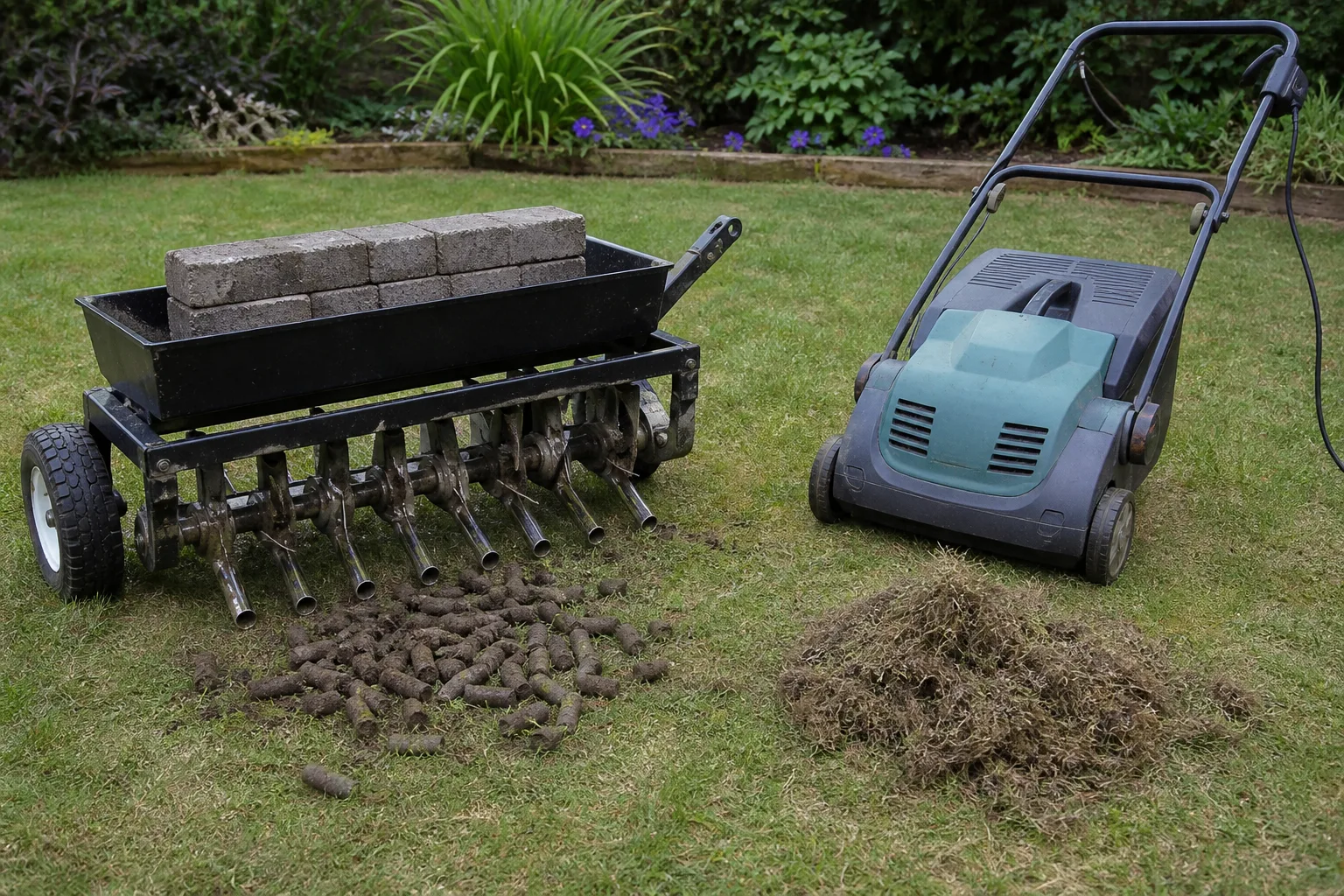
The aerator vs dethatcher choice depends on where the problem sits. Use a core aerator for compacted soil. Use a dethatcher or vertical mower when a measured thatch layer is excessive and needs physical removal. A core aerator pulls plugs from the soil and can help thatch decompose over time. A dethatcher combs or cuts material from above the soil, but it does not relieve soil compaction.
This is a research based comparison. Yard Foundry has not physically tested the machines discussed here. Timing and recovery vary by turf species, region, soil moisture, and the condition of the lawn.
Aerator vs dethatcher at a glance
| Question | Core aerator | Dethatcher or vertical mower |
|---|---|---|
| Primary problem | Compacted soil | Excessive thatch |
| What it removes | Cores of soil and turf | Loose and cut thatch material |
| Main effect | Creates channels and mixes soil with the thatch layer | Physically thins the thatch layer |
| Surface afterward | Soil plugs and holes | Loose debris and disturbed turf |
| Typical recovery need | Active growth and suitable soil moisture | Active growth, cleanup, and enough time to recover |
| Does it solve the other problem? | May help gradual thatch breakdown but is not rapid removal | Does not relieve compacted soil |
The table is a diagnosis aid, not a reason to rent both machines. Many lawns need neither one in a given year.
Measure the thatch instead of judging the brown surface
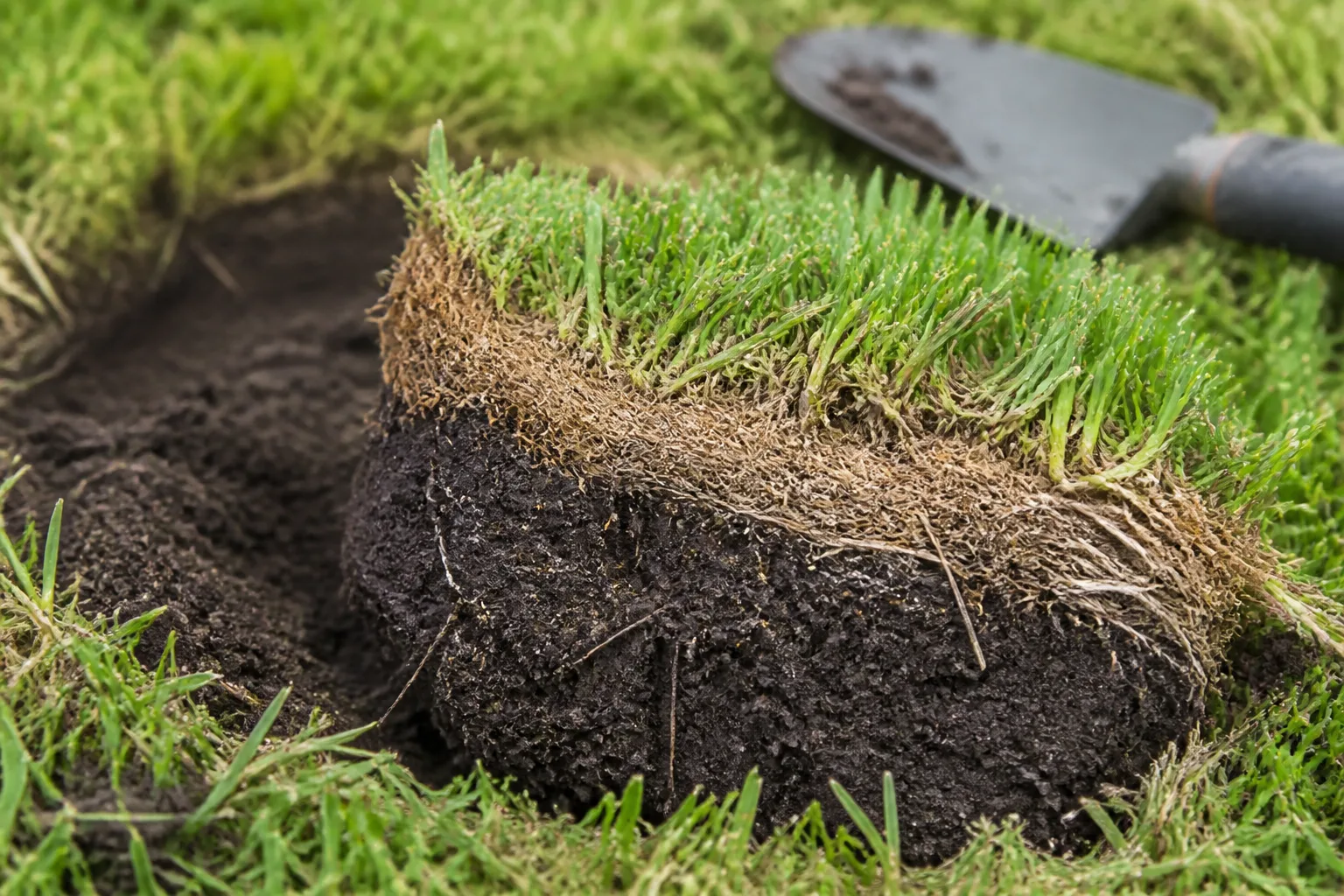
Thatch is the dense layer of living and partly decomposed stems, roots, and crowns between green grass and the soil. It is not the same as loose clippings lying on top. University of Minnesota Extension recommends cutting a two-inch-deep wedge from the lawn and measuring the layer between soil and green vegetation. Its guidance says one-half inch or less is usually not a problem, while more than one-half inch calls for a thatch-management plan.
Check several places. A wet low spot, a fertilized strip beside a bed, and the center of the lawn may differ. If the sample shows thin thatch but the ground is hard, water puddles, and roots remain shallow, compaction is the more likely target. If the soil crumbles reasonably but a thick springy mat separates grass from soil, dethatching deserves consideration.
Brown grass alone proves neither condition. Drought, disease, insects, shade, poor mowing, nutrient imbalance, and drainage can create similar symptoms. Identify the physical layer or compaction before using aggressive equipment.
What a core aerator does
A core aerator uses hollow tines or spoons to remove small plugs of turf and soil. The openings improve air and water movement into compacted ground, while the soil brought to the surface can mix into the thatch and support decomposition. This is different from a spike device that only pushes a solid tine into the ground.
Iowa State University Extension recommends hollow-tine core aeration and warns that spike devices can compact the soil around the holes. Its current lawn guide also advises working when the soil is moist, not dry or saturated. Dry ground limits penetration. Wet soil can clog tines and suffer additional damage.
Leave the plugs on the lawn unless a specific renovation plan says otherwise. Once they dry, mowing or light dragging breaks them up. The temporary mess is part of the process, and removing every core also removes the soil that could work back into the surface.
Signs that point toward aeration
- Heavy foot, pet, mower, or vehicle traffic
- Dense clay or fine-textured soil that has become hard
- Shallow rooting and poor infiltration across trafficked areas
- A renovation plan that needs better seed-to-soil contact
- Moderate thatch that may respond to improved soil and microbial contact
Core aeration is a treatment for the soil environment. It is not a fast way to rake out a one-inch mat.
What a dethatcher does
A dethatcher, power rake, or vertical mower uses rotating spring tines or vertical blades to pull or cut material from the thatch layer. The exact action varies by machine. After a pass, a surprising volume of debris may sit on the surface and must be collected.
Virginia Tech Extension draws a clean distinction: vertical mowing physically removes thatch, but it is not intended to relieve compaction or improve soil aeration. It also notes that both vertical mowing and core aeration stress the turf at first. That is why timing and machine depth matter.
Do not set blades deeply just because the machine can reach the soil. Utah State University Extension says vertical mower and power-rake blades should not be set so deep that they touch the soil. An overly aggressive pass can tear crowns and living shoots rather than selectively thinning the unwanted layer.
Signs that point toward dethatching
- A measured thatch layer above the local Extension threshold
- A springy mat that keeps irrigation near the surface
- Turf rooted into thatch rather than mineral soil
- A creeping grass species and maintenance history associated with rapid thatch buildup
- A renovation plan that requires physical thatch removal before seedbed preparation
Dethatching is disruptive. If the wedge shows only a modest layer, better mowing, irrigation, fertilization, and core aeration may be the more measured response.
Timing follows turf growth, not a universal calendar
Use either machine while the desirable grass is actively growing and has time to repair damage. For cool-season lawns, Extension guidance commonly favors early fall, with spring as a possible second window. For warm-season turf, cultivation belongs in its active late-spring or summer growth period. The exact month changes with climate and species.
Avoid aggressive work on dormant, drought-stressed, diseased, or heat-stressed turf. Waterlogged ground is also a poor aeration surface. If overseeding is part of the job, check the timing of any pre-emergent herbicide because it may prevent the desired seed from establishing.
Regional advice matters. Minnesota Extension gives late August through early October as its preferred window for aeration and vertical mowing, while Utah State describes late summer to early fall for its common cool-season grasses and summer for warm-season species. Use the principle of active recovery, then confirm the local window with a nearby Extension service.
Can a lawn need both?
Yes, but the diagnosis should show both compaction and excessive thatch. Do not automatically run two aggressive machines over a weak lawn on the same afternoon. The correct sequence depends on the renovation goal, severity, grass, and equipment.
Published Extension procedures are not identical because they describe different conditions. University of California guidance for overseeding describes dethatching, cleanup, and then aeration. Minnesota notes that severe thatch may call for aeration before vertical mowing. That is a useful warning against a rigid universal order.
For a heavily compacted lawn with moderate thatch, several passes with a core aerator may be enough. Soil from the plugs can help the thatch break down. For a deep dense mat that prevents the aerator from reaching soil effectively, controlled removal may need to come first. If the turf is already thin or roots are shallow, split the work into separate recovery windows or ask a local turf professional to inspect it.
Choose equipment by the job, not by attachment count
A walk-behind core aerator is heavy and works best when the soil has suitable moisture. A tow-behind unit needs a lawn tractor with enough traction and permitted towing capacity, plus weight added only as the manual allows. Narrow gates, slopes, trees, and storage often decide whether rental is practical.
Electric dethatchers suit smaller lawns and shallow work. Larger vertical mowers remove material faster but create more cleanup and can cause more damage in an inexperienced pass. A scarifier cartridge sold with a multi-tool is not automatically equivalent to a commercial vertical mower. Compare tine or blade type, working depth, width, collection method, and parts availability.
Use the Core Aerator Rent vs Buy Calculator for the aeration side of the decision. Include transport, deposit, fuel or charging, cleanup time, annual frequency, storage, and maintenance. A machine used once every few years can be a poor purchase even when its sticker price looks manageable.
Simple decision examples
| Observation | Likely first action | Reason |
|---|---|---|
| Hard trafficked soil, thatch under one-half inch | Core aerate | Compaction is the measured problem |
| Loose soil, thick springy thatch | Dethatch carefully | Physical removal targets the layer |
| Compaction plus moderate thatch | Core aerate and reassess | Plugs improve soil contact and may help decomposition |
| Severe thatch plus compaction | Plan a staged renovation | Both problems exist and recovery capacity matters |
| Brown lawn with no sample taken | Diagnose first | Color alone does not identify either problem |
Aftercare is different
After core aeration, leave the plugs, allow them to dry, and break them up naturally with mowing or light dragging. Irrigate only as the turf and weather require. Overseeding can benefit from the openings, but seed, fertilizer, and herbicide decisions should follow the grass species and a soil test.
After dethatching, rake and remove the loose material so it does not smother the grass. The job may expose thin areas that need seed or other renovation. Water for recovery without keeping the surface saturated. Avoid another aggressive pass simply because some brown material remains visible.
Compare lawn core aerators and dethatchers on Amazon (paid link). Read the tine or blade description closely, since product titles often use aerator, scarifier, and dethatcher loosely.
Make the call from one soil wedge
Cut and inspect several wedges before renting anything. If the soil is compacted, choose a hollow-tine core aerator. If the thatch is measurably excessive, choose a dethatcher or vertical mower suited to the turf. If both are present, protect the lawn’s recovery window and plan the sequence rather than treating two machines as a single routine. The Yard Foundry tools and calculators hub can help with the rental and ownership side after the diagnosis is clear.