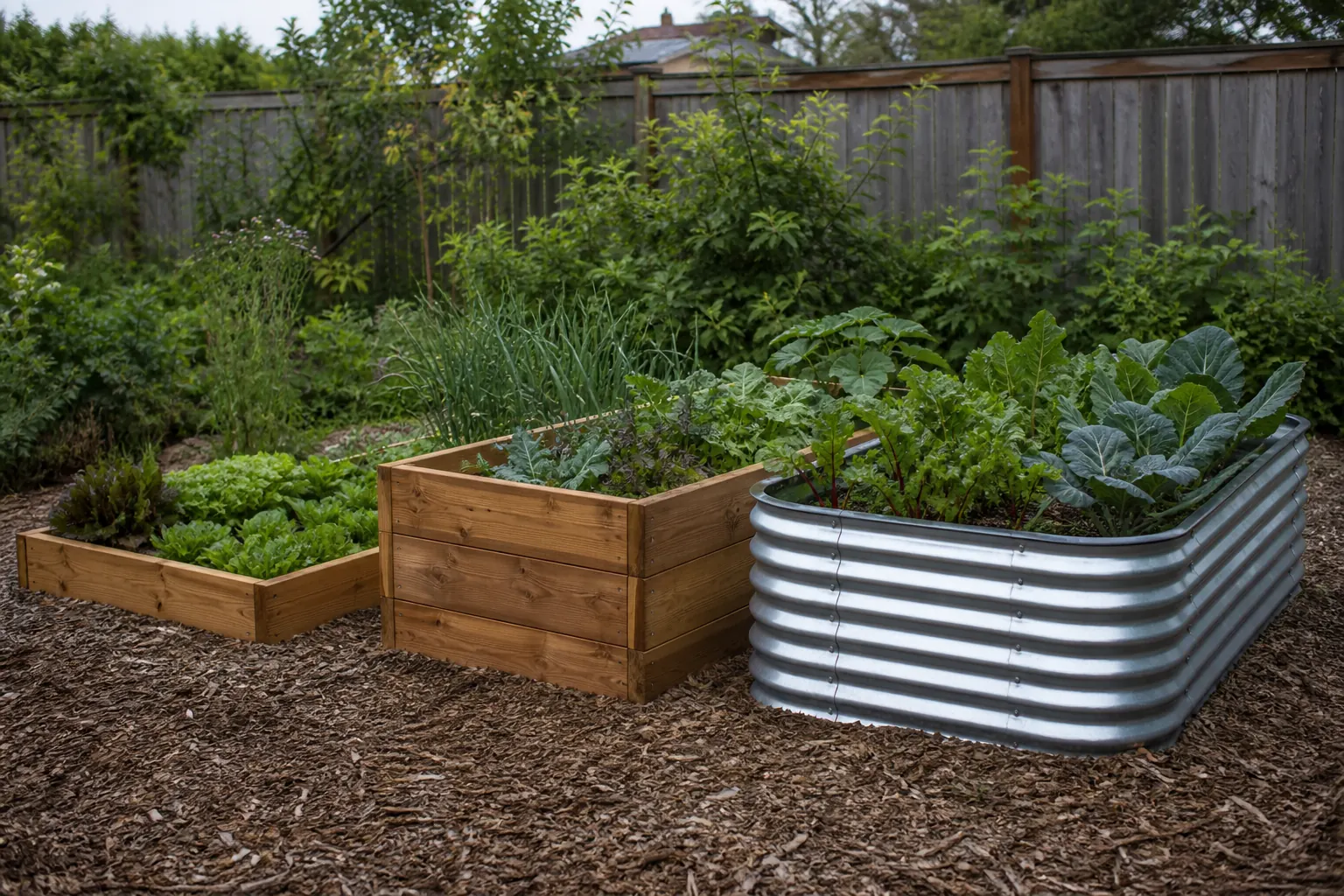
How deep should a raised garden bed be? For most vegetables, start with 10 to 12 inches of good growing mix if roots cannot enter the ground below. A 6 to 8 inch bed can work when it sits on loose, healthy soil. Go deeper for long root crops, poor native ground, tree roots, pavement, or a height that is easier to reach. Depth is not a badge of quality. Every extra inch adds fill cost, weight, watering demand, and pressure on the frame.
The useful number is total rootable depth, not the height of the boards. A 10 inch frame over open, loosened soil may give plants more usable room than a 20 inch box placed on concrete and filled with dense material. Before choosing a kit, dig into the site, decide what you plan to grow, and work out how the bed will drain.
How deep should a raised garden bed be?
A practical default is 10 to 12 inches of rootable soil. Utah State University Extension recommends a box at least 6 to 12 inches high for most vegetables and says beds shallower than 12 inches should have an open bottom so roots can reach the soil below. Colorado State University Extension makes the same distinction in a useful way: bed height matters much less when crops can root into suitable native soil, but 8 to 12 inches is a minimum when the ground underneath will not support roots.
| Site and crop | Useful starting depth | What changes the answer |
|---|---|---|
| Leaf lettuce, spinach, radishes, many herbs | 6 to 8 inches | Open bottom over loose soil makes a shallow frame more forgiving |
| Mixed annual vegetables | 10 to 12 inches | A sensible default when the native soil is poor or partly blocked |
| Carrots, beets, potatoes, tomatoes | 12 to 18 inches | Choose depth for the cultivar and whether roots can continue below the frame |
| Bed over concrete, rock, or dense fill | At least 12 inches, often 18 inches | The entire root zone and drainage system must fit inside the box |
| Seated or standing access | 18 to 30 inches | Ergonomics set the frame height, while only the upper rooting layer needs premium mix |
These are design ranges, not crop guarantees. Utah State’s vegetable production guide groups salad crops, garlic, onions, peppers, and several brassicas in a shallow effective root zone of roughly 6 to 12 inches. Carrots, beets, tomatoes, potatoes, beans, and peas use a moderate zone closer to 18 to 24 inches. Some roots can travel farther than the listed effective zone, especially in open ground. Cultivar, soil texture, irrigation, and compaction still matter.
Count the soil below an open bed
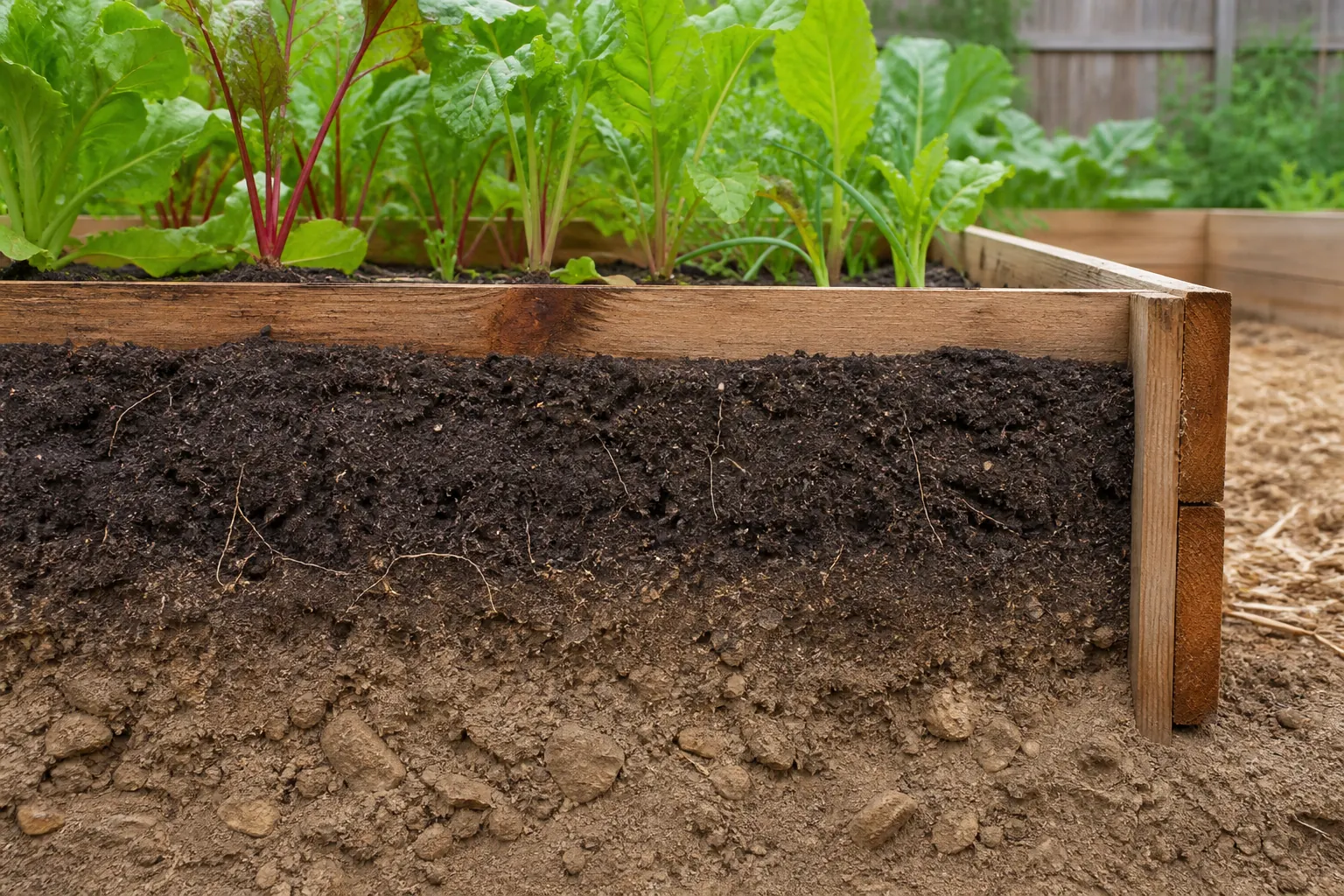
Remove sod and check the ground before the frame goes down. Push a garden fork into several spots. If the fork enters reasonably well and water does not sit after rain, a shallow open-bottom bed can borrow depth from the native soil. Loosen the interface where the new mix will meet the old ground. Do not leave a smooth, compacted boundary that encourages water to perch above it.
Colorado State advises blending the two soils at their boundary when the imported mix is different from the ground below. A sharp change in texture can slow water and root movement. That is a more useful step than lining the bottom with landscape fabric, which can obstruct roots and eventually fills with weeds and sediment anyway.
If the site contains contaminated soil, aggressive tree roots, rubble, or a hard surface, treat the raised bed as a large container. The frame must hold the full root zone. It also needs a route for excess water. A bottomless box on concrete with no gap, drain mat, or outlet is simply a basin.
Match depth to the crops you will actually grow
Six to eight inches
This depth suits a seasonal salad bed over usable soil. Lettuce, spinach, radishes, green onions, and compact herbs do not need a tall wall to get started. Shallow beds dry faster, though, and their temperature changes more quickly. They are less forgiving when irrigation is irregular or the box sits over an impermeable surface.
Ten to twelve inches
This is the safest all-purpose choice for a first vegetable bed. It holds enough mix to buffer moisture and gives common crops room even when the ground below is mediocre. It also keeps soil volume within reason. A 4 by 8 foot bed at 12 inches holds about 32 cubic feet before allowing for settling.
Use the raised bed soil calculator before ordering bulk mix. Measure the inside dimensions, not the outside of the frame. If the bed is partly filled with sound existing soil, calculate only the depth you still need.
Twelve to eighteen inches
Choose this range for longer carrots, many tomato plantings, potatoes, or a box over ground that roots cannot use well. Carrots deserve one caveat: a deeper bed does not fix stones, clods, fresh woody material, or compacted mix. A shorter carrot cultivar in 12 inches of fine, even soil often performs better than a long cultivar in an 18 inch bed full of obstructions.
Eighteen inches and deeper
Deep beds make sense for access, a paved site, or a permanent garden where the frame also acts as a seat or retaining structure. Oregon State University Extension warns that beds 18 inches deep or more need special attention to drainage and should not be filled with dense native soil or ordinary fill dirt. Deep boxes behave like very large containers.
Filling the full depth with premium bagged mix can become expensive. It can also settle more than expected. Stable, clean bulk material may be used below the main rooting layer, but avoid fresh logs, trash, construction debris, or an improvised mix that will collapse unevenly. Keep at least the upper 10 to 12 inches consistent, rootable, and easy to rework.
Depth, drainage, and soil mix are one decision
Deep does not automatically mean well drained. Fine-textured soil packed into a tall metal box can stay wet at the bottom while the surface looks dry. An overly coarse layer of gravel does not solve this and may create a sharp texture boundary. Build the whole root zone from a stable mineral soil and finished organic material that drains but still holds water.
A soil test is worth doing when you buy bulk topsoil or reuse native soil. It will not grade the physical structure, so use your hands too. A damp sample should form a weak ball and break apart with light pressure. If it smears like modeling clay or collapses into dust, expect trouble with aeration or water holding.
A liner does not create more root space
Hardware cloth can deter burrowing animals while leaving many openings for drainage and roots. Solid plastic is different. If it wraps across the bottom, the bed becomes a container and needs designed outlets that cannot clog. Landscape fabric may slow soil loss at first, but fine roots and sediment eventually occupy it. Choose a bottom material for a documented site problem, then count the soil above that barrier as the full rootable depth.
Plan irrigation at the same time. The raised bed drip irrigation layout guide explains emitter placement, while the drip flow and runtime calculator helps turn the layout into a starting schedule. A deeper bed may store more water, but plants still draw heavily from the upper root zone.
Do not buy height you cannot support
Soil pushes outward, especially after irrigation. Long thin walls can bow even when the corners look sturdy. Taller beds need stronger panels, closer braces, reliable fasteners, and level support. Compare the construction details in the raised garden bed kit guide, then decide whether the extra height is structural value or just more sheet material.
Material changes the maintenance, not the root depth. Cedar can be repaired with ordinary tools. Galvanized steel avoids wood decay but needs sound edges, bracing, and corrosion-conscious fasteners. The wood versus metal raised bed comparison separates those ownership issues from the crop decision.
Accessibility can justify a tall frame. Measure the gardener, not a generic diagram. Check comfortable reach from the path, knee clearance for seated work, and whether the top edge can bear weight if it will be used as a seat. A bed accessed from both sides is usually kept near 4 feet wide; one-sided access calls for a narrower box. Width often affects comfort more than another 4 inches of height.
Calculate the fill before committing
Each extra 6 inches in a 4 by 8 foot bed adds 16 cubic feet, a little under 0.6 cubic yard. Multiply that across four or six beds and the delivery grows quickly. The raised bed cost calculator helps compare frame and fill choices before the truck arrives.
Allow for settling, but do not mound the mix against the top edge on day one. Leave room for mulch and watering. Many mixes lose visible volume as organic matter decomposes and particles settle. Top up with compost as soil tests and structure indicate rather than replacing the whole depth every season.
A five-check depth decision
- Dig into the site and decide whether roots can use the ground below.
- List the crops and cultivars you expect to grow most often.
- Choose a rootable depth, then set any additional frame height for access.
- Confirm drainage, bracing, path width, and irrigation before ordering.
- Calculate soil volume and delivered cost for the inside dimensions.
For an open bed over decent soil, 8 to 12 inches handles most home vegetable plans. When roots are confined inside the box, make 12 inches the practical floor and use 18 inches where crop choice, drainage, or access supports the added cost. The best depth is the shallowest one that gives roots, water, and the gardener enough room.