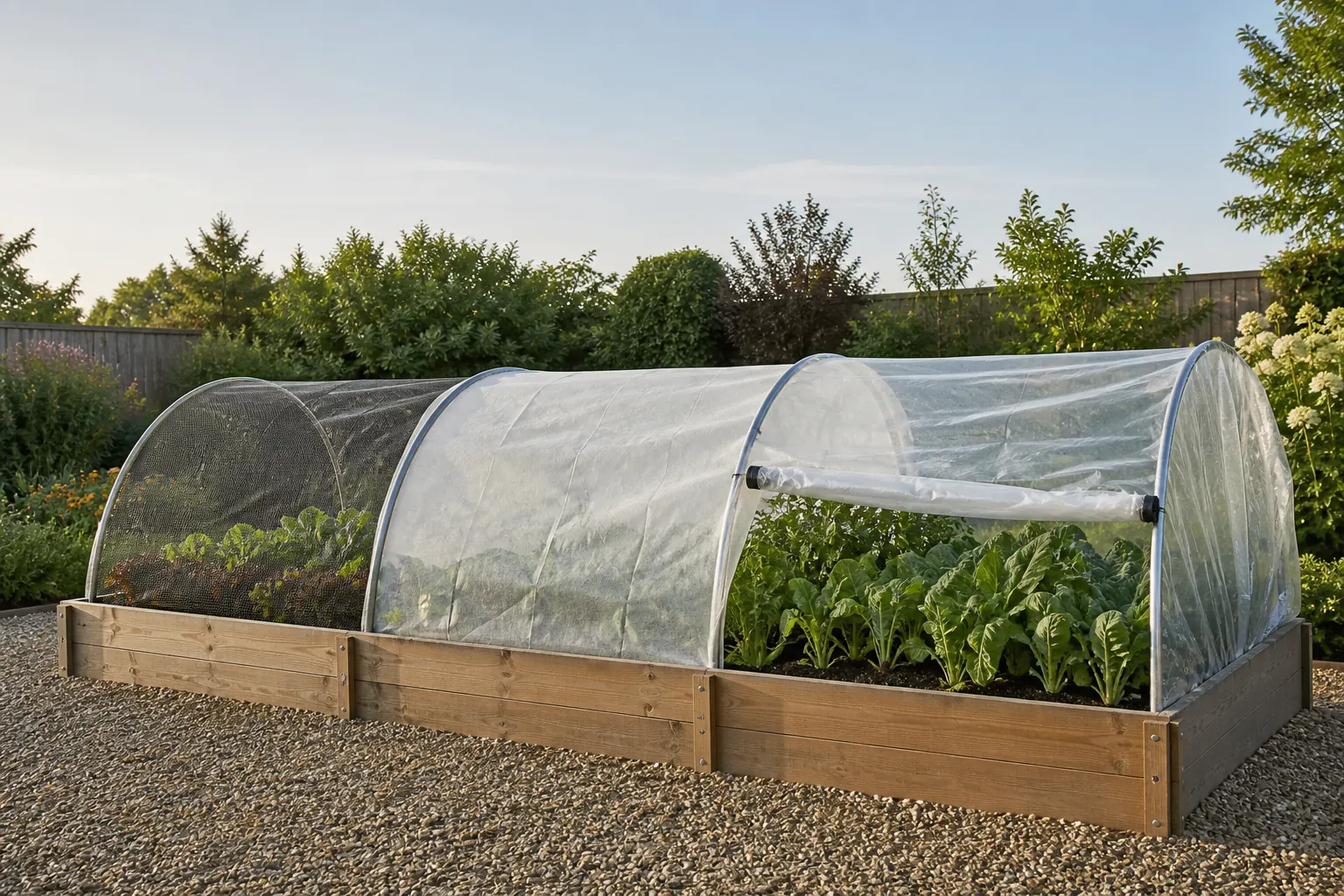
Raised bed covers work when the cover matches a specific job. Use insect mesh to exclude pests in warm weather, frost cloth for a modest temperature buffer, clear polyethylene for a carefully vented low tunnel, and shade cloth to reduce intense sun. The hoop frame can stay the same while the cover changes through the season. A permanent clear lid is rarely the best answer because a small enclosed bed can overheat surprisingly fast.
Disclosure: This page contains affiliate links. As an Amazon Associate, Yard Foundry earns from qualifying purchases.
The shopping decision starts with the problem, not the material. A fine mesh that stops flea beetles does almost nothing for a freezing night. Heavy frost fabric can protect tender growth but blocks too much light for long summer use. Clear poly traps heat and blocks rain, so it needs closer attention than a breathable fabric.
Raised bed covers at a glance
| Cover | Best use | Main risk | Water passes through? |
|---|---|---|---|
| Fine insect mesh | Warm-season pest exclusion | Wrong mesh size or insects trapped inside | Usually yes |
| Light row cover | Insects and a small cold buffer | Flapping damage and modest heat buildup | Yes |
| Medium or heavy frost cloth | Short cold spells and season extension | Lower light and overheating on sunny days | Yes, at different rates |
| Clear polyethylene film | Low tunnel warming and rain exclusion | Rapid heat buildup and condensation | No |
| Shade cloth | Summer heat and light reduction | Too much shade for the crop | Usually yes |
University of Maryland Extension reports that common spun-bonded row covers differ sharply by weight. A light 0.45 ounce fabric may transmit about 90 to 95 percent of light and offer roughly 2 degrees Fahrenheit of frost protection. Medium fabrics transmit less light and provide a larger buffer, while heavy covers can block half or more of the light. Those figures describe material categories, not a promise for every brand, wind speed, bed, or nighttime low.
Start with a hoop system you can open quickly
Hoops keep fabric off upright plants and create space for growth. They also make it possible to clip on a different cover without rebuilding the bed. For a typical 3 to 4 foot raised bed, heavy wire, PVC, or metal conduit can work. The correct span and spacing depend on snow, wind, cover weight, and how firmly the hoop ends attach to the frame.
Maryland Extension describes low tunnels about 15 to 30 inches high, with bows commonly spaced 2 to 4 feet apart. That is a reasonable home-garden pattern for light fabric. Snowy or exposed sites need stronger engineering. A thin PVC bow that holds mesh on a calm July day may flatten under wet snow or pull out when polyethylene acts like a sail.
Add a ridge line if the fabric sags between bows. Build one long side so it can release without removing every weight or clip. Daily access matters. A system that takes ten minutes to open tends to remain closed on a warm morning, which is exactly when plants need ventilation.
Do not rely on a few loose bricks placed on top of fabric. Secure the full perimeter. Soil bags, boards, dedicated clips, or a batten system spread the load better and leave fewer pest-sized gaps. Smooth every contact point that could abrade the cover.
Choose insect mesh by the pest, not the word “fine”
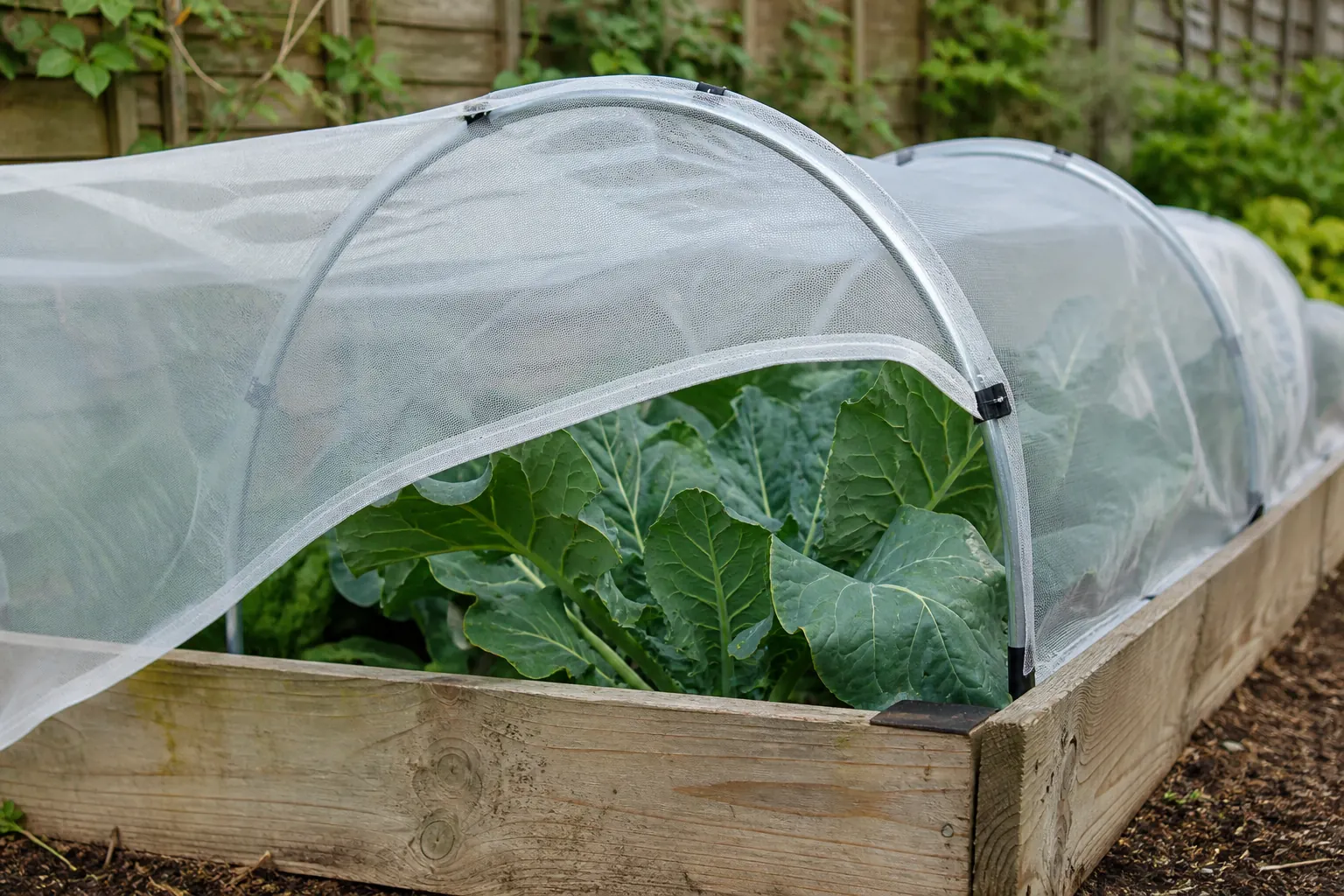
Insect mesh is the summer workhorse. It lets rain and air move through while blocking adult pests before they lay eggs. The opening must be small enough for the target insect. A net sold for cabbage moths may still admit flea beetles, thrips, or tiny flies. Check an actual aperture measurement in the product specification instead of trusting a generic product name.
Mesh works only as an exclusion barrier. Inspect leaves and soil before closing the bed. Maryland Extension warns that pests which overwinter near host plants can emerge under a cover, leaving them protected from predators. Crop rotation and a clean start matter as much as edge sealing.
Pollination changes the schedule. Cucumbers, squash, melons, and pumpkins normally need insect access once flowering begins. University of Minnesota Extension recommends removing row covers when those crops start to bloom. Another option is to open the tunnel during pollinator activity, but that also gives pest insects an entrance. Self-pollinating leafy and root crops can remain covered much longer if temperature and growth space are suitable.
Use frost cloth for a buffer, not a new climate
Frost cloth reduces heat loss from the bed and shields leaves from cold air. Heavier fabric generally gives more protection and less light. The published temperature rating is best treated as a comparison point. Wind, cloud cover, soil warmth, moisture, the crop, and how well the edges are sealed can change the result.
Keep fabric dry and secure where possible. A cover lying on tender leaves may transfer cold at contact points. Hoops help, especially with medium and heavy cloth. Give plants some clearance so a sagging cover does not abrade stems in wind.
Remove or vent frost fabric once the cold period passes. Even breathable cover changes air temperature and humidity. Minnesota Extension notes that heavy fabrics can block 40 to 50 percent of sunlight and may hold too much heat on warm days. Leaving winter-weight cloth over actively growing plants for convenience is a poor trade.
Clear poly needs active ventilation
Polyethylene turns the hoop frame into a low tunnel. It can warm soil and air more than woven fabric, and it keeps direct rain off the bed. It also stops natural rainfall, reduces air exchange, collects condensation, and heats quickly under sun. Those are management costs, not minor details.
Current University of Maryland production guidance warns that clear plastic can create heat injury even when vented, particularly after plants fill much of the tunnel volume. Open the ends or roll up a side before the sun has already pushed the temperature too high. A maximum-minimum thermometer inside the tunnel is more useful than judging from the outdoor forecast.
Keep irrigation under the cover. The raised bed drip irrigation guide shows how to place lines across a bed, and the drip flow and runtime calculator can check the zone’s total flow. A low tunnel hides the soil surface, so inspect moisture by hand rather than assuming condensation means the root zone is wet.
Use greenhouse-grade or UV-stabilized material when the cover will remain outside for a season. Thin household plastic may tear, cloud, and fragment. Remove poly when the warming job ends. Do not leave it installed as an unattended summer roof unless the structure has reliable ventilation designed for that use.
Shade cloth solves a different problem
Shade cloth reduces incoming light and can lower heat stress around cool-season crops. It does not act as a frost cover. Maryland Extension notes that 30 and 50 percent shade are common choices, while Utah State Extension describes low-tunnel shade structures for individual rows. Start with the lower shade percentage unless local conditions or the crop justify more.
Covering the entire tunnel can reduce light more than needed. In intense afternoon sun, shading the south or west side may help while leaving the other side open for air movement. Watch plant response. Stretched stems, pale growth, and slow drying suggest too much shade or too little ventilation.
For greenhouse crops, the greenhouse shade cloth guide covers percentage and installation in a larger structure. A raised-bed tunnel is smaller and reacts faster, so it needs closer daily attention.
Fit the cover to the bed and crop
Measure the hoop, not only the bed footprint. Run a flexible tape from one ground edge, over the top, to the other edge. Add enough material for secure side edges and gathered ends. A cover that barely reaches the frame will open gaps when the wind lifts it.
Leave headroom for the crop at its protected stage. A low tunnel over carrots can remain compact. Kale, peppers, and young tomatoes need more space, but a taller arch catches more wind. Once a crop outgrows the practical tunnel, remove the cover or move protection to another bed.
Mounting also depends on frame material. Wood accepts pipe straps and hinges easily. Thin steel beds may need purpose-made brackets so holes and fasteners do not weaken the wall or create sharp edges. Compare long-term frame tradeoffs in the wood versus metal raised bed guide. If you are still choosing the box, the raised bed kit buying guide covers panel strength and bracing.
A seasonal cover plan
- Install and brace hoops before plants need protection.
- Use frost cloth during short spring cold periods, then remove or vent it promptly.
- Switch to pest-specific mesh after the cold risk fades.
- Open covers when pollinator-dependent crops begin flowering.
- Use shade cloth only when light and heat, rather than insects, are the problem.
- Clean, dry, label, and store each cover away from rodents and sunlight.
Inspect fabric for holes before reuse. A small tear defeats fine insect exclusion, while a weak edge can split across a windy bed. Wash only as the manufacturer directs. Harsh cleaning and high heat may damage coatings or fibers.
Buying checklist
- Stated mesh opening for the target pest
- Fabric weight, light transmission, and frost rating from the maker
- UV stabilization and expected outdoor life
- Enough width for the hoop arc, sealed sides, and gathered ends
- Clips that fit the exact hoop diameter without cutting the cover
- A fast way to open one side for watering, scouting, and ventilation
- Repair tape or spare material compatible with the cover
Compare raised bed cover hoops, insect mesh, and frost cloth on Amazon (paid link). Check the listed dimensions, mesh opening, and material weight rather than buying by the product photo.
A versatile setup is a strong removable hoop frame, pest-specific mesh for summer, and a separate frost fabric for short cold spells. Add poly only if you can irrigate under it and vent it every bright day. That small amount of discipline matters more than a complicated frame.