Disclosure: This page contains affiliate links. As an Amazon Associate, Yard Foundry earns from qualifying purchases.
A useful greenhouse shade cloth percentage for most summer vegetables starts around 30%. Fruiting crops such as tomatoes and peppers usually need more light, while lettuce, seedlings, and shade tolerant ornamentals may benefit from 40% to 60% shade in a hot climate. Treat those numbers as starting points. The right cloth also depends on the light already lost through your glazing, the crop, local sun, and how well the greenhouse vents.
Shade cloth is easier to get wrong by going too dark than by starting modestly. A greenhouse that feels comfortable to a person can still be too dim for a tomato crop. Start with the lowest practical shade rating, monitor plant response and midday temperature, then add more shade only if the evidence points that way.
What the percentage on shade cloth means
The percentage describes how much incoming light the material blocks. A 30% cloth blocks roughly 30% and transmits roughly 70%. It does not promise a 30% temperature reduction. The color, fiber, spacing above the roof, airflow, glazing, and weather all affect the temperature result. Alabama Cooperative Extension makes the same distinction in its guidance on greenhouse shading and cooling.
Your glazing has already taken a share of the light before shade cloth enters the calculation. Dust, aging film, frame members, twin wall polycarbonate, and a second glazing layer can reduce transmission further. For that reason, two greenhouses under the same sun may need different cloth even when they hold the same crop.
Virginia Tech describes a more useful way to think about shade: compare the available daily light integral, or DLI, with the crop’s target, then account for greenhouse transmission. Its DLI guide includes a worked greenhouse lettuce example that arrives at about 40% shade. Home growers do not need laboratory instruments to make every decision, but the example explains why one universal percentage cannot fit every crop and location.
Greenhouse shade cloth percentage by crop
The ranges below are conservative starting points for a hobby greenhouse in summer. They are not fixed crop specifications. Local Extension recommendations, a light meter, and several days of observation should take priority over a generic chart.
| Crop or use | Practical starting range | What to watch |
|---|---|---|
| Tomatoes, peppers, cucumbers | 20% to 30% | Leaf curl, pale fruit patches, stalled fruit set, and excessive stem stretch |
| Mixed summer vegetables | 30% | Midday wilt that persists despite adequate root moisture |
| Lettuce, spinach, and cool season greens | 40% to 50% | Bolting, bitter leaves, and weak growth from too little light |
| Seedlings and tender transplants | 40% to 50% | Bleaching or scorch, followed by stretching if shade is excessive |
| Shade loving ornamentals | 50% to 70% | Species requirements vary widely, so use a crop specific reference |
For vegetables, 30% is a sensible first purchase in many hot regions. NC State Extension recommends 30% for tomatoes and peppers in very hot summers, with more shade for lettuce and related cool season crops in hot areas. Its season extension guidance also notes that 30% to 50% shade can lower leaf temperature during midsummer.
Ornamentals span a broader range. The University of Alaska Fairbanks publishes a table from 25% to 80% depending on the plant group in its greenhouse environment guide. That spread is a good warning against buying one dense cloth for every bench.
Account for the greenhouse before choosing the cloth
Glazing transmission
Clear single glazing usually passes more light than weathered film or multiwall panels. Dirt and condensation can cut transmission further. If the greenhouse is already diffuse or shaded by trees for part of the day, a lighter cloth may be enough. The construction details in our polycarbonate greenhouse kit guide help explain why panel type and roof layout matter before accessories are added.
Climate and exposure
A greenhouse in Arizona does not receive the same summer light load as one near the foggy Pacific coast. Note how many hours of direct sun reach the roof, when the temperature peaks, and whether nearby buildings give late afternoon relief. Afternoon shade can matter more than a small difference printed on the fabric label.
Ventilation capacity
Shade reduces incoming solar energy, but it cannot replace air exchange. A closed greenhouse under cloth will still store heat and moisture. Confirm that roof vents, doors, and intake openings have room to work. If the structure uses an exhaust fan, estimate the airflow with the Greenhouse Fan CFM Calculator before assuming a darker cloth will cure a ventilation shortfall.
Exterior or interior shade cloth?
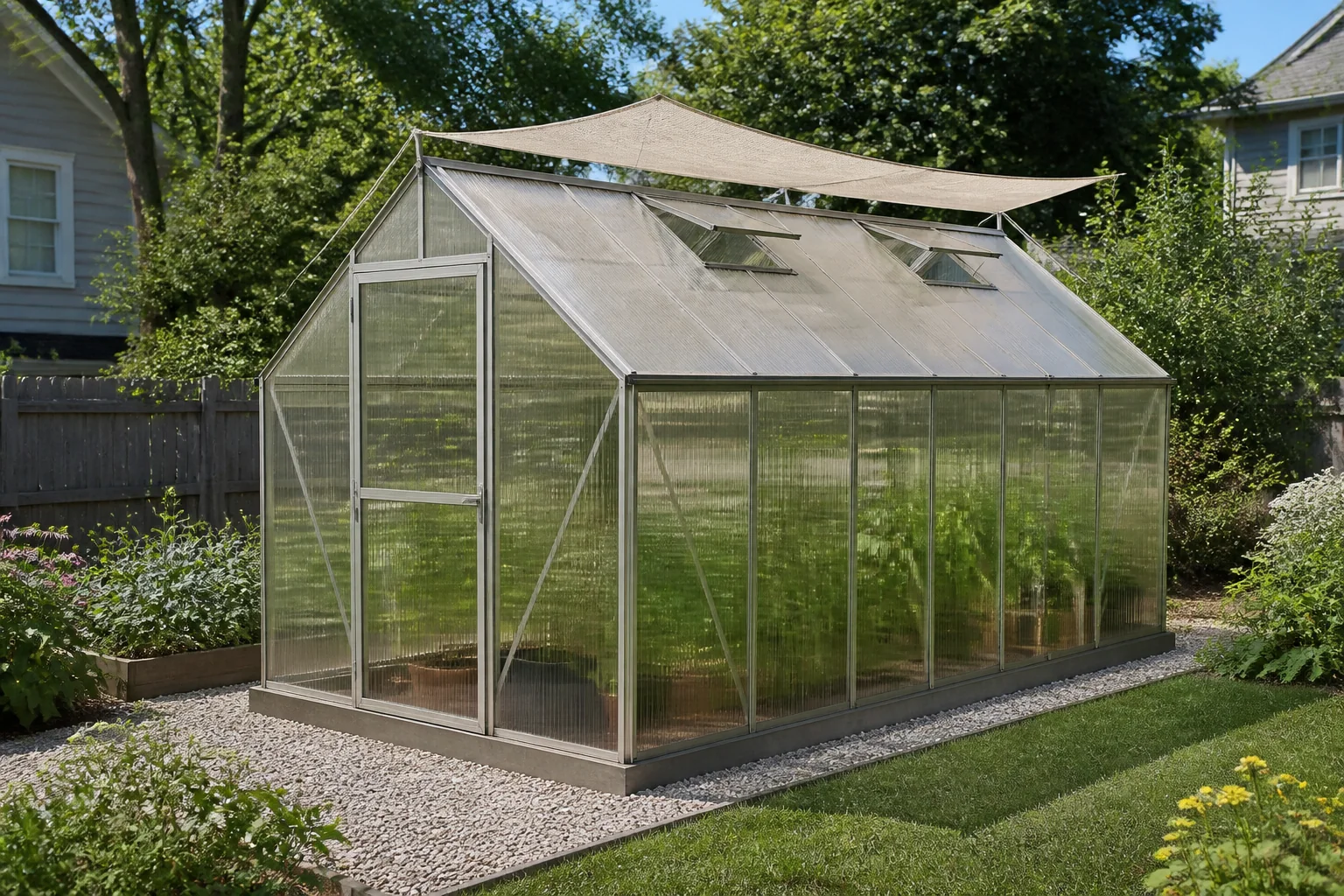
Exterior cloth normally does a better job of limiting heat because it intercepts sunlight before the glazing and interior surfaces absorb it. Leave an air gap between the fabric and roof when the frame allows it. The gap lets heated air escape and prevents the cloth from resting on hot panels.
Interior cloth is easier to protect from wind and may be simpler to retract. Its tradeoff is that solar energy has already crossed the glazing. An interior curtain can still lower light at the crop and separate the hottest roof air from the growing zone, but it is generally less effective as a first barrier against heat.
Use exterior cloth when summer cooling is the priority and the structure can support it safely. Use interior cloth when wind, access, snow, or frequent seasonal changes make an outside installation impractical. A retractable setup earns its cost when spring and fall light levels change quickly.
Choose the material and color
Knitted polyethylene cloth is common in hobby greenhouses because a cut edge is less prone to unraveling than many woven materials. Woven cloth can be strong, but exposed cut edges may need proper hemming. Look for UV stabilized material, reinforced edges, and enough attachment points to spread wind load.
Black cloth is widely available and economical. White or reflective cloth tends to absorb less solar energy, which can be useful where heat is the main problem. Color alone does not tell you the actual shade percentage or crop response. Compare the manufacturer’s tested shade rating first, then weigh color, durability, and price.
Avoid ordinary tarps as a substitute. They block rainfall and airflow, collect water, and can place concentrated loads on a lightweight greenhouse frame. A breathable agricultural shade fabric is much easier to tension and manage.
How to measure for shade cloth
- Measure the roof length along the ridge or long side that the cloth will cover.
- Measure over the roof curve or slopes, not straight across the floor.
- Add enough material for the planned air gap, edge overlap, hems, and fasteners.
- Mark roof vents, gutters, doors, and automatic openers that must remain free.
- Check the manufacturer’s roll width before finalizing seam locations.
Do not stretch knitted cloth to its limit while measuring. Excess tension can distort the mesh and pull hard on greenhouse fasteners as the fabric heats, cools, and moves in wind.
How to install greenhouse shade cloth
Pick a calm, dry day and work from the ground whenever possible. Lightweight greenhouse roofs are not walking surfaces. If the cloth cannot be positioned safely with ropes, poles, or help from another person, use appropriate access equipment or hire an installer.
- Clean and inspect the frame. Remove sharp burrs and repair loose glazing clips before fabric goes over the roof.
- Protect contact points. Add smooth padding where fabric may rub against a ridge cap, bracket, or cut metal edge.
- Position the cloth loosely. Center it before fastening any edge tightly.
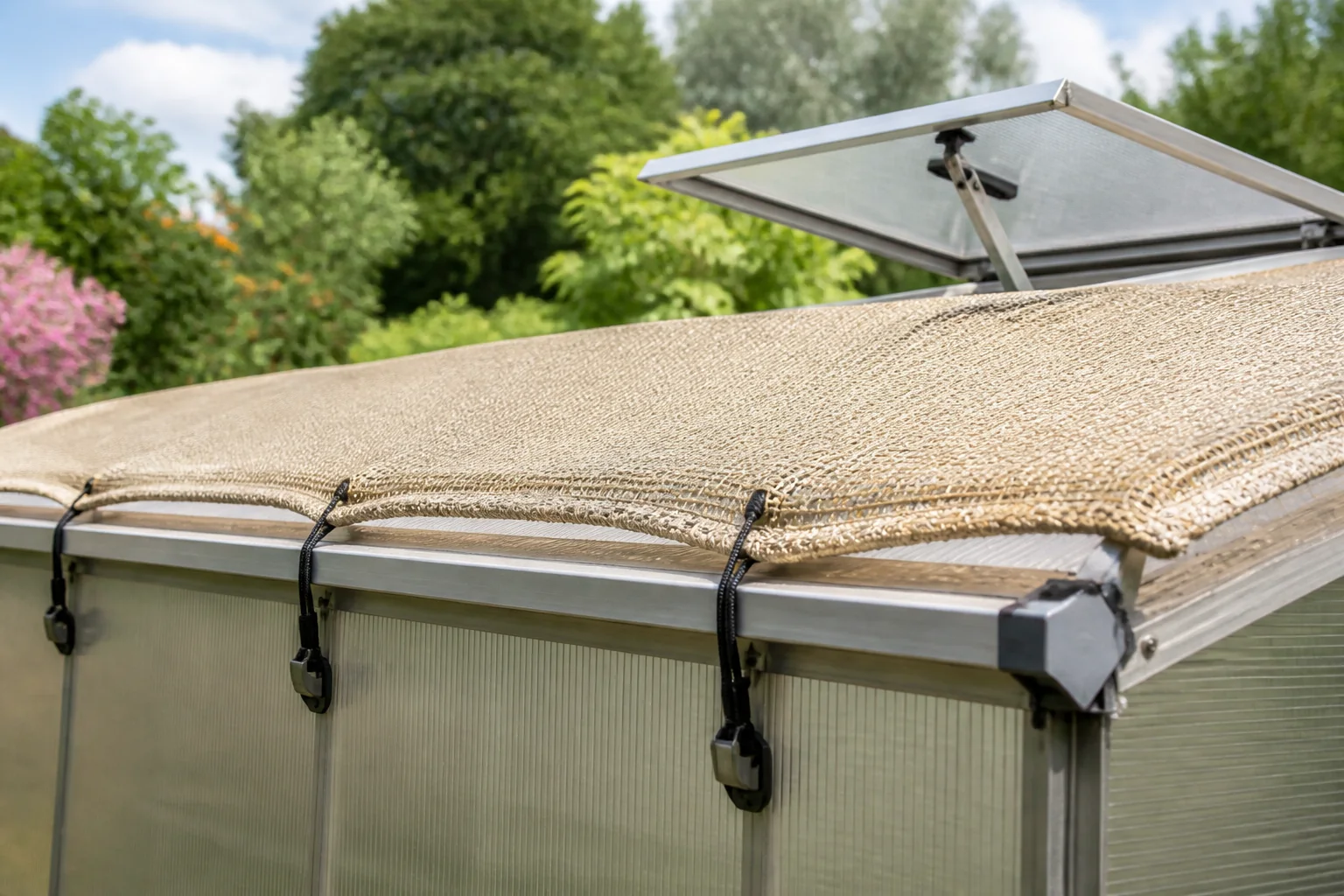
- Anchor the windward side first. Use purpose made clips, lock channel, or reinforced grommets as specified for the fabric and frame.
- Keep vents clear. Open every roof vent through its full travel and check that the cloth cannot snag the arm.
- Tension evenly. Remove large pockets without turning the cloth into a drumhead.
- Add storm control. Use enough attachment points that one loose corner cannot start flapping and tear the panel.
Never screw through polycarbonate just to hold fabric unless the greenhouse manufacturer specifically allows that fastening method. New holes can leak, crack a panel, or interfere with thermal expansion. Also keep cords away from doors, walkways, electrical equipment, and hot heater surfaces.
When to put it up and take it down
Install shade when repeated sunny days create a crop problem, not simply because the calendar says summer. Track the maximum greenhouse temperature for a week and note whether leaves recover after evening. A small temperature and humidity logger gives a much clearer picture than one afternoon reading.
Remove or retract the cloth when the heat risk passes. Leaving it up through cloudy fall weather can deprive crops of light just when days are shortening. In snow country, exterior cloth can trap snow and add loads the greenhouse was not designed to carry. Follow the frame and cloth manufacturers’ seasonal instructions.
How to tell if the percentage is wrong
Too little shade shows up as persistent midday heat, scorched or bleached tissue, sunscald on exposed fruit, and rapid drying that continues even after ventilation is working. Rule out root problems and inadequate watering before blaming light alone.
Too much shade often produces stretched growth, larger thin leaves, slow drying, delayed flowering, and weak fruiting. Check the crop under several days of typical weather. A removable second strip over a sensitive bench is usually better than darkening the entire greenhouse for one plant group.
If the greenhouse stays far above outdoor temperature after the right cloth is fitted, inspect the ventilation path next. Yard Foundry’s garden tools and calculators page gathers the airflow and heating tools used for planning a more complete environmental setup.
A sensible buying decision
For a mixed vegetable greenhouse, begin by comparing a UV stabilized 30% knitted cloth sized to cover the sunniest roof exposure. Move toward 40% or 50% when the crop and local Extension guidance support it, especially for lettuce, seedlings, or an exceptionally hot site. Choose reinforced edges and a fastening system that works with your frame. The installation details will matter every time the wind rises.
Compare greenhouse shade cloth sizes and ratings on Amazon (paid link).