Disclosure: This page contains affiliate links. As an Amazon Associate, Yard Foundry earns from qualifying purchases.
This guide compares kit materials, dimensions, and installed cost. Yard Foundry did not run a multi-year decay or corrosion test on every bed.
A raised bed kit can cost more than the plants that fill it, especially once you add soil. Paying more makes sense when the bed has durable corners, enough depth for the intended crop, and a size that lets you reach the center without stepping on the soil. Paying for decorative trim while ignoring those basics does not.
See premium raised bed kits on Amazon
Choose dimensions around your reach
A freestanding bed should usually be narrow enough to reach the center from both sides. Beds beside a wall or fence need to be narrower because you can work from only one edge. Mark the outline on the ground and kneel beside it before ordering.
Long beds need reinforcement. Soil pushes outward after rain, and thin boards or metal panels can bow. Look for cross braces, stout corner posts, and connections that don’t rely on a few small screws near the material edge.
Long or tall beds need more than decorative corner caps. Oregon State University Extension recommends reinforcement when framed beds exceed about 6 feet in length or 18 inches in height, and it advises planning irrigation before the bed is filled. See its peer-reviewed raised-bed guide.
How deep should the bed be?
Depth depends on the soil below and the crop above. A shallow frame placed over healthy, loosened soil works differently from a bed on concrete. Root vegetables and sites with poor native soil benefit from more usable depth. Tall beds reduce bending but require much more fill.
Calculate soil volume before choosing a 24-inch-tall model. A large bed can swallow several cubic yards of mix. Filling the bottom with random construction waste saves soil but creates drainage and contamination problems. Clean woody material may be used in specific layered systems, though it settles as it decomposes.
Cedar and other wood kits
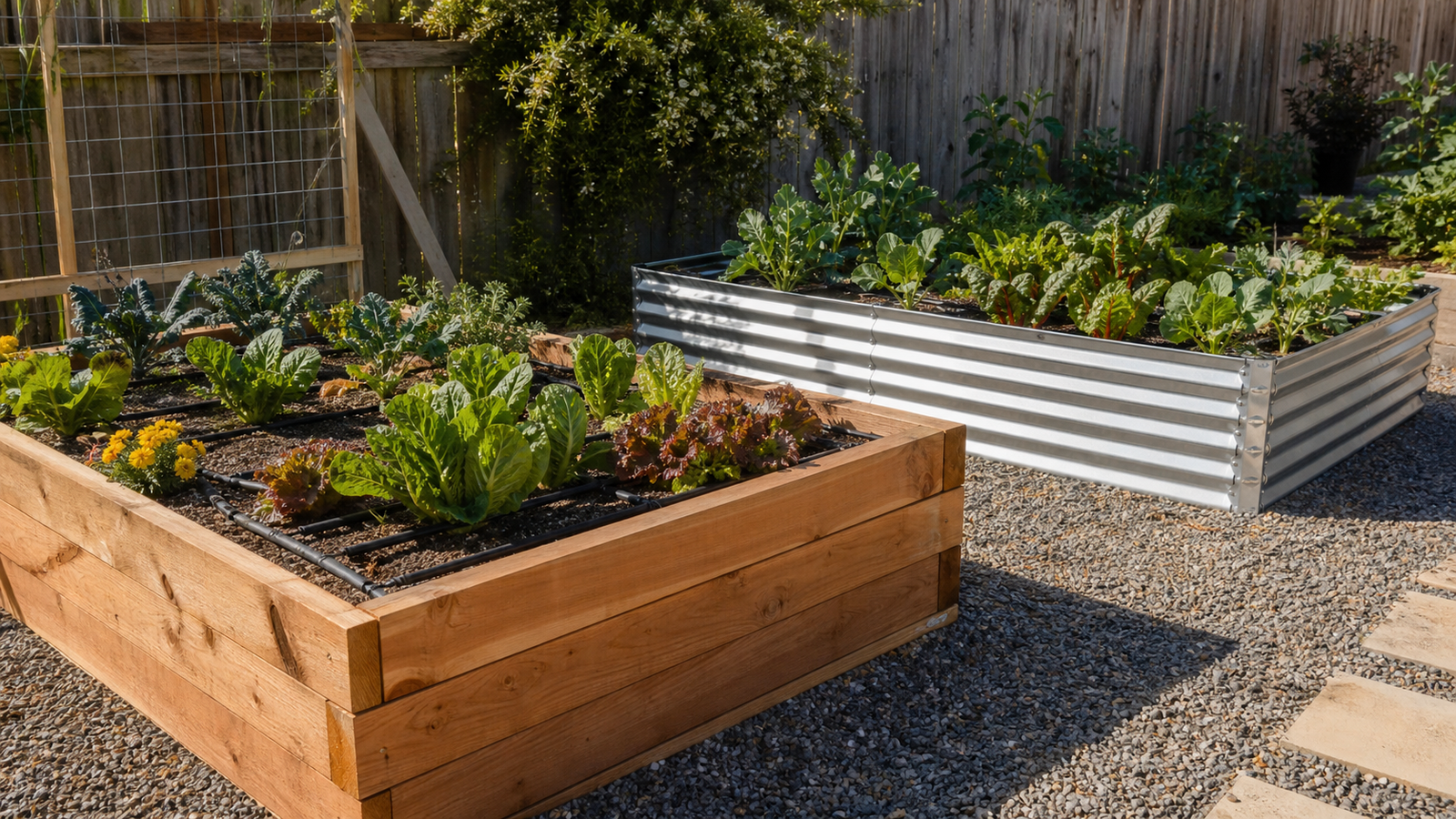
Cedar is light, attractive, and naturally more decay resistant than many common woods. Board thickness matters. Thin boards dry and move more readily, while thicker lumber tolerates years of wet soil better. End grain and fastener holes tend to show wear first.
A replaceable board system is worth considering. If one side eventually rots, you shouldn’t have to discard every corner and cap. Avoid unknown surface treatments on wood that will sit beside edible crops.
Galvanized steel beds
Metal beds offer long spans without bulky lumber and suit modern gardens. Rolled or covered top edges are kinder to hands and hoses. Check panel gauge, bracing, coating quality, and the number of fasteners. Tall beds need especially good support.
Dark metal warms in sun, but soil temperature is influenced by moisture, climate, mulch, and bed size too. In hot areas, adequate irrigation and surface mulch matter more than broad claims about one material.
Composite and plastic systems
Composite boards resist rot and don’t need stain. They can be heavy and may flex over long spans. Ask whether internal braces are included and whether replacement boards use a proprietary profile.
Food-contact marketing varies widely. Look for clear material information rather than vague “eco” language.
Elevated beds on legs
Waist-high planters are useful on patios and for gardeners who want less bending. Their soil volume is smaller, so they dry faster than ground-level beds. Drainage needs to be controlled if the planter sits on decking.
Inspect leg bracing and total filled-weight capacity. Wet soil is heavy. A long box supported by four slender legs may rack when moved or bumped.
Accessories worth paying for
A fitted cover frame, insect mesh, trellis, or irrigation grid can turn a plain bed into a practical system. Proprietary accessories are convenient, but simple standard dimensions make future repairs easier.
We would pay for strong corners, cross bracing, safe top edges, and available replacement pieces before paying for a built-in bench or elaborate caps.
Budget for the complete bed
- Foundation preparation and weed removal
- Soil, compost, and delivery
- Mulch and irrigation
- Hardware cloth where burrowing pests are common
- Trellises or protective covers
- Paths wide enough for a cart or wheelbarrow
The soil often costs as much as the frame. Compare the installed project, not just the box.
How to compare raised garden bed kits
- Can you reach the center from the available sides?
- Is the depth appropriate for the crop and ground below?
- Are long walls braced against soil pressure?
- Can individual boards or panels be replaced?
- Are edges and coatings suitable for frequent contact?
- Have you calculated soil volume before ordering?
A planned watering system makes a large bed far easier to manage. For beds far from a faucet, plan the drip layout, supply pressure, and water source before filling the frame.