Disclosure: This page contains affiliate links. As an Amazon Associate, Yard Foundry earns from qualifying purchases.
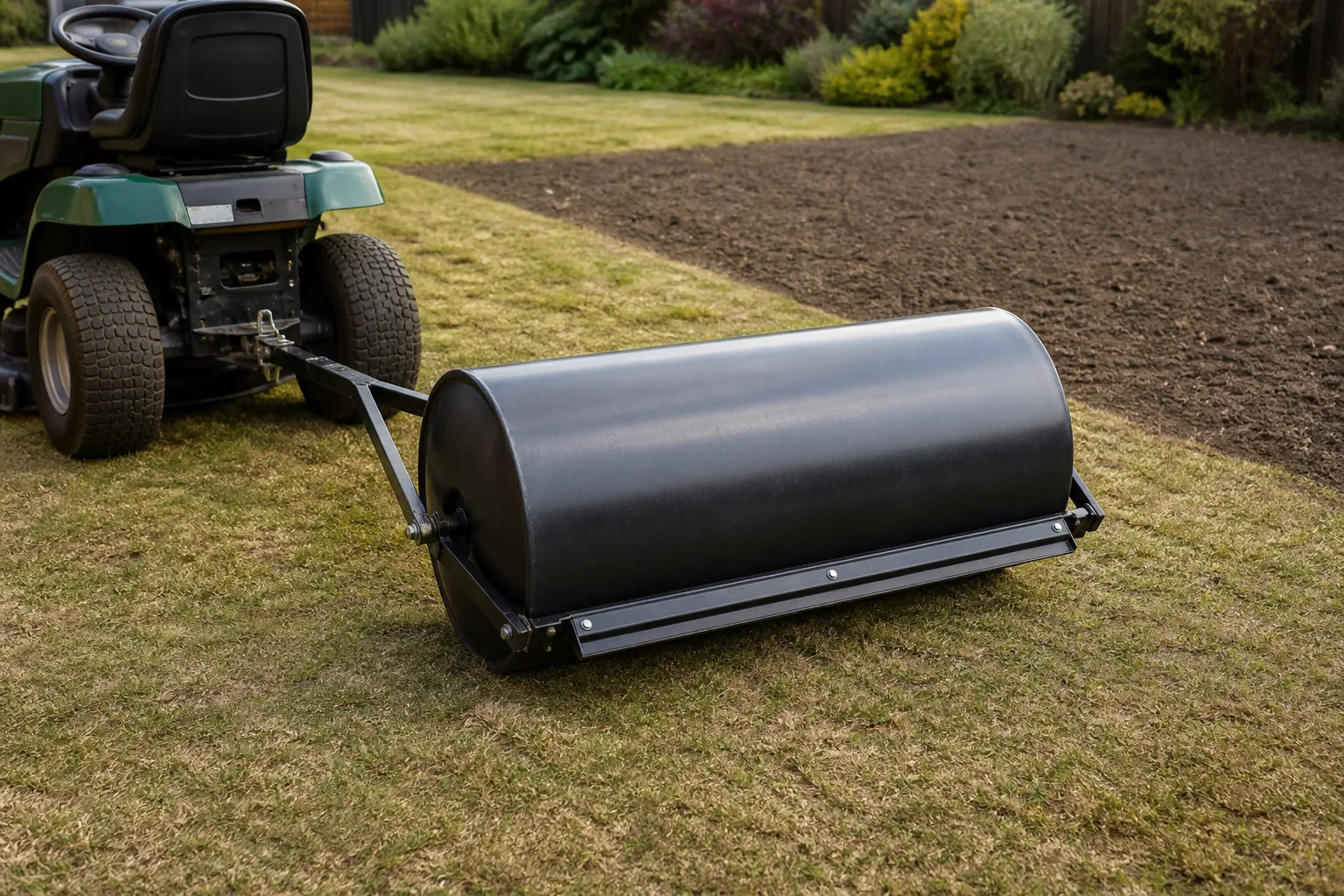
A tow behind lawn roller can firm a prepared seedbed, press seed into dry soil, or settle freshly laid sod. It can also compress wet ground and make an existing drainage problem worse. The right choice is not the heaviest drum your lawn tractor can move. Match the roller’s adjustable load, width, hitch, service parts, and storage needs to one defined job, then use the least weight that completes it.
This is a research-based buying guide, not a hands-on product test. Yard Foundry has not operated the rollers discussed here. Filled weight, towing limits, slope rules, speed, filling method, and storage instructions must be confirmed in the manuals for the exact roller and tow vehicle.
Decide whether the lawn needs rolling at all
Rolling is useful when light, even pressure solves a surface problem. That usually means a new seedbed, new sod, or a limited area that has minor surface irregularities. It is not a routine spring treatment for every established lawn.
Penn State’s lawn establishment guide recommends lightweight equipment on relatively dry soil during final grading. After seeding, a light roller can press seed against the soil. The same guide calls for a lightweight roller after laying sod, before watering. The repeated word is light. The purpose is contact and gentle firming, not deep compaction.
The University of Minnesota’s spring lawn care guidance advises skipping routine rolling because a roller can compact wet soil and damage roots. Frost-raised areas often settle as the ground dries. If a lawn is soft enough to hold deep tire marks, it is too wet for a loaded roller.
A roller also cannot repair buried construction debris, a poor grade, deep ruts, or a low spot that collects water. Those need diagnosis and correction. Rolling a depression may smooth its edge for a short time while leaving the drainage cause untouched.
How to choose a tow behind lawn roller by task
Product listings tend to lead with maximum filled weight. That number is easy to compare and easy to misuse. A roller that accepts a large water load still needs to work at lighter partial fills. Maximum capacity is an upper boundary for the attachment, not a target for every pass.
Use a short task statement before shopping:
- Firm a dry, freshly graded seedbed without leaving wheel ruts.
- Press seed into the surface after raking.
- Seat new sod against prepared soil before irrigation.
- Address a small, minor surface rise after the soil has dried.
If the actual problem is dense established soil, a roller pushes in the wrong direction. The tow-behind lawn aerator guide explains attachments designed to open compacted turf. The aerator versus dethatcher comparison can help separate a soil problem from a thatch problem before money goes toward another attachment.
Filled weight is adjustable, not fixed
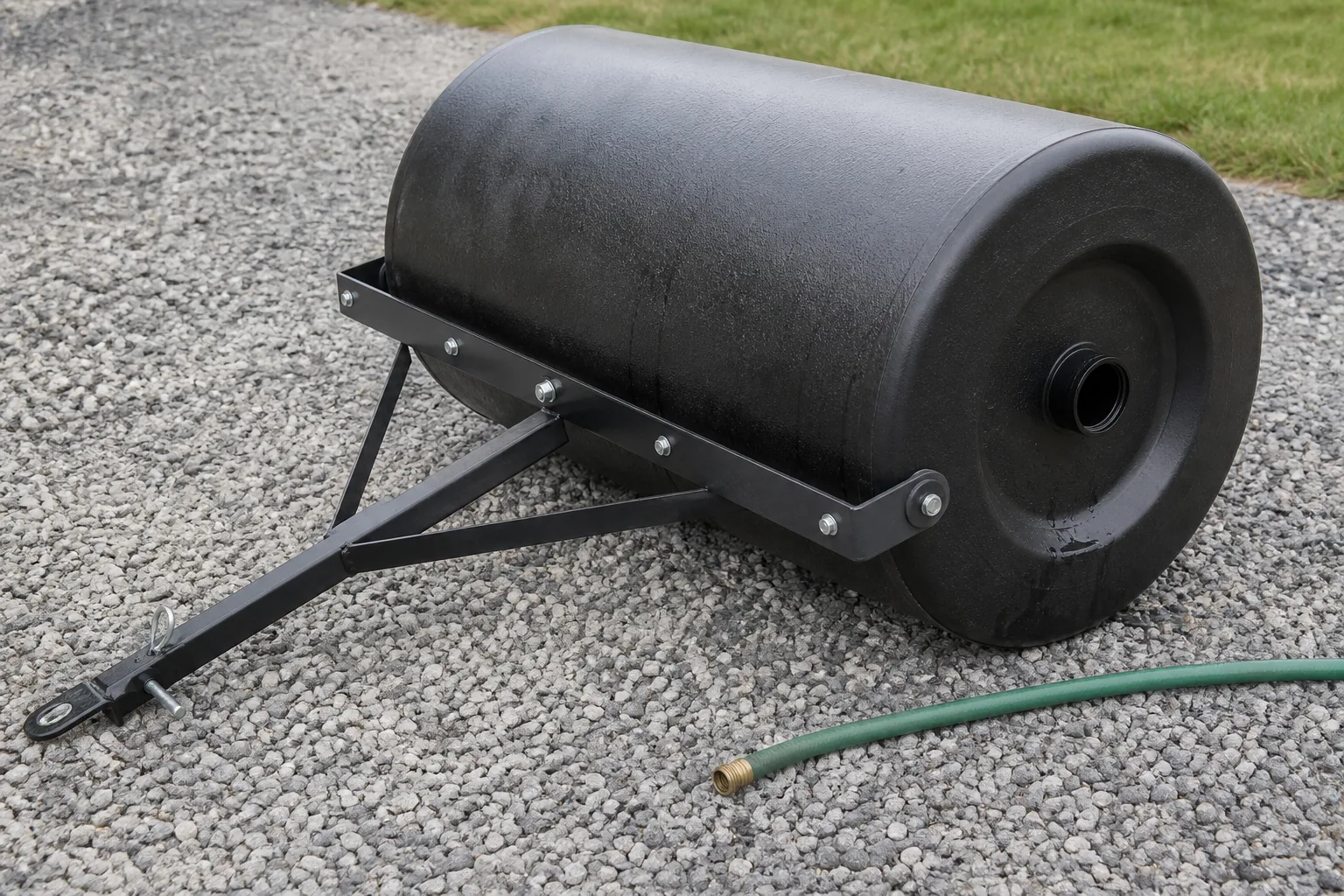
Water-fill rollers let the owner change load without handling loose ballast. Partial filling is the most useful feature. Start low, make one pass on a small section, and inspect the seedbed or sod contact. Add water only if the roller fails to do the planned job and the ground remains firm under the tractor tires.
Do not estimate the safe load from the roller’s capacity alone. Add its empty weight to the water load, then compare that total with the tow vehicle manual. The vehicle must pull, turn, and stop the combination. A compact lawn tractor that moves a heavy roller on level ground may struggle to control the same load on a slope.
An Agri-Fab 24 by 36 inch steel roller manual lists approximately 105 pounds empty and up to 640 pounds when filled with water. Those figures belong only to that cited model. More importantly, the manual says not to fill to maximum weight until the tow vehicle’s ability to pull and stop the roller has been checked.
The same manual warns against attaching a hose with a fixed connection to the fill opening because pressure can build inside the drum. Follow the exact filling method in the chosen manual. A hose lying near an open fill port is different from a sealed coupling that can pressurize the tank.
Drum width changes both coverage and control
A wider drum covers a prepared area with fewer passes and can bridge small shallow dips. It is also harder to place near beds, trees, and narrow gates. A wide roller takes more room to turn, and the tractor can disturb a seedbed before the drum reaches it.
Measure the full outside width rather than relying on advertised rolling width. Frame ends, axle hardware, hitch tubes, and a scraper bar can extend beyond the drum. Compare that measurement with the tightest gate, shed door, and storage path. Leave room for hands when guiding an empty roller through a doorway.
Drum diameter affects how easily the roller climbs small surface changes. A larger diameter generally rolls over mild irregularities more easily, but it increases storage volume. Neither diameter nor width makes a heavy pass safe on wet soil.
Poly and steel drums have different ownership details
A polyethylene drum resists rust and is usually easier to move when empty. Inspect molded seams, the fill plug, axle area, and frame attachment. Confirm that the manufacturer sells replacement plugs, bearings, scraper parts, and hitch hardware. A durable tank is not much use if a small missing plug takes the roller out of service.
A steel drum can be compact for its weight and may suit owners who prefer repairable metal construction. It needs attention around welds, scratches, seams, and the interior after draining. Check the manual’s coating and storage directions. Water left inside can promote corrosion, and freezing water can damage either material.
A scraper bar removes soil that sticks to the drum. Look for a bar that can be adjusted without rubbing constantly. Soil buildup changes the surface and can drop clumps onto a finished seedbed. Replaceable bearings or bushings, a common hitch pin, and a secure plug matter more over several seasons than decorative frame features.
Match the hitch and tow vehicle before ordering
Confirm hitch type, pin diameter, hitch height, and clearance through turns. The tongue should remain reasonably level in the working position. A poor match can place odd loads on the frame or make the scraper sit incorrectly.
Read both manuals. The roller manual governs its filled weight, slope, and operating limits. The tractor manual governs permissible attachments, towing, ballast, tire pressure, braking, and slope use. When the two documents disagree, follow the more restrictive instruction.
Do not assume a roller is safe because another attachment of similar width works behind the same tractor. A sweeper carries a growing debris load, an aerator may use tray ballast, and a water-filled roller starts heavy and stays heavy. Each changes stopping and steering in a different way.
Slopes make a simple drum harder to control
A filled roller adds momentum and can push the tow vehicle during a stop or turn. The cited Agri-Fab manual instructs operators to work across slopes rather than up and down and prohibits slopes above 10 degrees for that model. Do not transfer 10 degrees to a different roller or tractor. The exact manuals and site conditions control the decision.
Walking the route while the roller is empty is worthwhile. Mark holes, roots, soft shoulders, drainage swales, tight turns, and places where the tractor would need to reverse. Keep people and pets out of the work area. Never allow a rider on a roller.
If the route feels marginal with an empty drum, a full drum will not improve it. Use a lighter fill, a smaller roller, or another method. Some small seedbeds are better handled with a hand roller or a flat board than with a tractor.
Use light pressure on a seedbed
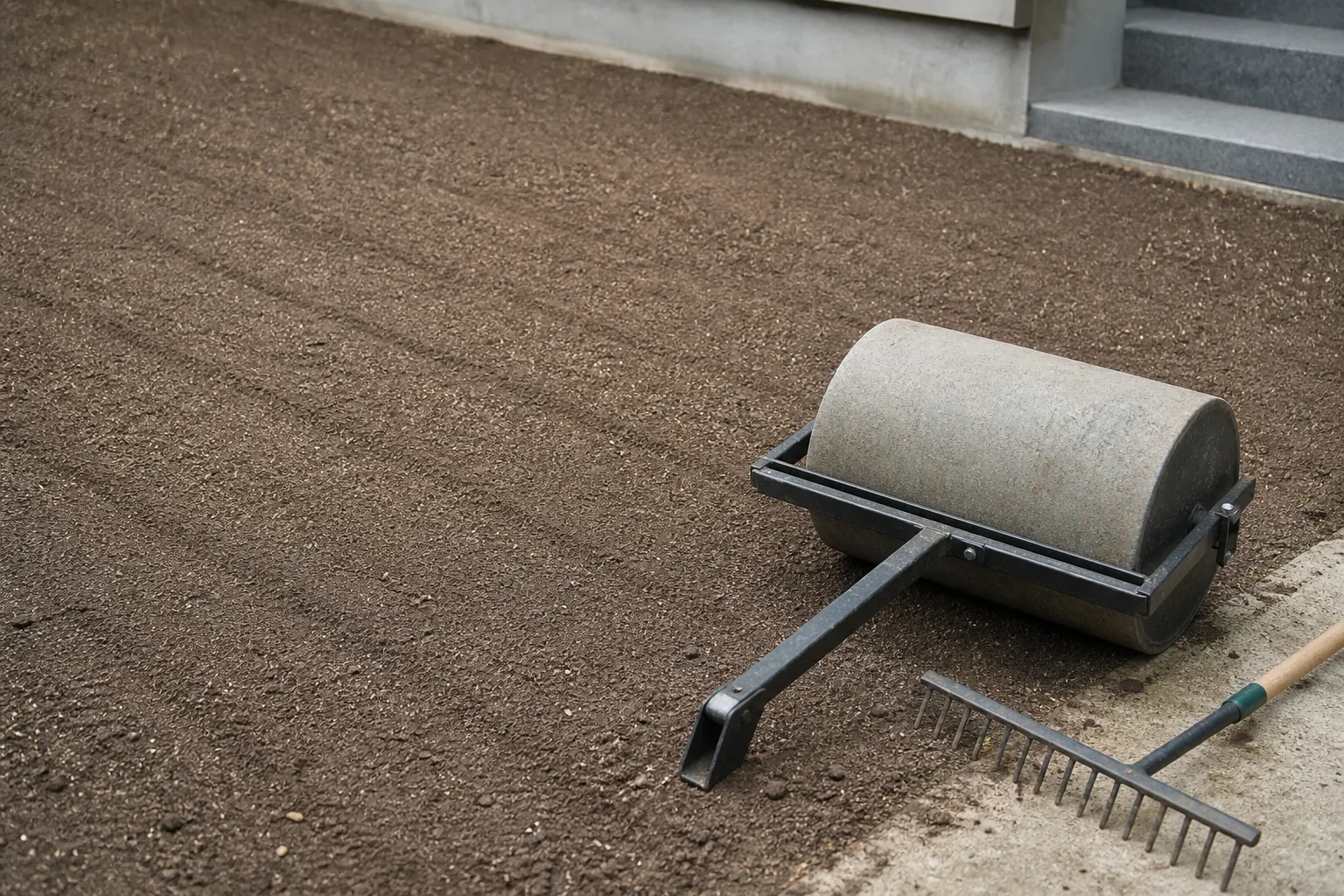
Fine grading comes before rolling. Remove stones, loosen compacted construction soil, correct drainage, rake high spots, and fill low spots. A roller will not redistribute enough soil to create a proper grade.
Penn State recommends relatively dry soil and lightweight equipment for mechanical firming. After seed is placed and lightly covered, rolling improves seed-to-soil contact. Stop if soil sticks to the drum, the tractor leaves ruts, or the roller creates a hard smooth crust. Those signs point to excessive moisture, excessive load, or both.
Make as few passes as the result requires. Crossing the same strip repeatedly because the surface does not look perfectly flat can compress it without fixing its shape. Adjust the grade with a rake, then make another light pass only if needed.
Do not use rolling to treat compacted turf
Compaction reduces the pore space that carries air and water. Penn State’s turf irrigation guidance notes that even a thin compacted surface layer can reduce infiltration. Heavy traffic on wet ground is a common cause.
If water ponds, roots remain shallow, or a soil probe is difficult to insert, identify the soil and drainage problem before rolling. Core aeration may be appropriate when grass is actively growing and can recover. The plug versus spike aerator guide explains why a hollow-tine tool and a solid spike do not affect soil in the same way. The lawn aeration timing guide covers recovery windows for cool-season and warm-season grass.
A roller can hide the symptom briefly by pressing a raised edge down. It cannot add pore space, remove buried debris, or correct water movement. Be willing to skip the purchase if the task statement points to those problems.
Plan draining, transport, and storage
A water-filled roller should be drained after use unless its manual explicitly allows another storage method. Draining reduces corrosion risk and prevents freeze damage. Rotate the drum until the opening reaches the drain position, keep the plug where it will not be lost, and allow enough time for the tank to empty.
Move the roller only as the manufacturer directs. The empty attachment may still be awkward because it rolls freely and the tongue sits low. Check whether the product has a combination push and tow handle, transport wheels, or a stable way to stand while detached. Do not lift a partly filled unit by its tongue.
Store it where the drum cannot roll into a wall or vehicle. Keep the hitch pin with the attachment and inspect the plug seal before the next fill. Touch up damaged steel coating according to the manual, clear dried soil from the scraper, and check fasteners and bearings at the start of each project.
Buying checklist
- Name the job: seedbed firming, seed contact, sod seating, or a limited dry-surface correction.
- Choose a model that works at a partial fill instead of planning around maximum weight.
- Confirm the tow vehicle’s attachment, pulling, stopping, and slope limits.
- Measure full outside width, turning space, gates, and storage access.
- Compare poly and steel drums by plug, seam, coating, and freeze protection.
- Look for replaceable bearings, hitch hardware, scraper parts, and fill plugs.
- Read the filling procedure and never create pressure inside the drum.
- Plan to drain the roller and store it securely after use.
- Skip rolling when the soil is wet or the real problem is compaction or drainage.
Compare tow-behind lawn rollers on Amazon (paid link). Before ordering, download the exact manual and verify empty weight, filled capacity, width, hitch, slope rules, filling method, drain access, and replacement parts.
A useful roller is adjustable and easy to leave in the shed when conditions are wrong. Start with dry ground and a light fill. One careful pass should solve a defined surface task without creating a new soil problem.