Disclosure: This page contains affiliate links. As an Amazon Associate, Yard Foundry earns from qualifying purchases.
In a brush cutter vs string trimmer decision, choose the string trimmer for regular grass edging, soft weeds, and detail work around lawn features. Choose the brush cutter for recurring dense grass, brambles, and approved woody stems that require a metal attachment. A brush cutter is heavier and demands a matched blade, guard, handle, and harness. Many properties need a trimmer every week but a brush cutter only a few times a season.
This is a research based comparison, not a hands-on test. Yard Foundry has not operated, timed, or measured the tools discussed here. Attachment approval, cutting limits, weight, vibration, sound, runtime, fuel or battery requirements, and warranty terms must be verified for the exact model.
Brush cutter vs string trimmer: the practical difference
A string trimmer spins flexible line from a head. The line cuts grass and light weeds, then wears or breaks when it meets hard surfaces. It works close to curved bed edges, fence posts, and places a mower cannot reach. Line can still throw stones and injure people, so flexible does not mean harmless.
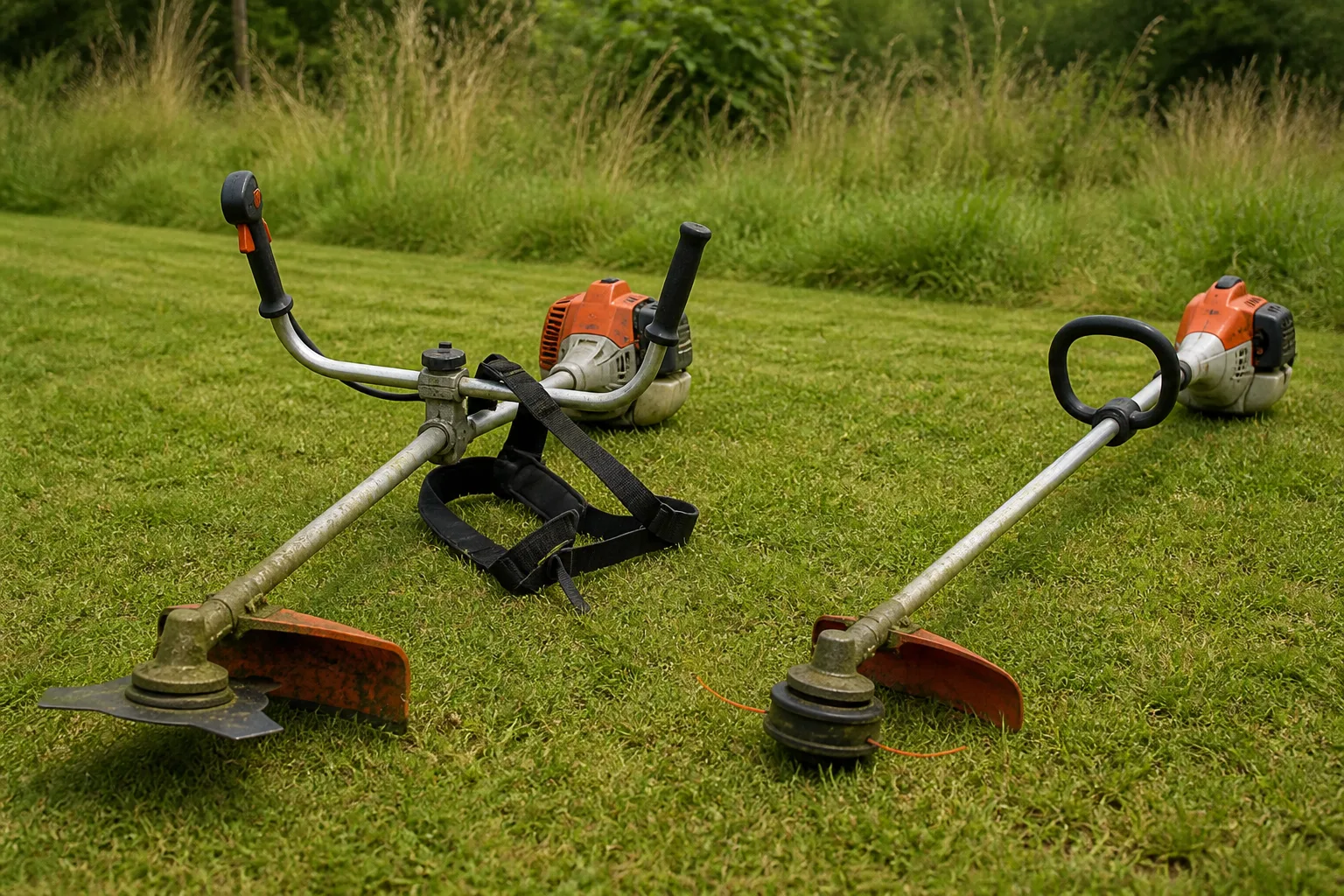
A brush cutter is built to operate approved rigid attachments. Depending on the model, that can include a grass blade, brush knife, or circular saw blade. The shaft, gearbox, guard, handle, and harness are part of the system. The blade does not simply turn a light trimmer into the same machine.
| Property task | Better starting tool | Reason |
|---|---|---|
| Weekly lawn edge and fence-line grass | String trimmer | Lighter, precise, and quick to start for short sessions |
| Tall soft weeds before mowing | Heavy-duty string trimmer | Line handles uneven ground without a rigid blade near obstacles |
| Dense fibrous grass over open ground | Brush cutter with approved grass blade | Blade resists line breakage and works with sweeping cuts |
| Brambles and coarse brush | Brush cutter with approved brush knife | Purpose-built attachment and harness improve control |
| Small woody stems within manual limits | Brush cutter with approved saw blade | Requires the correct guard, handle, harness, and technique |
| Maintained lawn over a wide area | Mower | Neither handheld tool is efficient for routine whole-lawn cutting |
Start with the vegetation that returns
Do not buy for one dramatic patch if most of the annual work is ordinary trimming. List what returns each month. Soft grass along 400 feet of fence favors low weight and easy line loading. A meadow edge that produces thick stalks and brambles favors a harnessed blade machine. A neglected lot may justify rental for the first clearing, followed by a trimmer or mower for maintenance.
Cut stem samples close to the ground and sort them by softness and diameter. Identify wire, rocks, irrigation tubes, landscape pins, and hidden debris. A rigid blade can catch or kick when it contacts resistant material. Where obstacles cannot be cleared, flexible line may be slower but more forgiving.
The official Husqvarna string-trimmer category focuses on grass and weed trimming, while its brush-cutter category shows machines equipped for tougher clearing and multiple attachment types. These are manufacturer descriptions, not independent performance tests, but they illustrate the intended task boundary.
Line, grass blade, brush knife, or saw blade
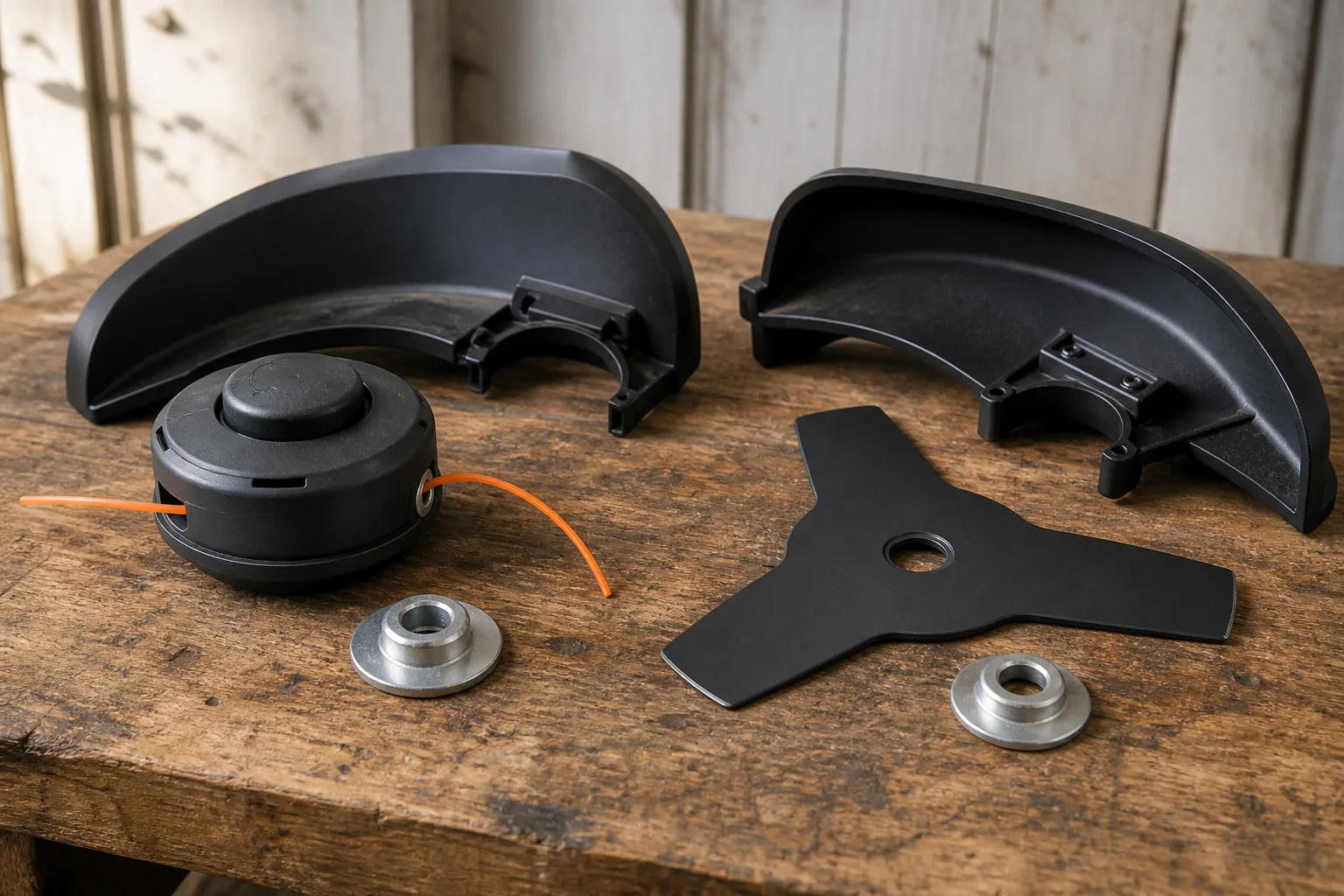
Trimmer line comes in different diameters and profiles. The head and guard specify the permitted range. Installing thicker line than the machine allows can overload the drive, reduce speed, and interfere with the line cutter. A bump-feed head suits frequent trimming when refilling is straightforward.
A metal grass blade cuts dense grass and nonwoody growth. A brush knife is shaped for tougher vegetation. A circular saw blade is intended for certain woody stems within a stated diameter. Each attachment needs the exact guard and mounting hardware required by the machine.
The STIHL trimmer and brush-cutter safety manual separates these blade classes and describes blade thrust with rigid attachments. It warns against contact with rocks, metal, and other hard objects. The selected model manual may impose narrower limits, so never select a blade only because its bore fits the shaft.
Weight and balance change the answer
A light trimmer is pleasant for ten-minute cleanup sessions. The operator carries it mainly through the handles or a simple shoulder strap. That same layout can become tiring during long sweeps through tall grass because the arms support the head and resist rotation.
A purpose-built brush cutter often weighs more but hangs from a full harness. Bicycle handlebars spread the hands and give leverage for controlled side-to-side work. Correct balance lets the machine float near cutting height. Poor balance makes a modest weight feel heavy.
Compare ready-to-work weight. Catalog figures may exclude cutting equipment, guard, fuel, battery, or harness. If possible, wear the complete tool with the motor off and adjust the suspension point. The blade should not swing into the legs when the hands relax. A quick release should be reachable with gloves.
Control around beds, trees, and fences

String line is better suited to detail work, though it can scar bark, cut irrigation tubing, and damage siding. Keep the head level and approach vulnerable plants slowly. A small guard may improve visibility but can expose more of the cutting path and throw more debris.
A blade needs open working room. It should not be used close to chain-link fence, steel edging, rocks, or tree trunks. Blade contact can damage the attachment and create kickout. The wider bicycle handle that improves field control can also be clumsy between narrow beds.
If the goal is clean vegetable-bed paths, plan the edges so a mower or trimmer can reach them. The raised garden bed kit guide covers access space around the structure. Good layout can reduce the need to bring either cutting tool close to crops and irrigation.
Power source does not define the tool category
Both trimmers and brush cutters can use battery or gas power. Some battery powerheads accept a blade-capable attachment. Some gas trimmers are not approved for any rigid blade. The attachment system and manual define the category more reliably than the energy source.
A battery trimmer is convenient for short weekly work. A high-output battery brush cutter can handle serious clearing, but blade load and dense vegetation reduce runtime. Gas suits long remote sessions and fast refueling, with more starting, fuel, exhaust, noise, and engine maintenance. YF-061 will cover that choice in depth without changing the basic trimmer-versus-cutter boundary.
Compare the power system you already own. Shared battery packs can lower total cost, but only if the approved tool meets the vegetation requirement. A bargain bare tool is expensive when it needs two large packs and a rapid charger.
Safety burden rises with rigid blades
Both tools can throw debris. Eye protection, suitable footwear, long clothing, hearing protection, and an exclusion zone remain necessary with line. A rigid blade adds the potential for blade thrust, damaged metal, and more severe contact. The manual may require a face shield, a specific harness, or other protective equipment.
Inspect the work area before each session. Remove wire, bottles, stones, and loose hardware. Keep people and animals outside the stated distance. Stop the machine before clearing wrapped vegetation or checking the head. Remove a battery or disconnect the spark plug as the service procedure directs.
The OSHA landscaping hazard overview identifies struck-by, noise, vibration, electrical, and equipment hazards. It is an occupational resource rather than a homeowner operating manual, but it reinforces why site conditions and protection belong in the purchase decision.
Maintenance and consumables
A string trimmer consumes line. Compare spool access, winding method, head availability, and permitted line sizes. A jam-prone proprietary cartridge can cost more over time than ordinary bulk line. Clean ventilation openings and inspect the guard and head after impacts.
A brush cutter needs blade inspection, sharpening or professional service, correct balance, and gearbox care. A cracked, bent, or badly worn blade must be replaced. Keep the mounting hardware together and use the locking method shown in the manual. Dull or unbalanced metal can increase vibration and reduce control.
Both machines need power-system care. Gas adds filters, spark plugs, fuel management, and winter storage. Battery adds pack inspection, temperature limits, charging, and long-term capacity loss. Parts availability matters more than a long accessory list that disappears next season.
How the tool fits the rest of the yard system
A brush cutter clears standing vegetation but does not process the debris. Thick branches may need separate handling. The wood chipper versus chipper shredder guide distinguishes woody branches from leafy material. For smaller branch work near an outlet, see the electric wood chipper buying guide.
A trimmer finishes where a mower stops. It should not replace the mower over large maintained areas. If the lawn is already suitable for automation, the robotic lawn mower guide explains slope, passage, and obstacle constraints. The robot mower installation guide can help plan edges that need less manual cleanup.
Soil work is another separate job. A brush blade cuts stems above ground; it does not prepare a seedbed. For compacted soil, compare the tiller versus cultivator guide instead of forcing a cutting tool into the dirt.
Which one should you buy?
Buy a string trimmer if most work is grass, soft weeds, bed edges, and short sessions around obstacles. Favor easy line loading, low ready-to-work weight, precise control, and a power system that finishes the weekly route.
Buy a brush cutter if dense grass, brambles, or approved woody stems return often enough to justify a rigid attachment. Favor a straight blade-capable shaft, matched guards and hardware, a full harness, comfortable handlebars, serviceable gearbox, and local blade support.
Buy both, or a verified multi-attachment system, when the property has a maintained lawn near the house and rough boundaries farther out. Check every attachment in the current manual. Marketing phrases such as “2-in-1” do not prove that the included guard and harness are suitable for all blades shown in a listing.
Decision checklist
- List the vegetation and obstacles that return each season.
- Choose line for detail work and only approved blades for heavier material.
- Verify shaft, gearbox, guard, hardware, handle, and harness compatibility.
- Compare ready-to-work weight, balance, sound, vibration, and runtime.
- Plan debris control, protective equipment, and the manual’s exclusion zone.
- Check line, blade, gearbox, fuel or battery, and replacement-part costs.
- Rent for one-time reclamation if long-term maintenance will be light.
Compare brush cutters and string trimmers on Amazon (paid link). Before ordering, read the exact manual and verify approved attachments, guards, mounting hardware, harness requirements, cutting limits, total working weight, and service parts.