Disclosure: This page contains affiliate links. As an Amazon Associate, Yard Foundry earns from qualifying purchases.
This is an editorial comparison based on machine layouts and published guidance. Yard Foundry did not run the same soil test with every tiller and cultivator model.
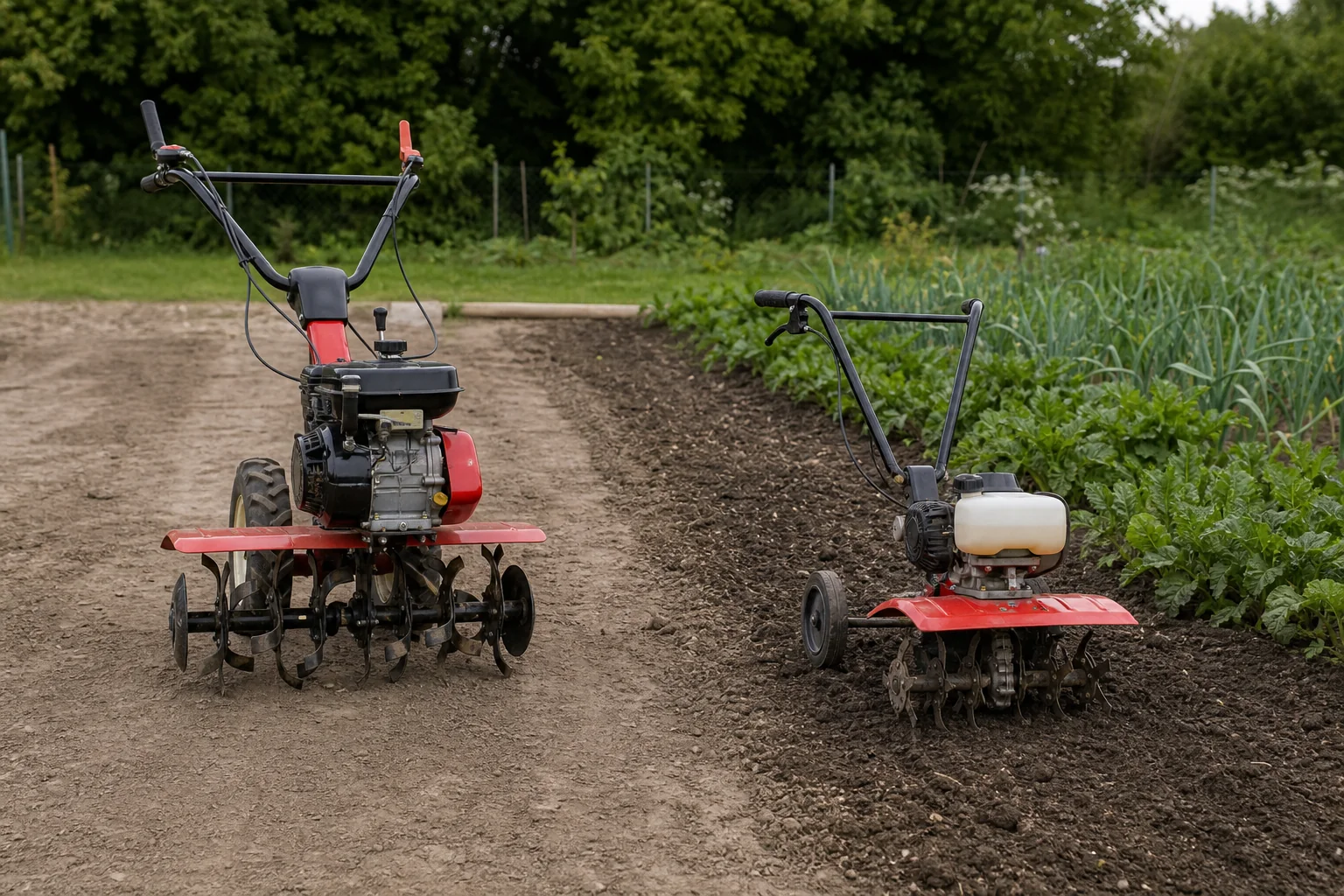
In a tiller vs. cultivator decision, choose the tiller for opening compacted ground and deeper primary preparation. Choose the cultivator for shallow mixing, seedbed refinement, and weed control in soil that has already been worked. A compact cultivator is easier to store and steer, but it is not a small substitute for a heavy rear-tine machine.
What people usually mean by tiller
A rear-tine tiller places driven tines behind the wheels. The wheels control travel while the tines break soil. Weight and traction help the machine work hard ground without depending entirely on the operator to hold it back.
Front-tine tillers are lighter and more maneuverable, but they still belong to the soil-opening side of the category. Product names are inconsistent, so inspect tine location, drive system, depth control, and machine weight rather than relying on the word printed on the listing.
What a cultivator does well
A cultivator uses smaller tines and a narrower working width. It loosens a prepared surface, mixes compost or fertilizer into the upper layer, and disturbs small weeds between wider crop rows. Many models can be carried by one person and stored on a shelf or against a wall.
The light weight that makes a cultivator convenient also lets it bounce on hard, dry soil. Repeated passes may polish or pulverize the top without loosening the compacted layer below.
Match the tool to the first job
| Job | Better starting tool | Reason |
|---|---|---|
| Opening an old lawn for a large plot | Rear-tine tiller | Weight, traction, and deeper working range |
| Mixing compost into an established bed | Cultivator | Better control in loose soil |
| Working between planted rows | Narrow cultivator | Smaller width and easier turning |
| Breaking rocky or root-filled ground | Site preparation first | Either machine can be damaged or become difficult to control |
Depth is not always better
Deep aggressive tillage can bring dormant weed seed to the surface and break stable soil structure. The University of Minnesota Extension discusses lower-disturbance options in its guide to reducing garden tillage. Use the machine because the site needs it, not because a yearly pass has become routine.
Never till wet soil that smears into a ribbon or large shiny clods. Wait until a handful crumbles under moderate pressure.
Control and transport
A rear-tine tiller needs enough turning room at row ends. Reverse gear helps reposition the machine, but follow the manual and keep feet away from the tine path. Check loading weight, ramp rating, tie-down points, and whether the handle folds for storage.
A cultivator can fit between beds and around permanent paths. Corded electric models introduce cord management. Battery models trade fuel maintenance for battery storage and replacement planning.
Rent or buy?
Rent a heavy tiller when the main job is opening one new plot. Ownership makes more sense when the property has enough recurring preparation work, safe storage, and a realistic maintenance plan. A cultivator often earns its storage space more easily because it handles frequent light tasks.
Buying checklist
- Identify the hardest soil condition the machine will face.
- Check tine position, rotation, and driven-wheel behavior.
- Compare working width with bed and gate dimensions.
- Confirm transport weight and storage footprint.
- Read the procedure for clearing wrapped roots and debris.