Disclosure: This page contains affiliate links. As an Amazon Associate, Yard Foundry earns from qualifying purchases.
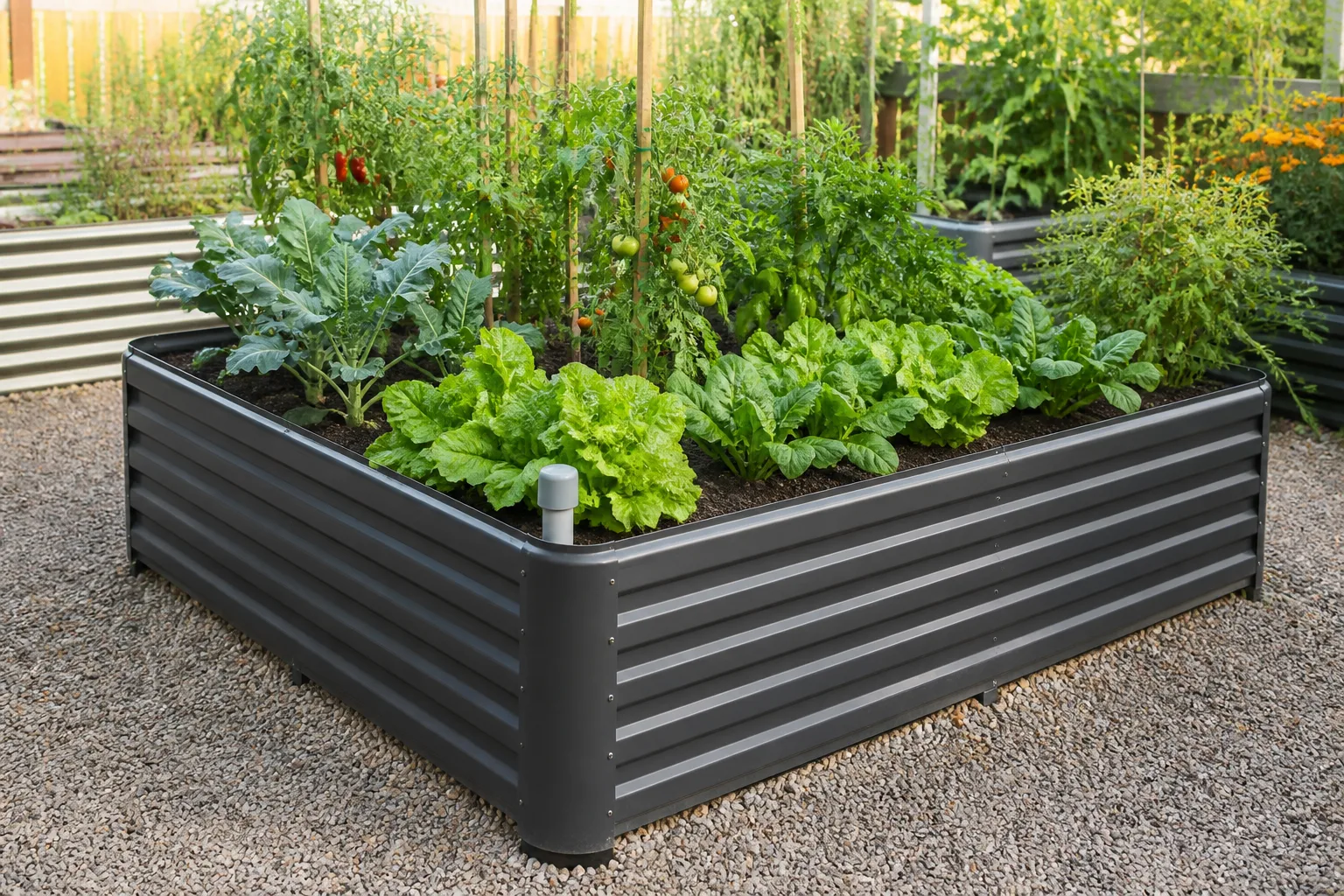
A good self-watering raised bed kit is a sub-irrigated planter with a serviceable water reservoir, a dependable path for water to wick into the root zone, and an overflow that prevents the bed from becoming a pond. The reservoir can extend the time between watering visits, but it does not make the bed automatic. Capacity, soil depth, fill access, drainage, and the crop’s root pattern still decide whether the system works in your garden.
This is a research based buying guide, not a hands-on product test. Yard Foundry has not assembled, filled, or measured the kits discussed here. Reservoir volume, usable soil depth, material claims, load limits, accessories, and warranty terms must be checked for the exact model.
Self-watering raised bed kit basics
Most kits use a sealed or lined lower reservoir. A perforated deck, soil-filled columns, fabric strips, or molded cones connect that water to the growing medium. Capillary action moves water upward as the root zone dries. A fill tube lets you add water without soaking the surface, while an overflow fitting sets the highest safe water level.
The idea resembles nursery subirrigation. A USDA Forest Service technical note on bottom watering explains that capillary action can draw water from a lower supply into container media. It also shows why automation and even delivery depend on the system layout. A garden kit applies the principle differently, so its own assembly diagram remains the controlling source.
| Kit detail | Why it matters | What to verify |
|---|---|---|
| Reservoir volume | Sets the stored-water buffer | Usable gallons after supports and wicking chambers take up space |
| Root-zone depth | Limits crop choice and soil volume | Distance from the deck or reservoir top to the soil surface |
| Wicking interface | Moves water into the growing mix | Number, size, spacing, and service access of wicks or columns |
| Overflow | Protects roots from prolonged saturation | Outlet height, screen, direction, and ability to drain away safely |
| Fill tube and gauge | Makes refilling and checking easier | Opening size, cap, debris protection, and replaceability |
Look past the reservoir gallon rating
A large gallon figure looks reassuring, yet runtime depends on planted area, weather, crop size, and how much of the listed volume is usable. A reservoir divided by structural ribs or wicking cups may hold less than a simple length times width calculation suggests. Ask whether the capacity is measured to the overflow level and whether the bed ships with a level indicator.
To make a rough comparison, divide usable reservoir gallons by bed area in square feet. This does not predict an exact refill interval. It simply reveals whether two beds with similar footprints store meaningfully different amounts. A deep reservoir also subtracts from soil depth unless the overall bed is taller.
Summer demand can be substantial. Oregon State’s rainwater harvesting guide uses about 0.62 gallon for one inch of water over one square foot and illustrates how quickly a raised bed can consume stored water. Rain, shade, mulch, crop canopy, soil, and local climate change the result. Treat any listing that promises a fixed number of unattended days as a best-case claim until the assumptions are visible.
Root-zone depth can shrink more than expected
Overall wall height is not the planting depth. Subtract the reservoir, false floor, required air gap, and any unfilled lip. A 24-inch-tall product may offer a much shallower root zone. That can be fine for lettuce and herbs, but limiting for deep-rooted crops or plants that need stable support.
Compare the usable dimension with the crop plan before buying soil. The raised bed depth guide separates framed height from rootable depth and covers site drainage. Then enter the actual internal length, width, and soil depth in the raised bed soil calculator. Do not pay to fill the reservoir zone with growing mix.
Raised beds behave like large containers and often dry faster than surrounding soil. The University of Minnesota Extension raised bed guide recommends a suitable topsoil and plant-based compost mix rather than filling the whole bed with potting soil. A self-watering kit may specify a lighter, more capillary mix. Follow that specification when it conflicts with a general raised-bed recipe.
Wicking design and soil compatibility
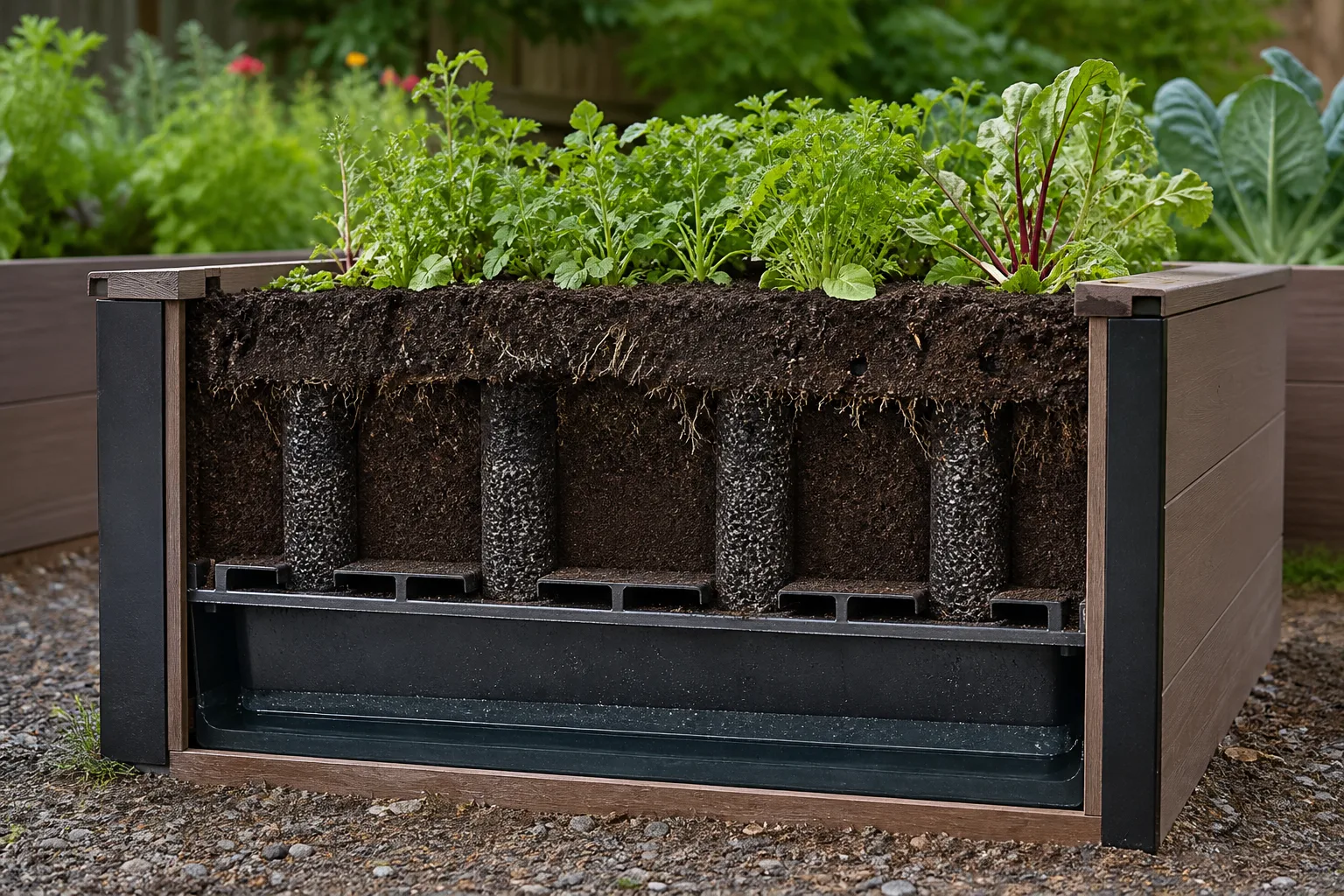
Water will not climb indefinitely. Fine pores can lift water higher but may restrict air and drainage. Coarse media drains readily but may fail to maintain a continuous capillary path. The kit should pair a tested maximum soil depth with a clear medium recommendation.
Systems that use soil-filled cones or columns need firm contact between the wick and the main bed mix. Large dry gaps interrupt the path. Fabric wicks are easier to replace in some designs but can clog, shift, or deteriorate. A full-width capillary mat spreads water differently from a few small cups.
Look for an assembly cross-section that shows where soil belongs. If the instructions only say “add soil,” ask the manufacturer for a media range and the distance water is expected to move. Garden soil shoveled straight from the yard can compact in a container. Very barky mixes may bridge poorly. Changes to the recommended mix can alter both wicking and aeration.
The overflow is a safety feature
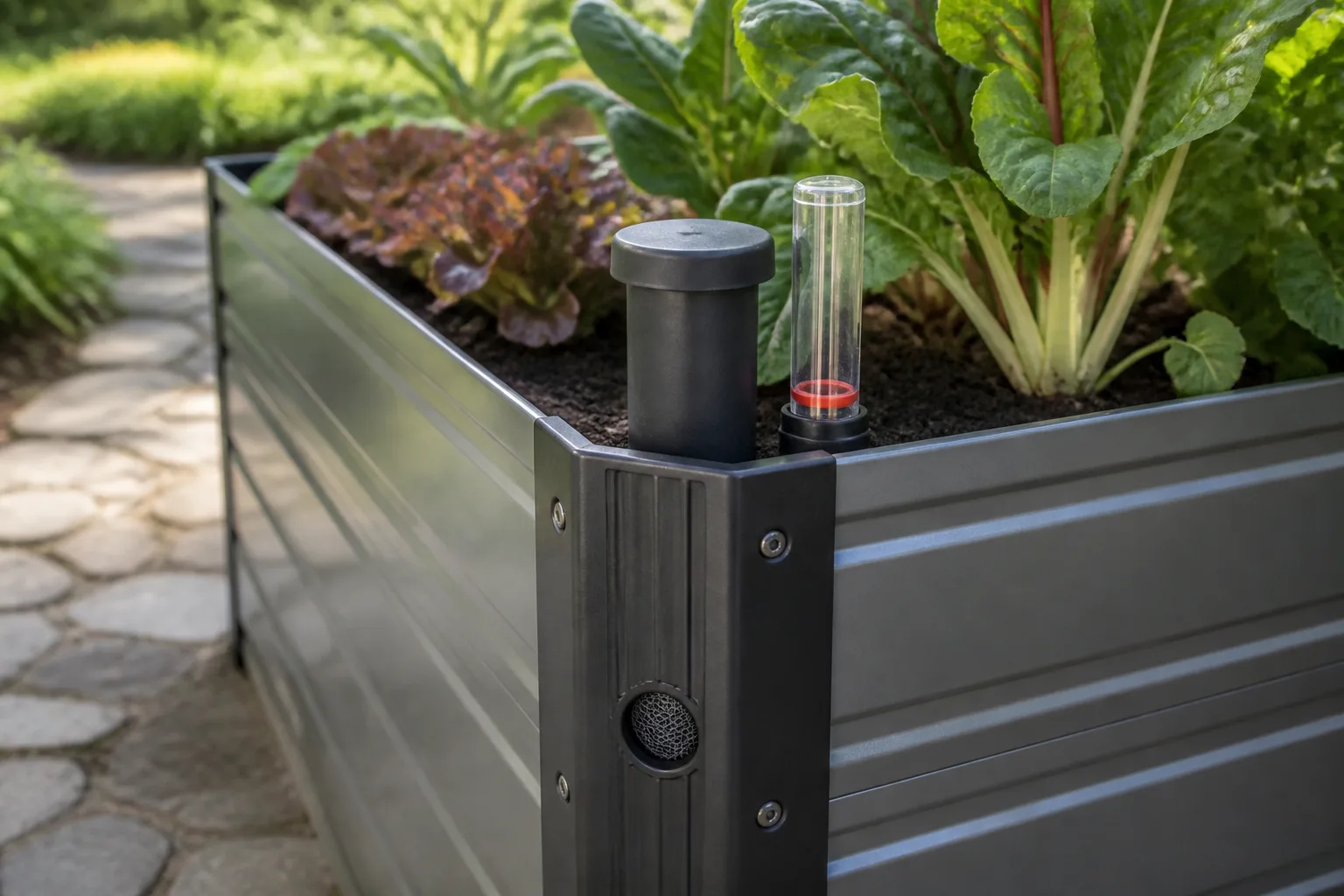
Rain still lands on the soil surface. Without an open overflow, the reservoir can rise into the root zone and displace air. Penn State Extension notes that waterlogged container soil makes it difficult for roots to breathe. Its container vegetable guidance emphasizes a path for excess water to leave.
Inspect the overflow diameter and where it discharges. A tiny hole can clog with roots or debris. An outlet that drains against a deck leg can cause staining or rot. A removable screen or accessible elbow is easier to clear than a hidden fitting behind a liner. In mosquito-prone areas, fill and overflow openings should be capped or screened without blocking water flow.
Cold climates add another question. Water expands when it freezes. The manual should say whether to drain the reservoir, remove the gauge, disconnect tubing, or store components for winter. Do not assume a thick plastic tank is freeze tolerant.
Frame strength and long-term access
Wet soil and stored water create a heavy structure. One gallon of water weighs a little more than eight pounds before soil and plants are counted. Long side panels need bracing. The reservoir deck must support the soil column without sagging into the water space.
Material choice still matters. The wood versus metal raised bed comparison covers rot, corrosion, heat, reinforcement, and repair. A liner can protect wood from constant wetting, but a punctured liner is harder to reach after the bed is full. Metal sides need protected edges and corrosion-resistant fasteners near overflow fittings.
Ask how to inspect the reservoir after installation. A removable corner panel, cleanout port, or lift-out gauge can reveal roots and sediment. If every repair requires unloading a cubic yard of soil, a five-dollar fitting becomes an expensive problem. Search the parts catalog for fill caps, gauges, overflow fittings, liner patches, and deck supports before purchase.
Self-watering does not mean no top watering
Fresh seed and shallow-rooted transplants may not reach the moist lower zone. They often need surface watering until roots establish. A dry new mix also needs to be moistened from above so it can make capillary contact. Later, rainfall may be enough to pause reservoir filling.
Check moisture in the root zone rather than trusting a float alone. A gauge reports reservoir level, not whether the soil is evenly wet. Plants near a small wick can receive more water than plants at the far corner. Salt can accumulate when water leaves mainly through plants and evaporation, especially under a roof where rain never flushes the mix. The manual should explain periodic top watering, drainage, and fertilizer use.
If your garden already has a reliable pressure source, conventional drip may be simpler to inspect and repair. The raised bed drip irrigation layout covers emitters, zones, and line placement. A reservoir bed makes more sense when stored water, accessibility, or reduced watering frequency solves a real site constraint.
Kit, retrofit insert, or conventional raised bed
A complete self-watering kit offers matched walls, reservoir, deck, fill tube, and overflow. It costs more to ship, but component compatibility is clearer. A retrofit insert can convert an existing bed if dimensions and wall strength match. Measure the inside, including corner posts and braces, because nominal bed dimensions can be misleading.
A conventional bed with drip leaves the full depth for soil and is easier to flush. It also depends on a pressurized supply or gravity system. An olla is a small, low-tech alternative for a limited area. None of these choices is universally superior. The right one follows the water source, crop plan, maintenance tolerance, and length of time the bed must run between visits.
Use the premium raised garden bed kit guide for general wall, hardware, and access decisions. The raised bed cost calculator can compare the full installed budget, including soil and irrigation rather than the kit price alone.
Pre-purchase checklist
- Confirm usable reservoir gallons to the overflow level.
- Calculate gallons per square foot of planted area.
- Verify actual root-zone depth above the reservoir deck.
- Read the required soil or growing-medium specification.
- Inspect wicking columns, fill tube, level gauge, overflow, and mosquito screens.
- Check sidewall bracing, deck load support, liner access, and replacement parts.
- Plan top watering for seedlings and a safe overflow route.
- Read winter draining, cleaning, fertilizer, and flushing instructions.
Compare self-watering raised bed kits on Amazon (paid link). Before ordering, confirm internal dimensions, usable soil depth, reservoir capacity, overflow height, fill access, media requirements, winter procedure, parts availability, and the weight of the filled system.