Disclosure: This page contains affiliate links. As an Amazon Associate, Yard Foundry earns from qualifying purchases.
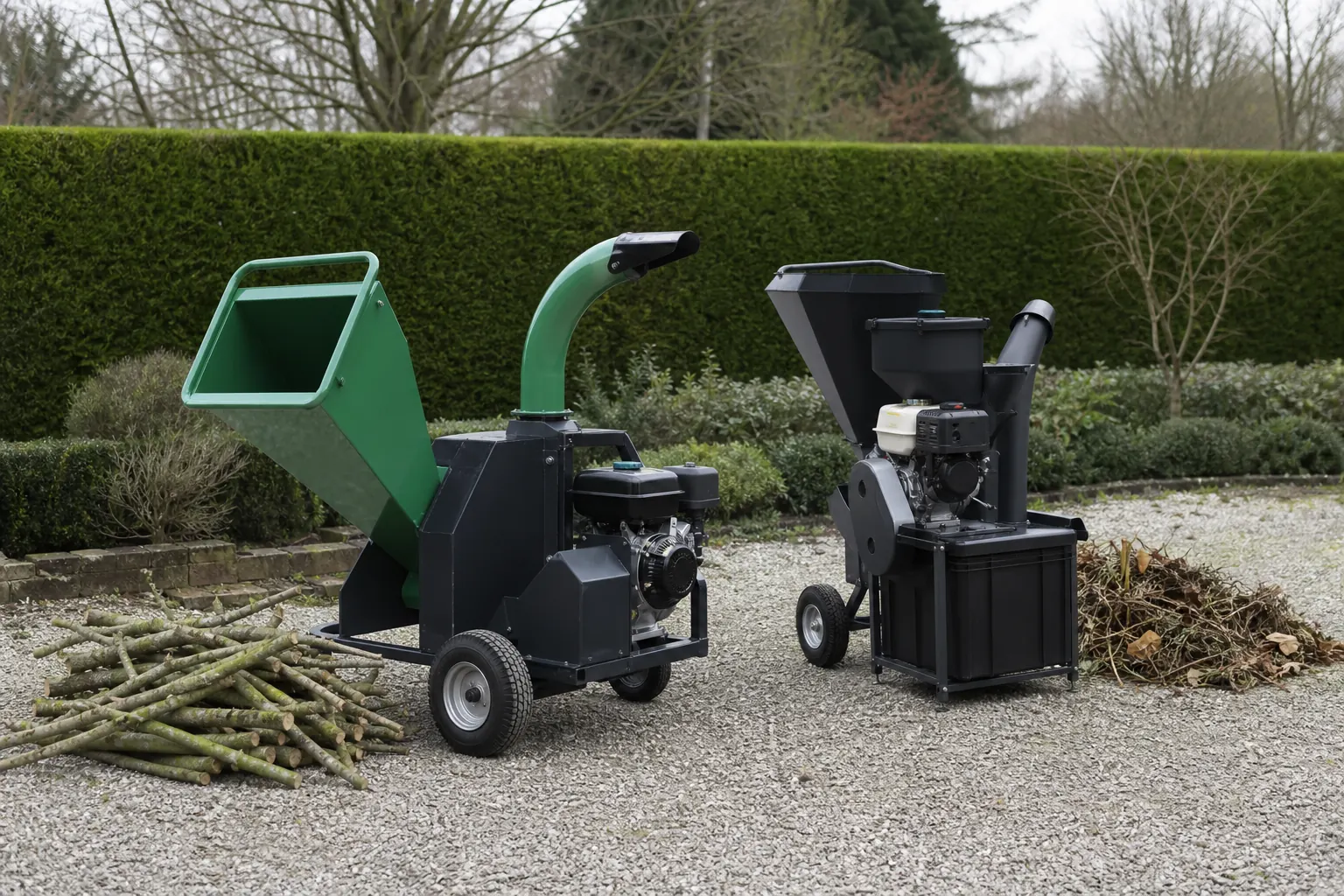
In a wood chipper vs chipper shredder decision, choose a wood chipper when most of the pile is woody branches near the machine’s rated diameter. Choose a chipper shredder when the pile mixes smaller branches with leaves, hedge trimmings, dry stalks, and other light garden debris. The second hopper on a chipper shredder is useful, but it also adds weight, cleaning work, and another feed path that can clog. Buy for the material you actually produce, not the widest list of materials in an advertisement.
This is a research-based comparison, not a hands-on product test. Yard Foundry has not operated the machines discussed here. Capacities, feed rules, and safety procedures must be confirmed in the manual for the exact model.
The short answer by yard-waste type
| Your recurring pile | Better starting point | Why |
|---|---|---|
| Straight limbs and pruned branches | Wood chipper | A dedicated chipper feed path is built around woody material. |
| Leaves, dry flower stalks, thin twigs, and brush | Chipper shredder | The broad shredder hopper accepts loose, light material more conveniently. |
| Mostly branches, with a few leaves still attached | Wood chipper | A capable chipper can process leafy limbs when fed at the rate allowed by its manual. |
| Mixed seasonal cleanup from beds and hedges | Chipper shredder | Separate chipper and shredder inlets reduce hand sorting. |
| Large storm limbs above residential capacity | Rental or tree service | Buying a small machine does not make oversize material safe or practical. |
The names are not perfectly standardized. Some sellers use “shredder” loosely, and a product called a chipper shredder may still have only a modest branch limit. Inspect the machine layout and its manual. A true combination unit normally has a narrow chipper chute for branches and a wider hopper for light material.
What a dedicated wood chipper does well
A wood chipper uses a knife on a flywheel, disc, or drum to slice wood into chips. Its strength is a steady stream of branches that fall inside the stated diameter and material limits. The feed opening is shaped to guide limbs toward the cutting mechanism. Larger towable machines may add hydraulic feed rollers; compact residential units often rely on gravity or self-feeding action from the knife.
Manufacturer instructions show why the distinction matters. In its support material, DR Power describes its wood chipper as a wood-only machine and tells users not to force material into the hopper. The same guidance notes that green wood generally processes more easily than dry wood and that hardwood is harder work than softwood. A diameter number alone cannot capture those differences.
A chipper makes sense when pruning trees and large shrubs supplies most of the feedstock. It also produces the coarser chips many gardeners want for paths, informal mulch, or a carbon-rich compost ingredient. Output texture varies with knife design, screen, feed rate, species, and moisture, so do not assume every machine creates a uniform decorative mulch.
If you already know a dedicated chipper fits, the electric wood chipper buying guide covers the practical limits of corded residential machines. For larger piles, the electric versus gas wood chipper comparison separates power-source tradeoffs from the chipper-versus-shredder question.
What the shredder side adds
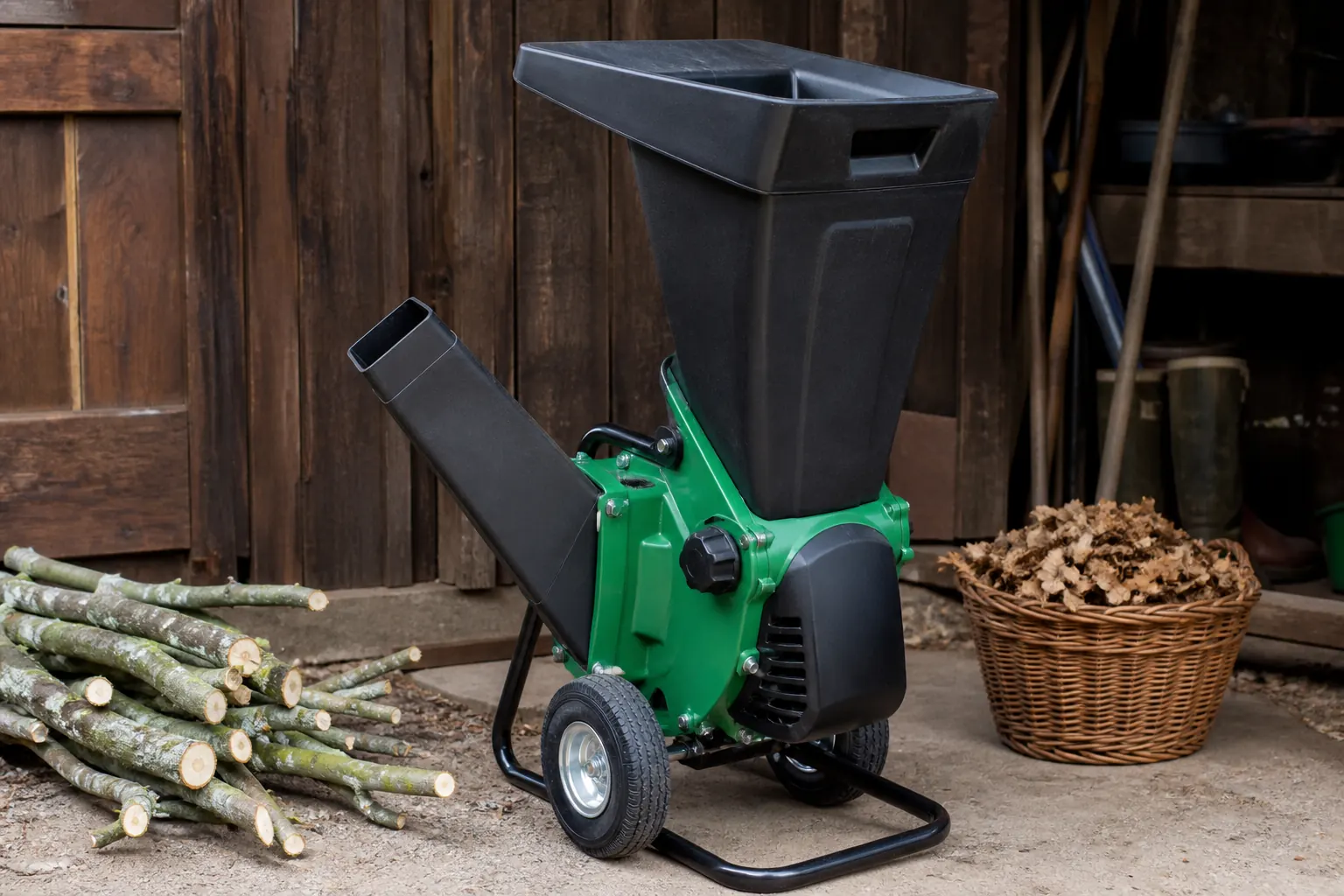
A chipper shredder combines a branch chute with a broad hopper that feeds light debris to hammers, flails, or a similar shredding mechanism. The extra inlet is the point. You can drop in dry leaves, small prunings, spent plant stalks, and thin twigs without trying to line them up as branches.
One current combination-machine manual illustrates the split clearly. The Harbor Freight chipper shredder instructions allow branches up to 3 inches in the chipper chute but only material up to 1/2 inch in the shredder hopper. Those figures apply to that model, not to the category as a whole. They do show why a large hopper is not permission to throw in a large branch.
The shredder path is most valuable during repeated cleanup, not one dramatic storm. Think bags of dry leaves, hedge clippings, vegetable stems after harvest, and small twiggy brush. Shredding reduces volume and exposes more surface area for composting. Very wet, stringy, muddy, or fibrous material can still bridge or clog. Roots carrying soil and stones can damage cutting parts. Check the manual before feeding vines, palm fronds, bamboo, pine needles, kitchen scraps, or anything damp enough to mat.
Build a pile inventory before comparing machines
Walk the property and estimate what lands in the waste pile over a normal year. A one-time branch pile can make a chipper look essential even when the other eleven months produce leaves and herbaceous trimmings. The reverse also happens after someone buys a combination unit for autumn leaves, then discovers that their real problem is several cords of thick hardwood limbs.
Sort the material into four rough groups:
- Woody limbs: note typical diameter, maximum diameter, length, forks, and hardness.
- Fine woody brush: hedge clippings, twiggy tops, and multi-stem brush.
- Dry light debris: leaves, dry stalks, pine cones, and dead annuals.
- Difficult material: wet weeds, tangled vines, fibrous fronds, muddy roots, and anything containing wire, stone, or metal.
Choose around the first two groups that account for most of the volume and labor. Difficult material may belong in municipal green-waste collection or a different processing method even if a marketing page suggests otherwise.
Rated branch diameter is a ceiling, not a daily target
A model advertised for 3-inch branches may accept a straight, freshly cut 3-inch softwood limb under favorable conditions. A dry hardwood crotch of the same nominal diameter can be far more demanding. Side branches catch on a narrow chute. Dull knives slow self-feeding. The engine or motor loses speed when feed rate is too high.
For recurring work, leave practical margin below the published maximum. If most branches measure close to the ceiling, move up a machine class or rent a commercial chipper. Running at the limit all afternoon is different from processing one occasional limb.
Also check where the manufacturer measures diameter. Forks and knots create a much larger effective cross-section than a straight tape-measure reading. Chute shape can be as important as the round capacity number.
Compare throughput without trusting reduction ratios alone
Reduction ratios such as 10:1 or 20:1 describe claimed volume reduction under particular conditions. They do not tell you how fast a mixed pile will move, how often the screen clogs, or whether the output texture suits your use. A machine that accepts armloads of leaves may still slow down if the material is wet. A powerful branch chipper may process clean limbs quickly but force you to bag leaves separately.
Useful comparison details include:
- Chipper chute opening and the shape of its throat
- Shredder hopper opening and permitted material thickness
- Discharge bag, chute, or collection-container arrangement
- Access to knives, flails, screen, and jam-clearing points
- Replacement knife, belt, screen, and flail availability
- Machine weight, wheel size, balance, and storage footprint
- Cord requirement for electric models or fuel and oil service for gas models
Read the operating section of the manual before ordering. A product page can tell you that a hopper exists. The manual tells you what can go into it.
Storage and movement can decide the purchase
Combination machines are often taller and more top-heavy because of the large shredder hopper. A compact unit may roll easily on pavement but dig into soft soil on narrow wheels. Measure gates, shed doors, steps, and the route from storage to the work area. Record the machine’s assembled dimensions, not its shipping-box dimensions.
Noise and debris also change where the machine can work. Chippers require eye and hearing protection, generous clearance, and a controlled discharge area. An electric unit avoids stored gasoline and engine maintenance, but it needs a suitable outdoor circuit and correctly sized extension cord if the manufacturer permits one. Gas units travel farther from an outlet but bring fuel storage, exhaust, seasonal service, and more noise.
Renting may beat owning
A machine used for one weekend after winter pruning can occupy a shed for the rest of the year. Ownership becomes easier to justify when the yard generates repeat piles, transport to a rental counter is awkward, or you need to work in short sessions as material appears.
Before buying, compare purchase price, expected years of use, annual maintenance, knife sharpening, storage, rental day rate, delivery, and how many rental days a season you would realistically need. The wood chipper rent-versus-buy calculator keeps that arithmetic separate from the machine-type decision. Yard Foundry’s garden tools and calculators hub collects the other planning tools.
Safety is not a feature comparison
Both machine types have fast rotating parts, forceful discharge, noise, and serious entanglement hazards. A combination unit is not safer because one hopper accepts smaller material. Never reach into a hopper or chute, bypass a guard, or clear a jam while energy remains in the machine.
NIOSH wood chipper guidance emphasizes testing safety controls, following the exact manufacturer’s procedures, keeping hands and feet outside the infeed area, standing in the position specified for the machine, and using eye and hearing protection. Its workplace guidance is written for professional equipment, but the hazards are a sober reminder for residential owners. Shut down, disconnect the spark plug or power source as directed, and wait for every moving part to stop before inspection.
Remove metal, stones, soil, rope, and wire from the pile. Keep children, pets, and bystanders away. If a branch exceeds the manual’s size or shape limit, set it aside rather than trying to force it through.
A practical buying verdict
Pick a dedicated wood chipper when at least three quarters of the recurring pile is branch wood and chip quality matters more than leaf reduction. Pick a chipper shredder when mixed light debris is a major part of every cleanup and the permitted shredder materials match what your yard produces. Rent when the job is rare, unusually large, or above residential capacity.
Compare wood chippers and chipper shredders on Amazon (paid link). Open each candidate manual and verify both feed paths, realistic branch margin, replacement parts, assembled size, and shutdown procedure before buying.