Disclosure: This page contains affiliate links. As an Amazon Associate, Yard Foundry earns from qualifying purchases.
This is an editorial equipment comparison, not a controlled test of every machine. Branch capacity and operating procedures must be verified in the manual for the exact model.
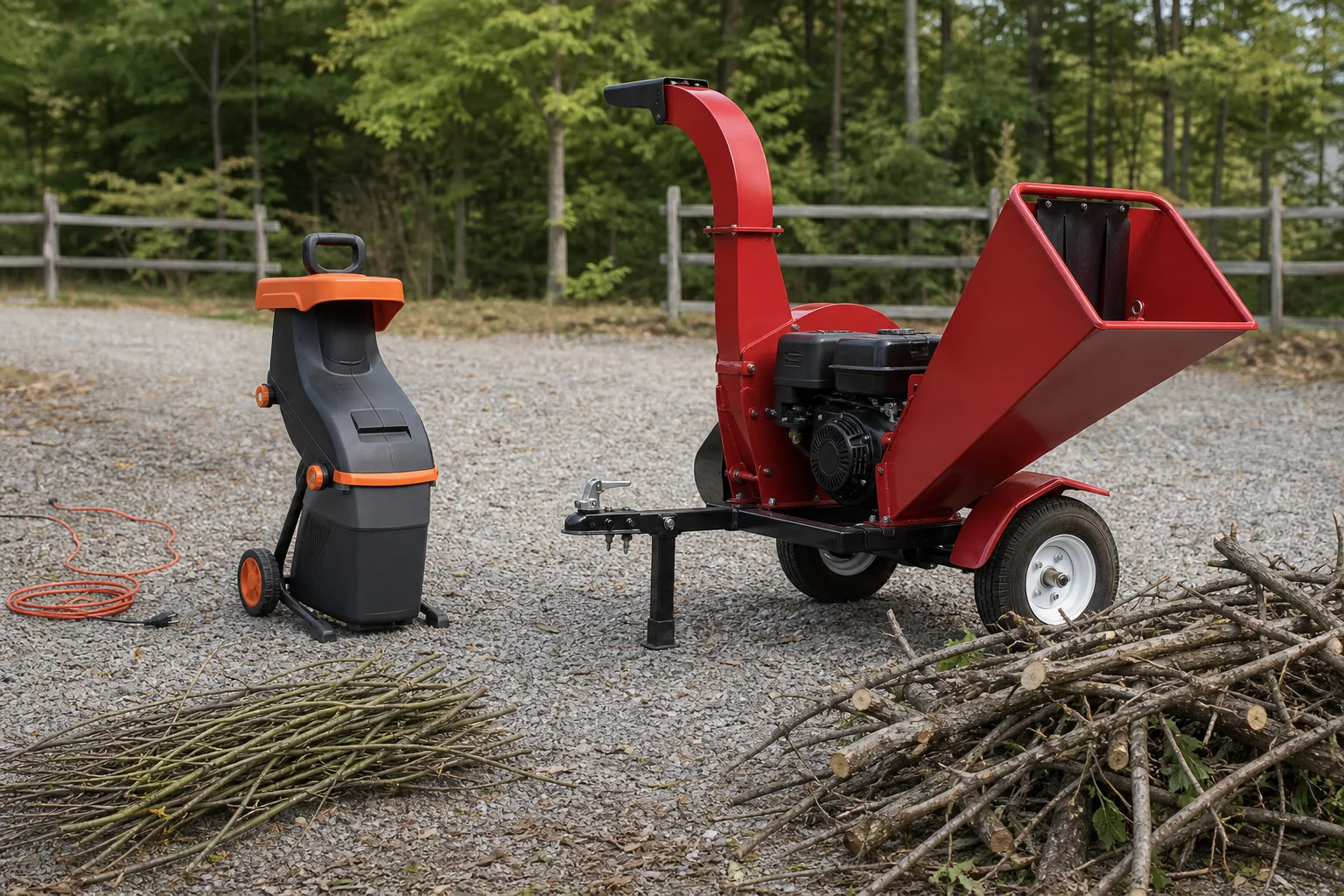
In an electric vs. gas wood chipper comparison, electric is the better fit for frequent piles of thin, relatively straight pruning stems near a suitable outlet. Gas makes sense for larger properties, thicker woody material, and work far from power. Neither homeowner category is intended for roots, soil-covered wood, vines, rocks, or material outside the manual.
Electric chipper strengths
Electric machines start easily, avoid stored gasoline, and usually need less engine maintenance. They are lighter and easier to move through a gate or store in a small shed. They also stop being convenient when the work area requires an unsuitable extension cord or the pile contains forked hardwood close to the advertised maximum.
Use only the cord gauge and maximum length allowed by the manual, on a protected circuit appropriate for outdoor equipment. Voltage drop can reduce performance and overheat the cord.
Gas chipper strengths
A gas engine supports higher power and mobility. Larger homeowner machines may accept heavier branches and process a mixed pruning pile faster. The price includes fuel handling, oil changes, seasonal storage, engine noise, exhaust, and a heavier chassis.
Do not run a gas chipper in a shed, garage, greenhouse, or other enclosed space. Carbon monoxide can accumulate even when a door is open.
Advertised diameter is a ceiling
A straight green branch and a dry forked hardwood limb of the same diameter do not feed alike. Knots, side branches, species, moisture, and cutter condition change the load. Choose capacity around the routine pile, not the largest branch found once a year.
Keep a lopper or pruning saw nearby to remove forks and trim side shoots. Material that needs repeated forcing is telling you something. Stop and reassess rather than leaning into the feed chute.
Noise and neighbors
Electric chippers are not quiet, but they remove engine noise and idle periods. Cutting impact still warrants hearing protection when the manual calls for it. Gas models carry farther through a neighborhood, so work-hour restrictions may matter.
Mobility and storage
Compare wheel diameter, handle position, balance, and actual assembled weight. A powerful machine that cannot cross a slope or fit through the storage door will be frustrating. Gas equipment also needs a safe fuel-storage plan.
Safety does not change with power source
OSHA identifies caught-in contact, thrown material, hearing loss, and maintenance hazards in its chipper safety guidance. A homeowner machine is smaller, but rotating knives still require guards, eye and hearing protection, controlled clothing, and complete de-energization before clearing a jam.
For electric equipment, unplug and control the plug before access. For gas equipment, follow the manual’s shutdown and spark-plug procedure. Wait for the cutting system to stop completely.
Choose electric when
- The normal pile is thin pruning material.
- A compliant outdoor circuit is close to the work area.
- Low storage weight and simple starting matter.
- You can trim forks before feeding.
Choose gas when
- The property produces recurring heavier woody material.
- The work happens far from electrical service.
- You have safe transport, fuel, and maintenance arrangements.
- The machine’s feed design matches the actual branch pile.