Disclosure: This page contains affiliate links. As an Amazon Associate, Yard Foundry earns from qualifying purchases.
This is a research-based overview of heat-loss and moisture-control methods. It is not a heating-load calculation or an installation specification for electrical and fuel-burning equipment.
Good greenhouse insulation for winter starts with air leaks, not with covering every transparent surface. Seal gaps that bypass the glazing, add removable insulation where light loss is acceptable, and retain controlled ventilation. A tightly wrapped greenhouse can still drip with condensation if moist air has nowhere to leave.
Find the uncontrolled leaks first
Inspect door weatherstripping, panel edges, ridge caps, louver frames, utility penetrations, and the joint between frame and foundation. A deliberate vent can be closed or controlled. A random gap leaks whenever wind pressure changes.
Use sealants and gaskets compatible with polycarbonate, aluminum, treated wood, and ultraviolet exposure. Do not block drainage channels in multiwall panels or seal combustion-air openings required by a heater.
Insulate the surfaces that cost the least light
The north wall receives little useful direct sun in many northern locations, so an opaque insulated panel there may save heat with a smaller lighting penalty. Kneewalls, doors, and foundation edges are other sensible targets. Reflective interior surfaces can redirect some light, but keep combustible material away from heaters and hot flues.
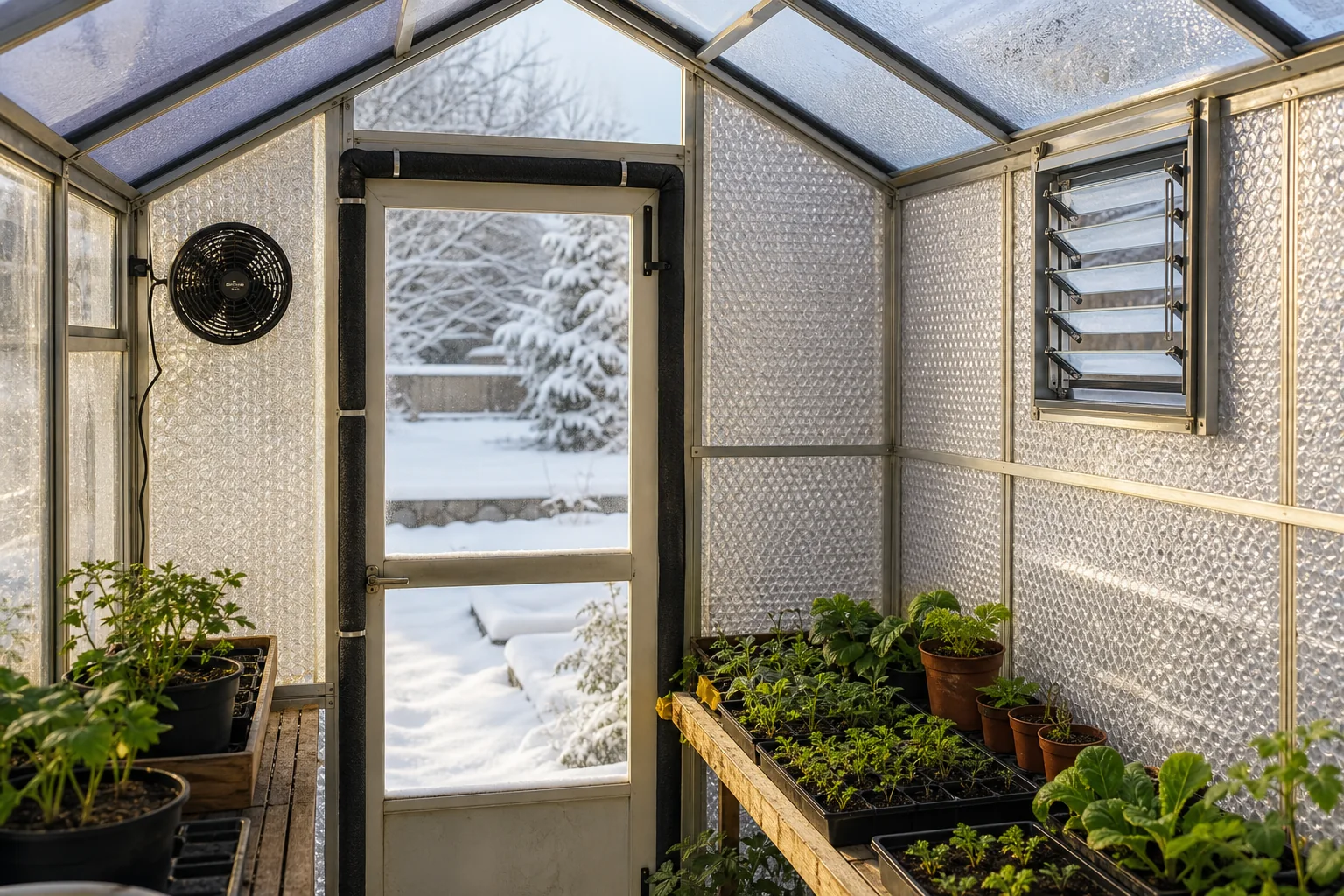
Translucent greenhouse bubble insulation adds an air layer while admitting diffuse light. Use material intended for greenhouse conditions, fasten it without crushing every air pocket, and leave vents, electrical panels, and moving hardware accessible.
Thermal curtains and night covers
A retractable thermal curtain reduces the volume and glazing area exposed to the heated zone at night. It must open reliably in the morning before sunlight traps heat below it. Wet fabric or plastic folded into a tight bundle can support mold, so allow the curtain to dry.
For a small hobby greenhouse, removable insulated panels may be simpler on the coldest wall or over unused glazing. Label panels and provide a dry storage place for daytime removal.
Moisture does not disappear when heat is retained
Plants, damp soil, and irrigation continue adding water vapor. When humid air touches cold glazing or frame members, water condenses. Insulation can warm the interior surface, but it can also conceal wet cavities if installed carelessly.
Use a hygrometer, water early enough for foliage and floors to dry, and run circulation fans gently. Vent during the warmest part of a winter day when outdoor conditions allow. The University of Minnesota explains the general relationship between insulation, vapor control, and condensation in its building ventilation guidance; a greenhouse has different loads, but the moisture principle is the same.
Do not insulate around a bad heater plan
Calculate heat loss after proposed insulation changes, then size the heater. Unvented combustion adds moisture and combustion products to the greenhouse. Clearances, fuel storage, electrical circuits, and ventilation must follow the appliance manual and local rules.
A sensible order of work
- Repair damaged glazing and door hardware.
- Seal unintended gaps while preserving drains and required air openings.
- Insulate opaque walls, the perimeter, and low-value glazing areas.
- Add removable translucent insulation or a thermal curtain.
- Monitor temperature and humidity through several cold nights.
- Adjust ventilation and heat based on measured conditions.
If the structure itself is still being selected, begin with our polycarbonate greenhouse kit guide. Strong doors, usable vents, and replaceable panels make winter upgrades much easier.