Disclosure: This page contains affiliate links. As an Amazon Associate, Yard Foundry earns from qualifying purchases.
This guide explains greenhouse ventilation concepts using published engineering and Extension guidance. It does not replace the fan manufacturer’s performance data or a design for a commercial greenhouse.
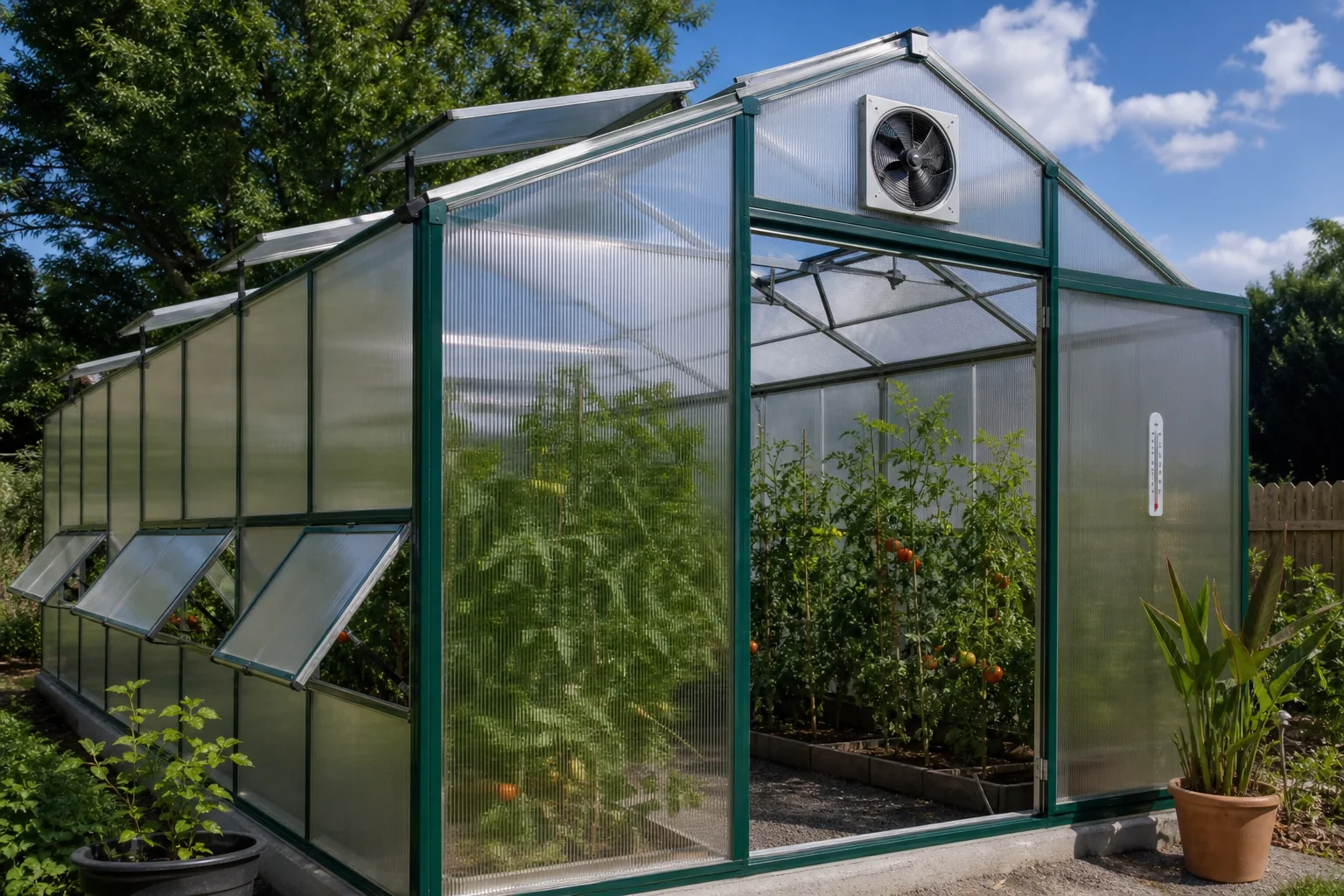
Greenhouse ventilation needs two different systems: enough air exchange to remove solar heat, and steady circulation inside the structure to reduce stagnant pockets. Roof vents and low side vents can handle mild weather when their combined opening is generous. Hot, still days often require a rated exhaust fan, a matching intake opening, and shade.
Air exchange and circulation are not the same
An exhaust fan replaces hot greenhouse air with outdoor air. A circulation fan mixes air already inside. The small fan clipped above a bench may reduce a hot corner, but it cannot remove the building’s solar heat unless fresh air enters and warm air leaves.
Use circulation fans to move air gently across plants, not to blast leaves at close range. Arrange benches, hanging baskets, and storage so they do not divide the greenhouse into isolated pockets.
Natural greenhouse ventilation
Warm air rises, which makes roof vents useful outlets. Lower side vents or open doors admit cooler replacement air. The path between them should remain open. A roof vent with no useful intake can move far less air than its size suggests.
Vent area recommendations are only starting points because wind, vent angle, screens, greenhouse height, and surrounding trees change performance. Insect screen can add substantial resistance. Automatic wax-cylinder openers are convenient, but each vent still needs clearance to open fully.
Penn State Extension emphasizes high and low openings plus unobstructed flow in naturally ventilated greenhouse-style structures. Its ventilation guidance also notes how nearby buildings and trees can create a wind shadow.
When an exhaust fan makes sense
A fan becomes useful when natural openings cannot keep the indoor temperature close enough to outdoor conditions. Select by rated airflow at the static pressure created by shutters, screens, and intake restrictions. Free-air CFM printed on a box may overstate what the fan delivers after installation.
Place the exhaust high on one end and distribute intake area on the opposite end. An intake that is too small starves the fan, increases pressure, and reduces airflow. Motorized shutters or backdraft shutters should open reliably at the fan’s operating pressure.
Penn State recommends choosing fans with performance data from standardized tests in its guide to rated agricultural ventilation fans. Match the tested condition to the planned shutters and screens rather than comparing diameter alone.
Thermostats and staging
A thermostat can open vents or start an exhaust fan before the greenhouse becomes dangerously hot. Stage equipment so passive vents open first, followed by fan ventilation and then any evaporative cooling. Manual doors still need a backup plan for days when nobody is home.
Put the sensor near plant height in a shaded, ventilated shield. A thermostat in direct sun can read the heated sensor body rather than representative greenhouse air.
Shade reduces the ventilation load
Ventilation cannot cool the greenhouse below outdoor temperature without an evaporative or mechanical cooling process. Exterior shade cloth intercepts some solar energy before it enters the glazing, which makes it more effective than a curtain placed inside. Choose a shade percentage appropriate for the crop and season.
A practical greenhouse ventilation checklist
- Confirm that roof and side vents can open fully.
- Keep a clear path from low inlets to high outlets.
- Size exhaust equipment with rated performance data.
- Provide enough intake area for the selected fan.
- Add circulation without aiming a harsh stream at plants.
- Use shade when solar load exceeds what air exchange can manage.
Ventilation hardware is easier to plan before the frame is assembled. See our polycarbonate greenhouse kit guide for roof shape, vent placement, foundations, and weather-related buying checks.