Disclosure: This page contains affiliate links. As an Amazon Associate, Yard Foundry earns from qualifying purchases.
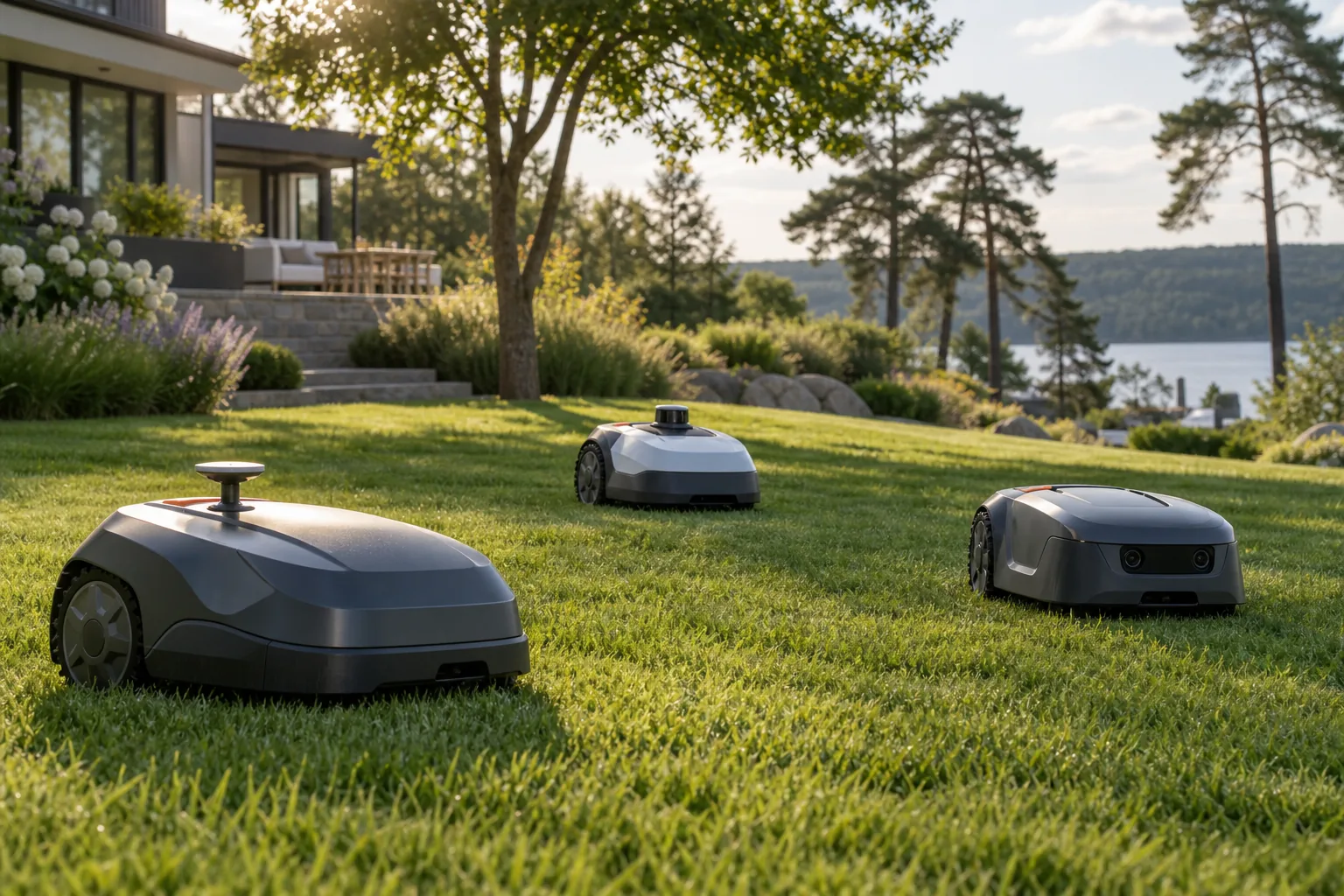
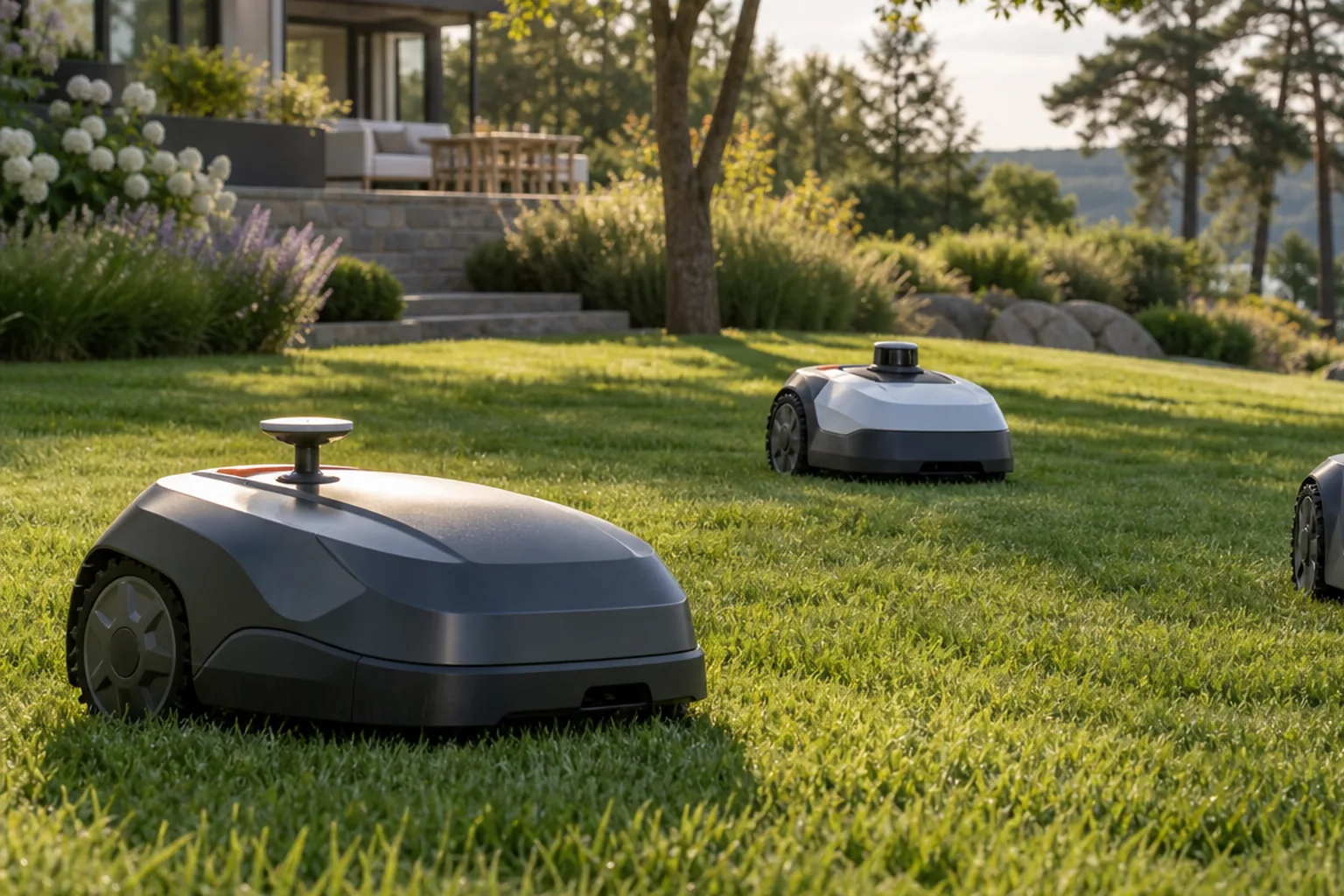
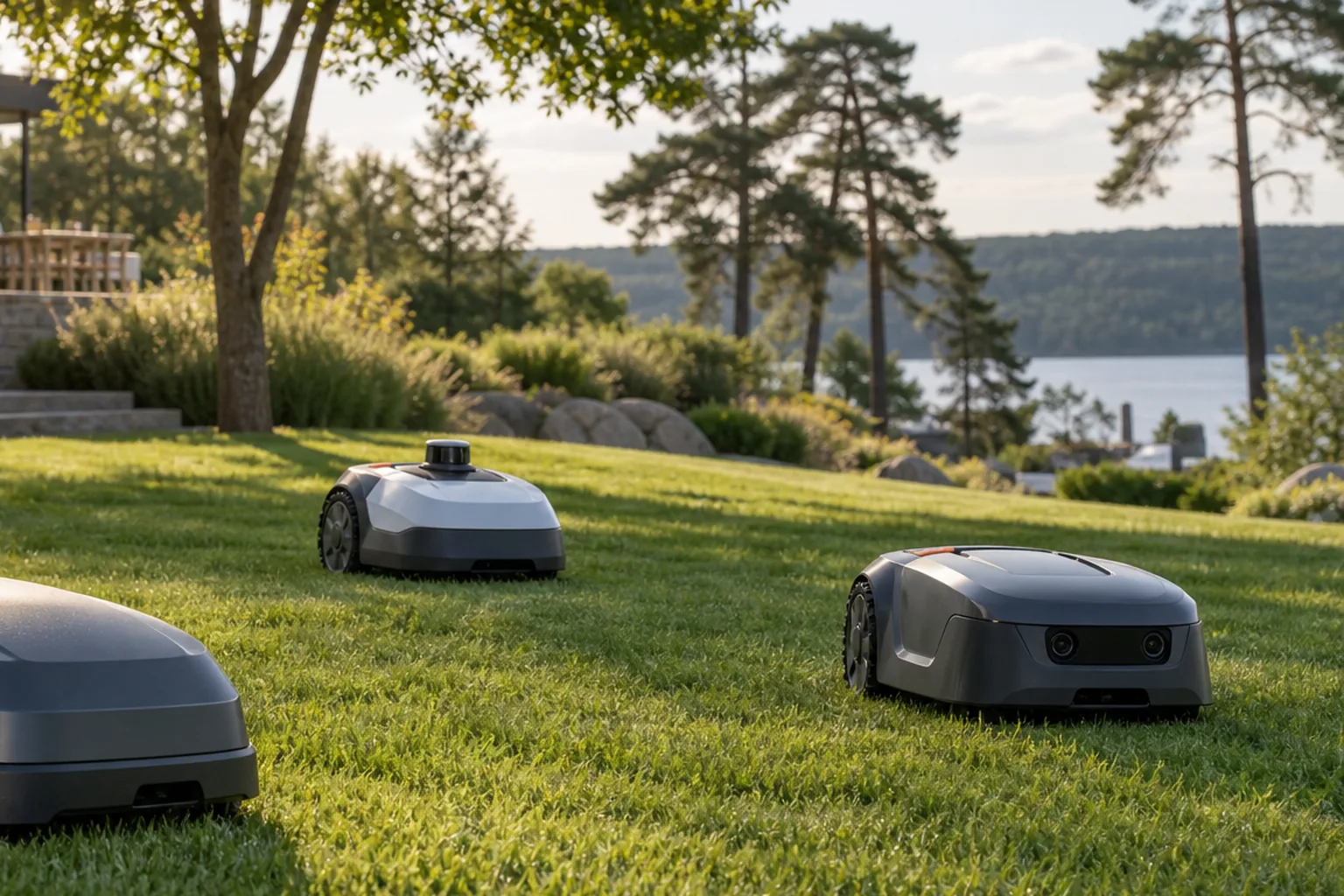
RTK vs LiDAR vs vision robot mowers is not a contest with one universal winner. RTK uses satellite positioning with correction data, LiDAR maps nearby geometry, and vision interprets camera images. Many machines combine methods. The right choice depends on sky view, tree canopy, building layout, lighting, boundaries, and how gracefully the mower recovers when localization weakens.
This guide is based on extension guidance, installation manuals, and published specifications. Yard Foundry has not physically tested the equipment discussed here. Confirm every load, clearance, electrical detail, and compatibility requirement with the current manual for the exact product you buy.
Which robot mower navigation fits which yard?
RTK is compelling on open lawns with good sky view and a stable reference or supported correction service. LiDAR can suit structured yards with reliable physical features, while vision helps recognize grass, obstacles, and boundaries. For mixed tree cover and buildings, favor a mower that combines sensors and documents its fallback behavior rather than choosing by one technology name.
Navigation quality includes docking, narrow passages, edge behavior, and recovery after interruption. The broader robotic lawn mower buying guide explains the surrounding decision. This page stays with one narrower job: matching localization method to yard geometry.
Map the places where localization becomes difficult
Walk the lawn and mark dense canopy, walls, eaves, narrow side yards, reflective glass, low branches, featureless open areas, steep transitions, and boundaries beside roads or water.
Ask what happens at each weak area. Does the mower slow, stop, use odometry, follow a wire, switch to vision, or request user help? A feature list without fallback behavior is incomplete.
Husqvarna’s current Automower manual documents satellite limits near trees, buildings, and narrow passages in the Automower 305E and 310E NERA operator manual. It is one manufacturer’s implementation, but it clearly shows why yard geometry matters to an RTK-based installation.
Compare sensor strengths and dependencies
| Decision point | What to check | Why it matters |
|---|---|---|
| RTK GNSS | Sky view and correction data | Offers global position but can struggle near obstructions |
| LiDAR | Stable nearby geometry | Maps shapes but depends on useful features and clean sensing |
| Vision | Lighting, lens condition, visual boundaries | Adds recognition but changes with shadows and weather |
| Odometry and inertial sensing | Wheel grip and calibration | Bridges short gaps but error can accumulate |
| Boundary backup | Wire, barrier, or stay-out zone | Adds protection where localization is not enough |
Technology labels are broad. Read the manual for the exact model to learn which sensors are primary, which are supporting, and what the mower does when confidence falls.
RTK GNSS
Start with sky view and correction data. Offers global position but can struggle near obstructions. A specification may describe a ceiling rather than a comfortable working point, so read the footnotes before relying on it. Write the confirmed figure beside the measurement from your yard.
LiDAR
Stable nearby geometry. Maps shapes but depends on useful features and clean sensing. Give this item its own line on the comparison sheet. If the product page and current manual disagree, use the manual or ask the manufacturer to explain the difference.
Vision
Then look at lighting, lens condition, visual boundaries. Adds recognition but changes with shadows and weather. Note the conditions attached to the number, including the selected accessory, surface, weather, load, or operating mode. Those details often explain why two similar listings behave differently.
Odometry and inertial sensing
Wheel grip and calibration. is easy to skim past. Bridges short gaps but error can accumulate. Confirm whether the figure applies to the standard setup or an optional configuration, then compare it with the tightest condition on your site.
Boundary backup
Finish with wire, barrier, or stay-out zone. Adds protection where localization is not enough. A blank or vague answer is a reason to pause, especially when it affects safety, fit, or a costly accessory. Get the answer in writing before ordering.
Look past the purchase price
Make a second budget for everything that arrives after the main product: fittings, anchors, electrical or water work, delivery, consumables, replacement parts, and sheltered storage. That list keeps RTK vs LiDAR vs vision robot mowers from looking cheaper on paper than it will be in the yard.
Warranty length can be misleading. Check what happens after weather damage, an installation change, skipped maintenance, or use of a third party part. Download the current paperwork and keep it with the receipt.
Now find the parts diagram. If a small damaged piece requires a complete assembly, include that risk in the comparison. Easy access for cleaning and adjustment matters too; neglected service points turn small chores into repairs.
Turn the yard into an installation test
Measure narrow passages, canopy length, building setbacks, slope at boundaries, and open area in front of the charging station. Compare them with the current installation manual.
Check connectivity separately from positioning. Wi-Fi, cellular service, Bluetooth, reference-station radio, and satellite reception solve different links.
Identify hazardous edges. A virtual map should not be the only protection beside water, a retaining drop, or a public road when the manual calls for a physical barrier. If the numbers lead to a larger system than expected, revisit the assumptions before downsizing the equipment. Our boundary wire vs wire-free comparison can help with that adjacent calculation.
Judge setup and long-term recovery
A stable reference station needs an approved mount, power, and sky view. If moving it invalidates the map, place it where maintenance will not disturb it.
Camera and LiDAR windows need cleaning and protection from damage. Check how the mower operates in low light, wet grass, glare, and seasonal leaf drop within the manufacturer’s limits.
Review map backup, multi-zone editing, service diagnostics, subscription dependencies, and what remains functional if cloud access changes. This is also where the robot mower installation guide becomes useful.
Common mistakes that make a good product disappoint
- Buying RTK for a yard without checking sky obstruction
- Treating Wi-Fi coverage as satellite coverage
- Assuming every vision mower recognizes the same obstacles
- Ignoring docking and transport paths
- Using a virtual line as the only protection beside a hazard
Request a site demonstration or use a strong return window for a difficult yard. The navigation question is specific to the lawn, not the showroom.
Put the decision on one sheet
A short comparison sheet prevents details from getting lost between browser tabs. List the yard condition, the manual limit, and where you found the answer. Circle any gap involving structure, electricity, water, moving parts, slopes, or clearances and resolve it before checkout.
The order that keeps rework down
- Map canopy, buildings, passages, and hazards
- Identify primary and fallback sensors
- Check reference-station and connectivity needs
- Measure docking and passage clearances
- Review low-confidence behavior
- Confirm physical barriers where required
- Choose documented recovery over novelty
Compare wire-free robot mower systems on Amazon (paid link). Use the results to build a shortlist, then leave Amazon and verify the current manual, dimensions, warranty conditions, and replacement-part path on the manufacturer’s site.
Use listings to build a shortlist, then read the exact installation and operator manuals. Current firmware and optional accessories can materially change capability.
Questions homeowners ask before committing
Is RTK the same as GPS?
RTK uses satellite positioning plus correction data to improve accuracy. Performance still depends on signal conditions, installation, and the mower’s supporting sensors.
Does LiDAR work under trees?
It does not rely on satellite view in the same way, but performance depends on the product’s mapping, range, environmental limits, and available physical features.
Are camera mowers safe without a boundary wire?
Safety and boundary behavior are model-specific. Follow the manual and use physical barriers beside hazards when required.
The Yard Foundry take
Open lawns often favor RTK, structured areas may benefit from LiDAR, and vision can add useful recognition. Complex yards benefit most from a documented sensor stack and a credible fallback plan. Before placing an order, compare that plan with the robot mower maintenance guide so the new purchase fits the rest of the yard rather than solving one problem and creating another.