Disclosure: This page contains affiliate links. As an Amazon Associate, Yard Foundry earns from qualifying purchases.
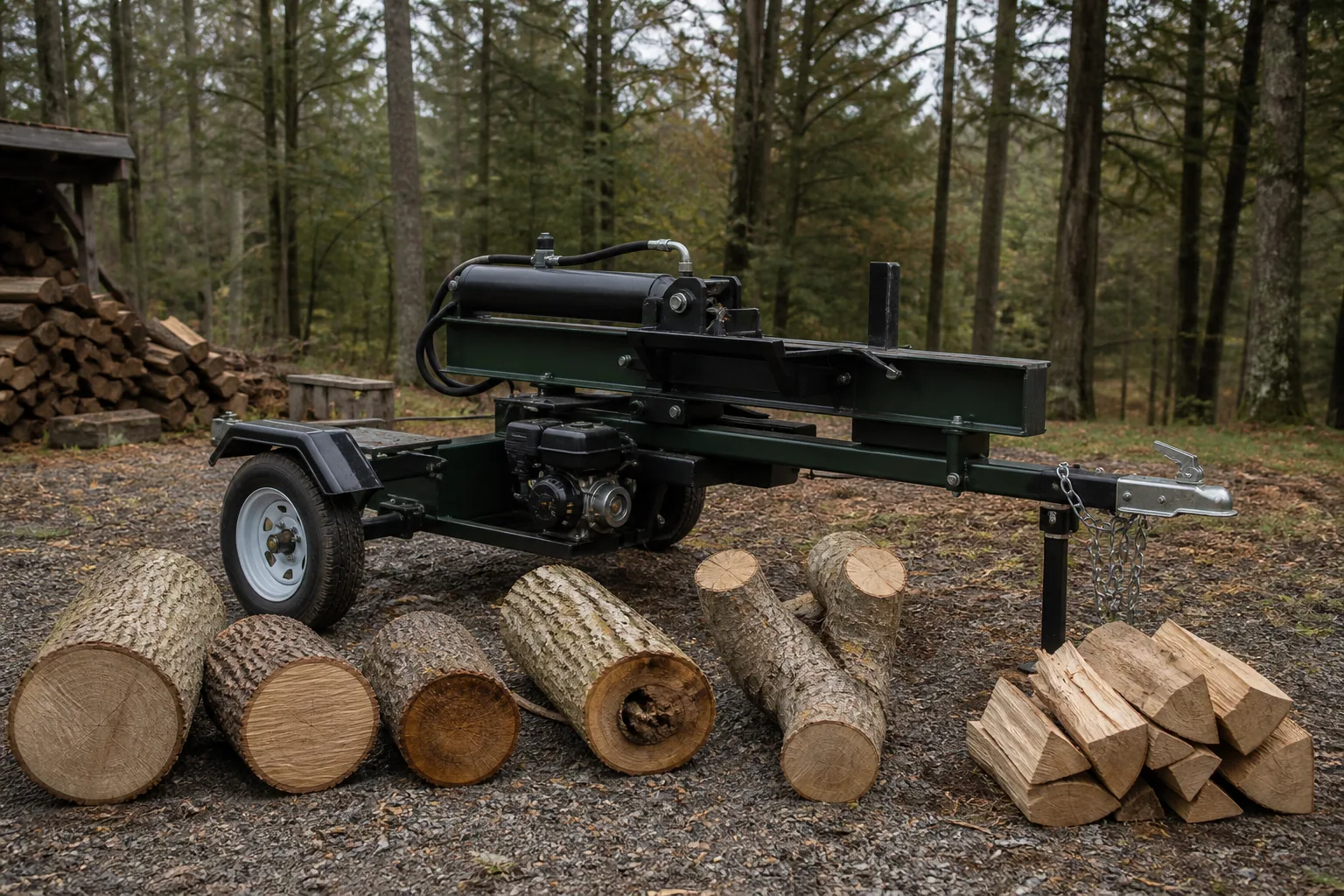
If you are asking, “what size log splitter do I need?”, do not choose from diameter alone. Measure a representative pile and account for species, moisture, knots, forks, grain direction, log length, lifting weight, and how many cords you process. Advertised tonnage is useful for comparing hydraulic systems, but the right machine also needs a suitable wedge, cycle time, cradle, working orientation, and material-handling plan.
This is a research based sizing guide. Yard Foundry has not measured splitting force or tested the machines discussed here. Manufacturer capacity limits and operating procedures must be checked for the exact model.
Why diameter-to-tonnage charts fall short
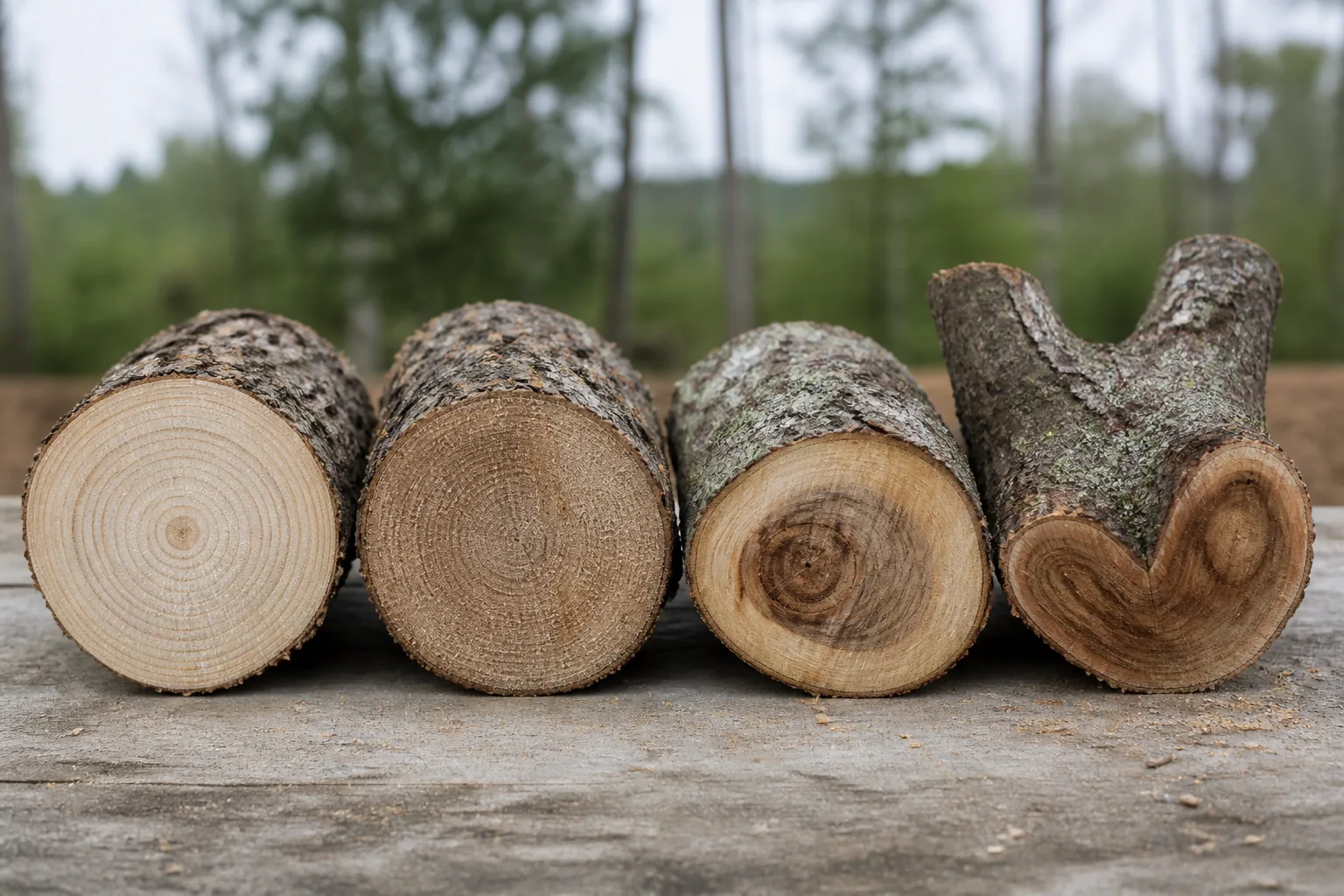
A straight eight-inch round can resist differently from another eight-inch round cut from a fork. The USDA Forest Service Wood Handbook chapter on mechanical properties documents how wood varies with moisture, knots, slope of grain, species, and other natural features. Those variables do not fit into a universal diameter table.
Charts can still screen obvious mismatches. A compact residential splitter is not intended for every oversized hardwood round, and a large towable unit may be unnecessary for straight stove wood. Treat a chart as the start of the shortlist, then compare the actual pile with the manual.
Sample at least twenty rounds from different parts of the stack. Record:
- Length and widest diameter
- Species or best available identification
- Green, partly seasoned, or dry condition
- Straight grain, large knots, branch unions, forks, or spiral grain
- Whether the end cut is square enough to sit securely
- How much each difficult piece can be reduced with a saw before splitting
The machine should comfortably accept the routine pile. A few ugly crotch sections can have another path. Paying for a much larger splitter solely to defeat rare outliers can add cost, weight, fuel use, storage, and lifting height without improving the normal workday.
What log splitter tonnage actually describes
Hydraulic force is calculated from system pressure multiplied by cylinder piston area. Oregon presents the basic formula in its log splitter technical guide. The published tonnage describes a force available at the ram under defined conditions. It does not guarantee that every log below a certain diameter will split.
Two machines with the same claimed tons may differ in cylinder speed, relief setting, beam stiffness, wedge geometry, pump stages, engine or motor output, and duty cycle. Those differences affect how the machine feels through a large pile. Look for a current manual and full specifications rather than treating the largest number on the decal as the whole machine.
| Question | Why it matters | Where to verify |
|---|---|---|
| What log length and diameter are allowed? | Determines basic fit and cradle clearance | Current owner manual |
| Is the advertised force supported by system information? | Separates useful specification from a bare marketing claim | Technical sheet, manual, manufacturer support |
| How long is the full cycle? | Controls throughput over repetitive work | Manufacturer specification under stated conditions |
| Does the beam work horizontally and vertically? | Changes how large rounds are lifted and positioned | Manual and locking mechanism |
| What is the maximum tow or transport speed? | Some yard splitters are not road trailers | Manual and local towing rules |
| Which accessories are approved? | Tables, cradles, wedges, and lifts add loads and pinch zones | Model accessory list |
What size log splitter do I need for the wood?
Start with four traits that tend to change the decision.
Species and density
Hardwood is not one uniform category. Species differ, and a tree’s growing conditions add variation. Use species as a clue, not a guarantee. If the pile contains several species, size for the material that appears regularly, not for the easiest stack.
Knots, forks, and grain direction
A knot redirects fibers around a branch. Forks join grain from two stems. A wedge may enter cleanly and stall as those fibers twist. Straight pieces can often be split from the outside edge, while crotches may need a different orientation or a larger class of machine. Never hold a turning round in the danger zone.
Moisture condition
Moisture changes mechanical behavior, but it does not create one rule that all green wood is easier or all dry wood is harder. Species, checks, decay, temperature, and grain remain involved. Record the condition you normally process and compare it with manufacturer guidance or a dealer demonstration using similar wood.
Length and end cut
A round longer than the beam capacity does not fit, regardless of tonnage. An angled end can sit poorly and push sideways as the ram advances. Cut logs square and within the manual’s length limit before they reach the splitter.
Choose the work rate as well as the force
A slow cycle becomes important after a hundred easy rounds. Record how much firewood is processed in a season and how concentrated the work is. A homeowner splitting a face cord across several afternoons has a different throughput need from a property handling repeated tree removals.
Cycle time is only one part of throughput. The operator also has to move a round into place, control it outside the pinch area, remove pieces, resplit large halves, and stack the result. Tables and cradles can reduce repeated lifting when they are designed for the exact model. Poorly placed accessories can make the work zone crowded.
Multi-stage hydraulic pumps on larger machines are intended to move the ram quickly under low load and develop higher pressure when resistance rises. Electric compact models use different systems. Compare real cycle specifications within the same machine class rather than assuming the larger engine or motor always finishes a pile faster.
Horizontal or vertical splitting changes the lifting plan
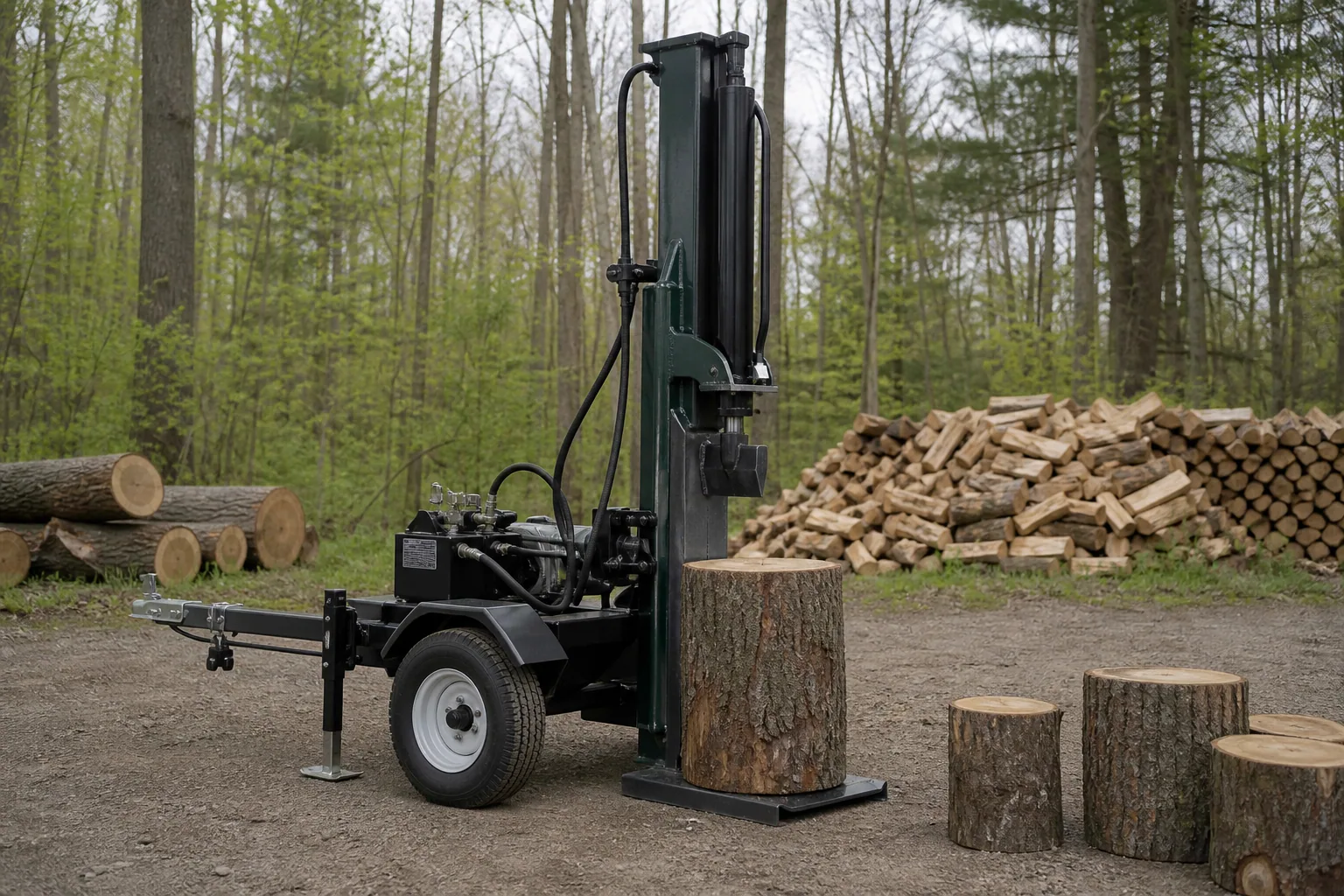
Horizontal splitting keeps the work at beam height and suits pieces one person can lift safely. Vertical mode lets a large round remain near ground level, but the operator still has to roll, steer, and stabilize it. The machine must lock securely in each approved position.
Think through the material path:
- Rounds arrive on one side without crossing the control area.
- The operator can position a round while remaining outside pinch points.
- Split pieces have a clear landing or support area.
- Finished wood leaves without stepping over the tongue, hoses, cord, or loose rounds.
- The next piece can be reached without twisting under load.
Large rounds may justify a hydraulic lift or log table only when the manufacturer approves it. A second person should not become a substitute for material handling. Unexpected movement can trap a helper who is not at the controls.
Electric, gas, tractor-powered, or rental
Compact electric splitters suit modest rounds and shorter sessions near the correct circuit. They are easier to store than many towable units and avoid engine exhaust at the work area. Their cord and circuit become part of the setup. The forthcoming YF-062 page owns the detailed electric buying decision; until it is published, do not link to its draft URL.
Gas hydraulic splitters are common for larger piles and remote work. They add fuel, engine maintenance, noise, warm starting, and more machine weight. Tractor-powered systems can make sense for an owner who already has compatible hydraulic flow and understands connection requirements, but tractor compatibility is its own engineering check.
Rental often beats ownership for a single annual pile. Reserve a machine whose manual covers the wood, confirm transport requirements, and plan enough time that safety does not compete with the return deadline. Our Garden Tools and Calculators hub collects the site’s rent-versus-buy tools for adjacent yard equipment, even though a dedicated log-splitter calculator is not yet available.
Transport and storage can rule out a machine
A towable appearance does not prove highway approval. Check the manual’s transport method, speed limit, hitch requirement, safety chains, tire rating, and lighting. Local road law controls public towing. Some splitters are intended to move around private property or on a trailer, not behind a vehicle on the road.
Measure the parked length, width, and height in each storage position. Include the tongue, fenders, beam pivot, table, and engine service clearance. The shed sizing guide helps turn those dimensions into a usable route rather than a tight rectangle on paper.
Keep fuel, batteries, hydraulic supplies, and electrical equipment according to their manuals and local rules. Make sure a leak can be seen and cleaned rather than hidden under stacked wood. Condensation deserves attention before machinery moves inside, as explained in our shed moisture guide.
Safety features are part of sizing
A machine that accepts larger rounds also exposes the operator to heavier pieces and more stored force. Review control location, two-hand operation where provided, guards, hose routing, emergency stop procedure, and the stability of horizontal and vertical positions.
OSHA case records document severe caught-in injuries around powered splitters when activation and point-of-operation hazards were not controlled. These are workplace records, not a consumer product rating. They are a clear reminder to keep hands away from the wedge and ram, prevent a second operator from entering the cycle, and never bypass controls.
Wear the protection required by the manual and inspect every round for nails, wire, or other embedded material. Work on firm level ground. Stop the engine or motor, isolate its energy source, and release stored pressure as instructed before inspection or service.
Compare log splitter classes on Amazon (paid link). Use the results to identify machine types, then verify capacity, controls, towing, and service in official documentation.
A sizing worksheet that avoids false precision
- Measure a representative sample, including the worst regular pieces.
- Separate rare outliers that can be cut smaller or handled another way.
- Reject machines whose stated length or diameter limits exclude routine rounds.
- Compare credible force documentation, cycle time, wedge, cradle, and duty cycle.
- Choose horizontal or vertical capability from the actual lifting path.
- Confirm power source, service, transport, and storage before ordering.
- Read the manual and parts support for every finalist.
This is the same disciplined approach used for other processing equipment. See the electric wood chipper guide, the electric versus gas chipper comparison, and the chipper versus chipper shredder decision when branches, brush, and leafy waste share the same cleanup plan.
Frequently asked questions
Is a 20-ton log splitter enough?
It may be more than enough for one pile and frustrating for another. Check regular log length, diameter, species, moisture, knots, and forks, then compare them with the exact machine’s documented capacity, wedge, cycle, orientation, and duty limits.
Do I need a 30-ton splitter for hardwood?
Hardwood alone does not set the number. Straight grain, moisture, diameter, knots, and branch unions change resistance. A dealer demonstration with representative wood and a complete manual is more useful than a generic hardwood chart.
Is a vertical log splitter better?
Vertical mode reduces the need to lift the largest rounds to beam height. It still requires rolling and positioning heavy wood, stable level ground, and a machine that locks securely in that approved position.
Size the splitter around the routine pile, the safe material path, and the hours of work it must complete. Keep a separate answer for the ugly few rounds. That boundary is more useful than buying the largest tonnage you can store.