Disclosure: This page contains affiliate links. As an Amazon Associate, Yard Foundry earns from qualifying purchases.
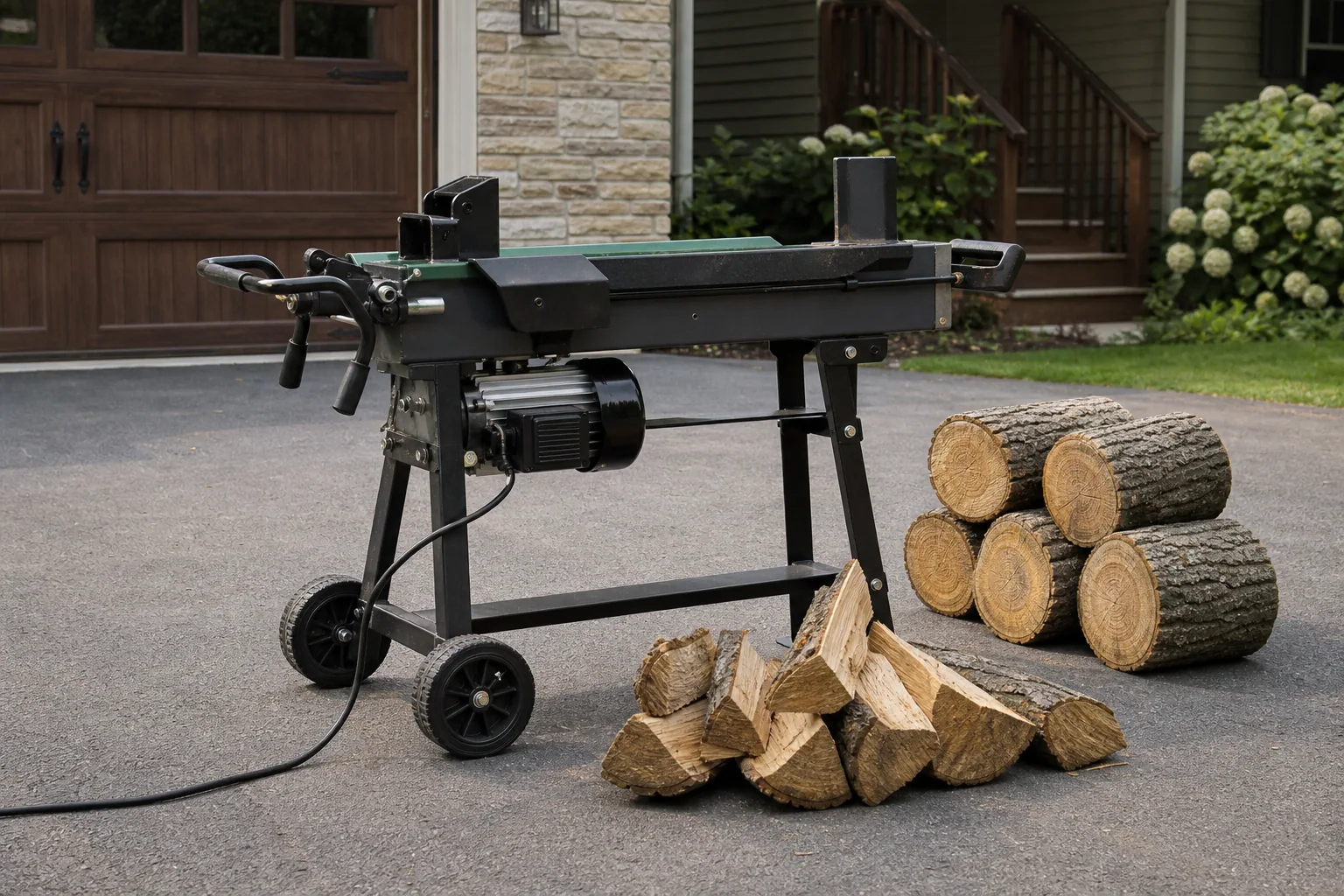
An electric log splitter buying guide should look past the tonnage badge. The better purchase is a machine that accepts your normal log length and diameter, holds awkward rounds securely, works at a comfortable height, completes a cycle at a useful pace, and can run on the available electrical circuit without an improvised cord setup. Compact 120-volt splitters are convenient for residential firewood, but their limits become obvious in large, knotty, or forked rounds.
This is a research based buying guide. Yard Foundry has not split logs with the models discussed here. Capacity, electrical requirements, and operating procedures must be confirmed in the current manual for the exact machine.
Describe the wood pile before choosing force
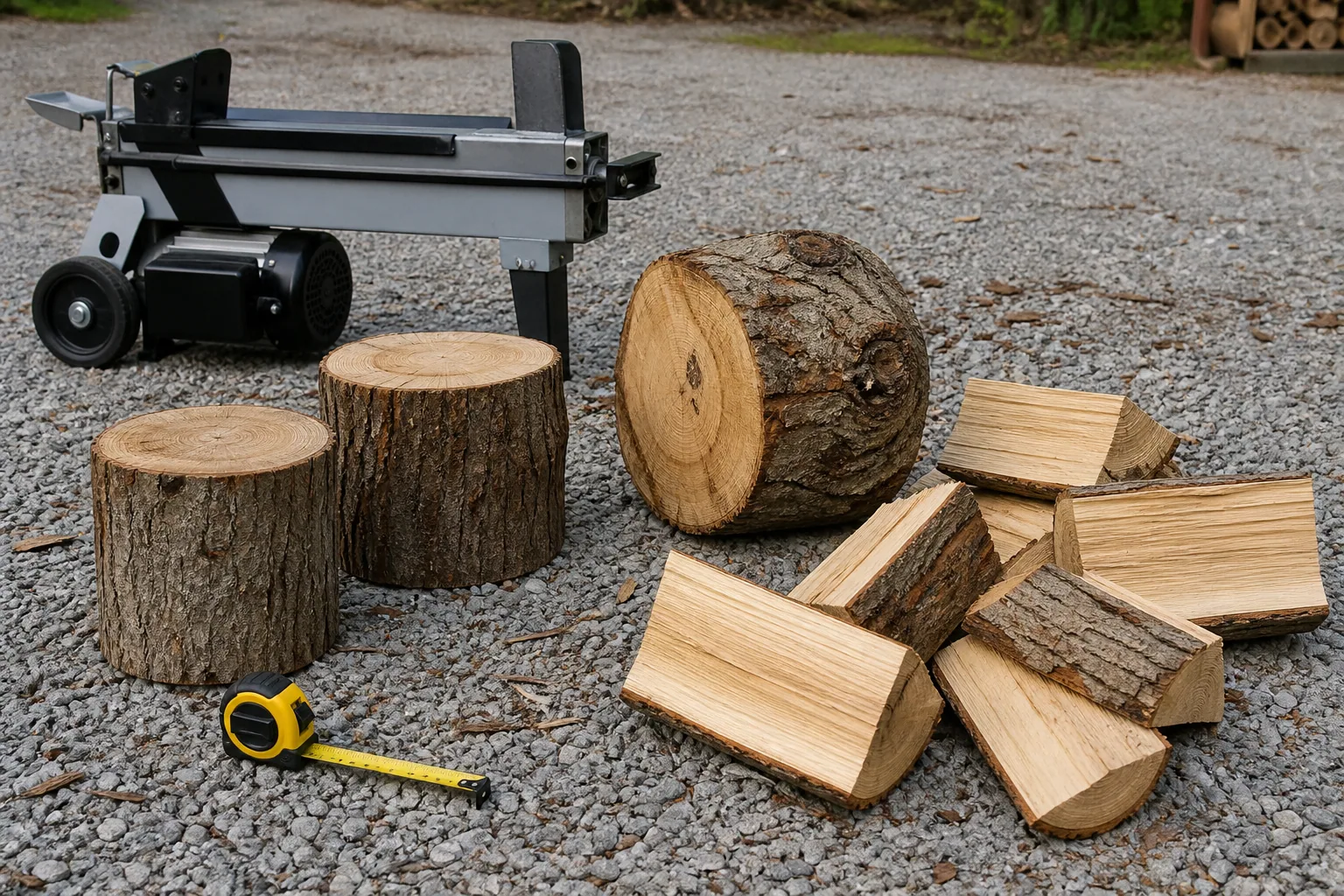
Measure a representative group of rounds, not the three easiest pieces. Record length, widest diameter, species when known, moisture condition, knots, forks, and whether the grain is straight. A neat stack of straight softwood behaves differently from storm-damaged hardwood with branch unions.
Diameter and species are useful screening details, but they do not predict every split. Wood is a variable natural material. The USDA Forest Service Wood Handbook chapter on mechanical properties explains that moisture, knots, slope of grain, and other growth features change wood behavior. That is why a simple chart that assigns one splitter tonnage to every log of a given diameter can mislead.
Separate the pile into three groups:
- Routine rounds that should pass through the machine without special handling
- Occasional difficult pieces that may need another orientation or a manual wedge
- Oversized, twisted, or unsafe pieces that should be cut smaller or handled by different equipment
A splitter does not need to conquer every piece ever delivered to the property. It needs a clear, honest duty range. If difficult pieces make up most of the pile, a compact electric model may be the wrong class even when its advertised force sounds adequate.
Electric log splitter buying guide to the main specifications
| Specification | What it changes | What to verify |
|---|---|---|
| Maximum log length | Whether standard stove-length rounds fit between the ram and wedge | Usable length, not shipping dimensions |
| Maximum diameter | A screening limit for cradle space and intended duty | Whether the manual treats it as a hard limit and under what wood conditions |
| Rated splitting force | The hydraulic force available under the maker’s test conditions | Do not treat it as a guarantee for every knot or fork |
| Full cycle time | How long the ram advances and returns | Whether an adjustable return stop shortens cycles for small rounds |
| Working height | Bending, lifting path, and where split pieces fall | Stand stability and the maker’s approved configuration |
| Machine weight and wheels | Transport from storage to the work area | Handle position, balance, wheel size, and route clearance |
| Electrical requirement | Circuit, receptacle, and cord suitability | Voltage, amperage, grounding, GFCI guidance, and extension-cord limits in the manual |
Read the whole manual before ordering. A current YARDMAX electric log splitter manual, for example, covers assembly, electrical safety, extension-cord sizing, operating controls, log positioning, and maintenance in one place. Use the manual for the shortlisted model rather than borrowing limits from another machine that looks similar.
Rated tons are only one part of splitting performance
Hydraulic splitting force comes from pressure acting on piston area. Oregon explains the basic calculation in its log splitter technical overview. That formula describes the cylinder system. It does not account for the wedge profile, alignment, structural flex, relief settings, log grain, or the time needed to complete the stroke.
Be cautious when two inexpensive machines claim the same force but publish little else. Look for a readable manual, a parts diagram, a stated duty cycle, hydraulic-fluid requirements, and service support. A credible capacity statement belongs with a complete operating envelope.
Cycle time matters when the pile is large. Full stroke may waste time on short rounds, while an adjustable return stop can keep the ram closer to the next log. Speed is not worth sacrificing controlled positioning or two-hand operation. The work rhythm should allow the operator to place one round, remove split pieces, and clear the table before starting again.
Horizontal layout, stand, and real working height
Most compact electric splitters work horizontally. The operator must lift every round to the cradle. That is manageable for small straight pieces and tiring for heavy hardwood. A stand can reduce repeated bending, but it raises the lift and must be approved for the machine.
Check the complete setup rather than the product photo:
- Does the stand lock to the splitter at every required point?
- Is the footprint stable on the driveway or floor you will use?
- Can the operator reach both controls without leaning over the wedge?
- Do split pieces land on a support table or fall near the feet?
- Can the machine roll through gates, doors, and the shed aisle?
Do not place a splitter on a makeshift table. A shifting platform changes control reach and can tip when a knotty round moves. If the included machine sits too low and no approved stand exists, price a different model rather than designing around the problem after delivery.
The cradle and controls deserve a close look
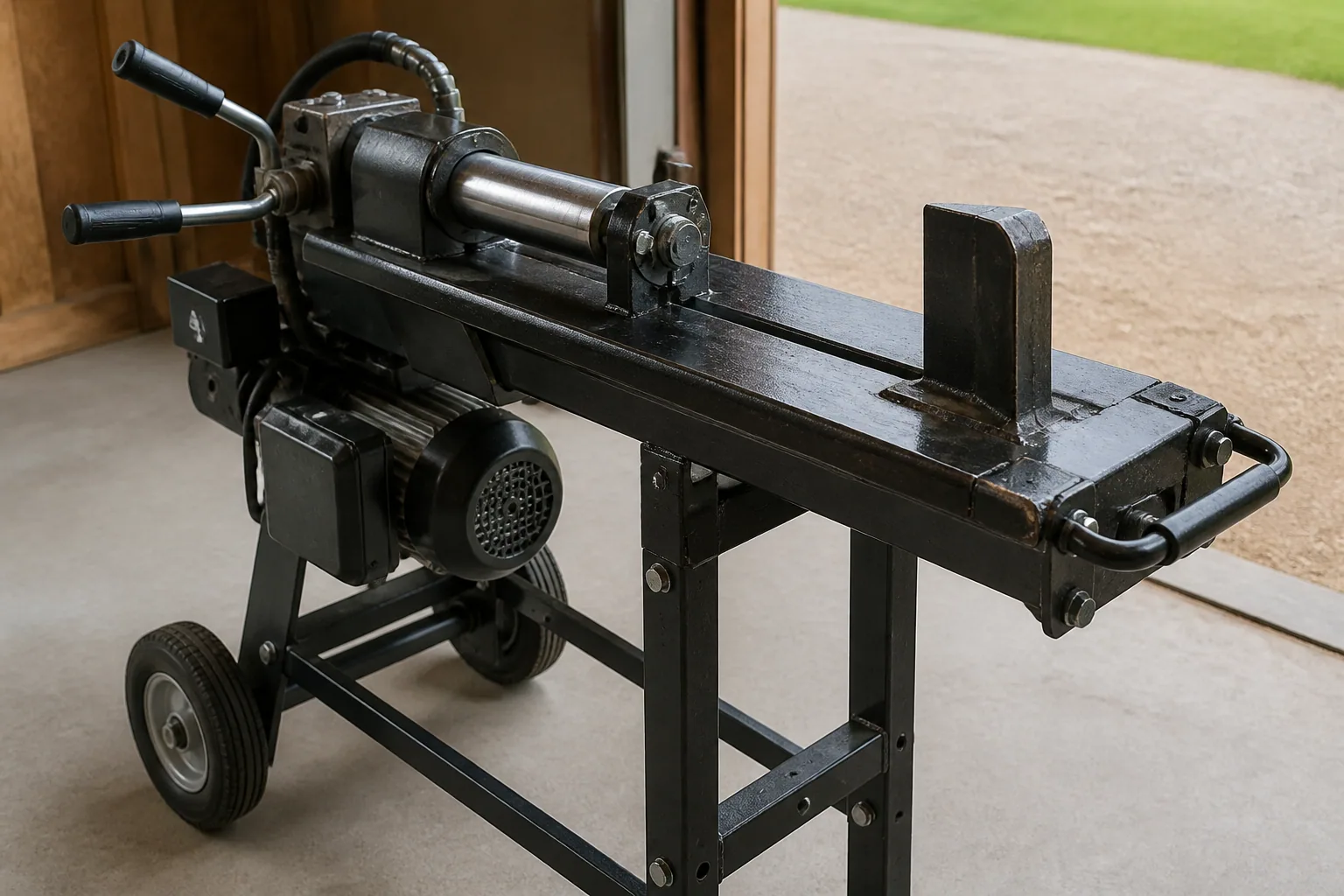
A shallow rail may hold a straight round and let an irregular one rotate. Compare the cradle width, side supports, and how close hands must come to the pinch zone while positioning wood. A work table or side tray can catch pieces after the first split, reducing the need to pick them up from the ground.
Many compact electric splitters use controls that keep both hands occupied during the power stroke. Do not defeat that arrangement. OSHA investigations of industrial splitter incidents show how quickly unexpected activation and unguarded pinch points can cause severe injuries. Home equipment differs from workplace machinery, but the physical hazard at a moving ram and wedge is the same.
The emergency response should be obvious. Know how to stop motion, release hydraulic pressure, and disconnect power before clearing a jam. Never let a second person hold the log while the operator runs the controls. Keep children, pets, and bystanders outside the work area.
Plan the electrical path before delivery
An electric splitter needs more than a nearby outlet. Confirm the circuit voltage and amperage, grounding arrangement, outdoor protection, and whether other loads share the circuit. Follow the manual’s GFCI and extension-cord instructions. A long undersized cord can cause voltage drop and heat while lying exactly where logs and wheels move.
Sketch the route from receptacle to machine. Keep the cord behind the operator area, away from the ram, wheels, sharp wood, standing water, and vehicle traffic. Use only an outdoor-rated cord of the gauge and length allowed by the manufacturer. Do not chain multiple cords or use a damaged connector to reach a preferred work spot.
Test the outlet protection before the splitting season. If the circuit trips repeatedly, stop and find the cause rather than increasing breaker size or bypassing protection. Electrical work beyond simple inspection belongs with a qualified electrician.
Transport, storage, and weather exposure
A compact splitter may still be awkward to move because most of its mass sits low around the motor and hydraulic system. Look at wheel diameter, handle height, balance at the transport angle, and ground clearance. Small hard wheels roll on a garage floor and struggle on loose gravel.
Measure the storage route with the stand attached and removed. Our shed sizing guide explains why door width and the turning path matter more than advertised floor area. Keep the motor, controls, and electrical connections dry. Follow the manual for hydraulic-fluid storage temperature and seasonal inspection.
Store rounds and split wood separately from the machine so the route remains clear. A splitter trapped behind a winter stack becomes a lifting and rearrangement project before work even begins. Moisture control also matters around electrical equipment, so address shed condensation before the storage area fills.
Electric, gas, or rental?
Electric models suit short residential sessions near suitable power, especially when logs fall within a modest and consistent size range. Gas and larger hydraulic splitters bring more duty capacity and remote operation, but they add engine service, fuel storage, noise, and often much more mass.
Rental can be better for one annual pile or a storm cleanup. Count transportation, loading, the work crew, and whether the rental period encourages rushed operation. Owning earns its space when wood arrives regularly and the machine remains accessible, maintained, and matched to most of the pile.
The decision resembles choosing other yard-processing equipment. Our electric wood chipper guide and electric versus gas chipper comparison explain how material size, service, noise, and storage can outweigh a headline power number. For mixed branch and leaf waste, the chipper versus chipper shredder guide helps separate that job from firewood processing.
Compare electric log splitter listings on Amazon (paid link). Check each candidate against the current manual for log limits, controls, approved stand, cycle, circuit, and cord requirements.
A shortlist that survives the manual check
- Measure twenty representative rounds and flag the knotty outliers.
- Reject models whose manual limits exclude normal log length or diameter.
- Compare cycle time, return stop, cradle, controls, and working height.
- Confirm the electrical circuit and cord route before choosing the work area.
- Move a similar machine or verify its transport dimensions and balance.
- Price stand, table, protection, cord, hydraulic supplies, and replacement parts.
- Plan a safe answer for pieces outside the machine’s duty range.
Frequently asked questions
Is a 5-ton or 7-ton electric log splitter enough?
It can be enough for a pile dominated by modest straight rounds, but force alone does not answer the question. Compare the exact machine’s length and diameter limits with species, moisture, knots, forks, cycle time, cradle, and your willingness to set difficult pieces aside.
Can an electric log splitter use any extension cord?
No. Follow the manual’s limits for outdoor rating, conductor gauge, length, grounding, and receptacle protection. An undersized or damaged cord can overheat and cause poor motor performance.
Should I buy a log splitter with a stand?
A stable manufacturer-approved stand can improve posture for smaller rounds, but it also increases lifting height. Compare the operator’s reach, log weight, stand attachment, and where split pieces land.
Bring the shortlist back to the wood pile. The right electric splitter handles the common rounds comfortably, fits the route from outlet to storage, and leaves a safe alternative for the pieces it should never be asked to split.