Disclosure: This page contains affiliate links. As an Amazon Associate, Yard Foundry earns from qualifying purchases.
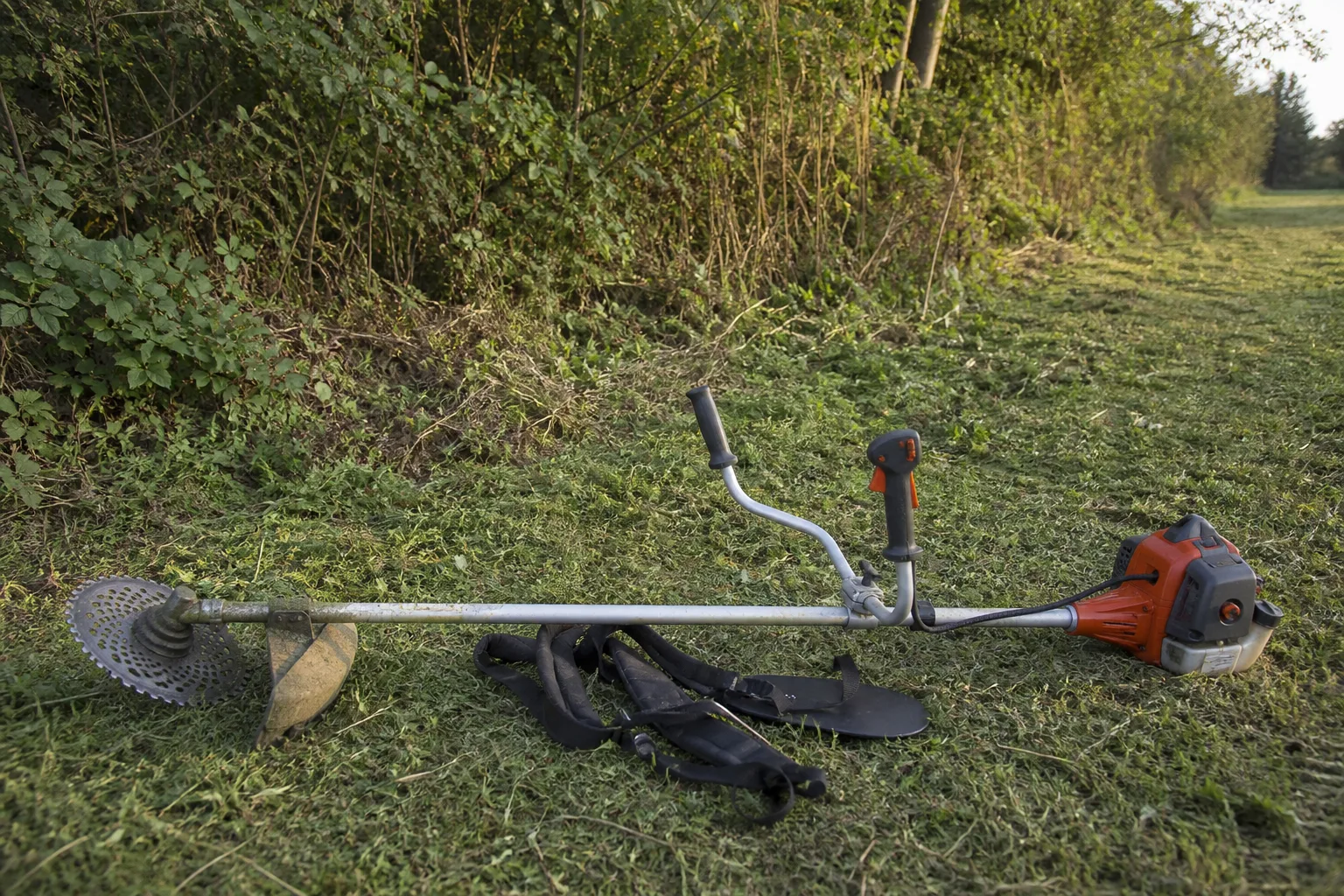
A useful brush cutter buying guide starts with the thickest material you regularly need to cut. String handles grass and soft weeds. A metal grass blade handles dense, fibrous growth. A suitable brush knife or saw blade can address woody stems within the machine and blade manufacturer’s limits. Once a rigid blade enters the plan, the correct guard, handlebar, harness, gearbox, and approved attachment matter as much as engine or motor power.
This is a research based buying guide, not a hands-on product test. Yard Foundry has not operated, timed, or compared the machines discussed here. Cutting capacity, attachment compatibility, vibration, noise, runtime, weight, fuel or battery requirements, and warranty terms must be verified for the exact model.
Brush cutter buying guide: define the material first
Walk the work area before comparing machines. Separate ordinary trimming from dense grass, brambles, saplings, and debris-strewn ground. Note fences, rocks, wire, stumps, slopes, ditches, and public paths. A blade that can cut woody growth also carries greater consequences when it strikes a hidden hard object.
| Regular task | Likely cutting attachment | Machine feature to prioritize |
|---|---|---|
| Grass around beds and posts | Approved string head | Low weight, precise throttle control, compact guard |
| Tall grass and fibrous weeds | Approved metal grass blade | Straight shaft, suitable gearbox, blade guard, harness |
| Brambles and coarse brush | Approved brush knife | Handlebar control, robust drive, anti-vibration system |
| Small woody stems within manual limits | Approved circular saw blade | Correct guard, harness, handlebar, power, and operator training |
| Routine lawn-edge cleanup | String trimmer | A dedicated brush cutter may be unnecessary |
Do not choose by the largest branch diameter in a retailer bullet point. The cutting attachment manual sets the permitted material and technique. The machine manual sets which blades, guards, washers, nuts, and harnesses are approved. Both documents need to agree.
A blade-capable system is more than a blade
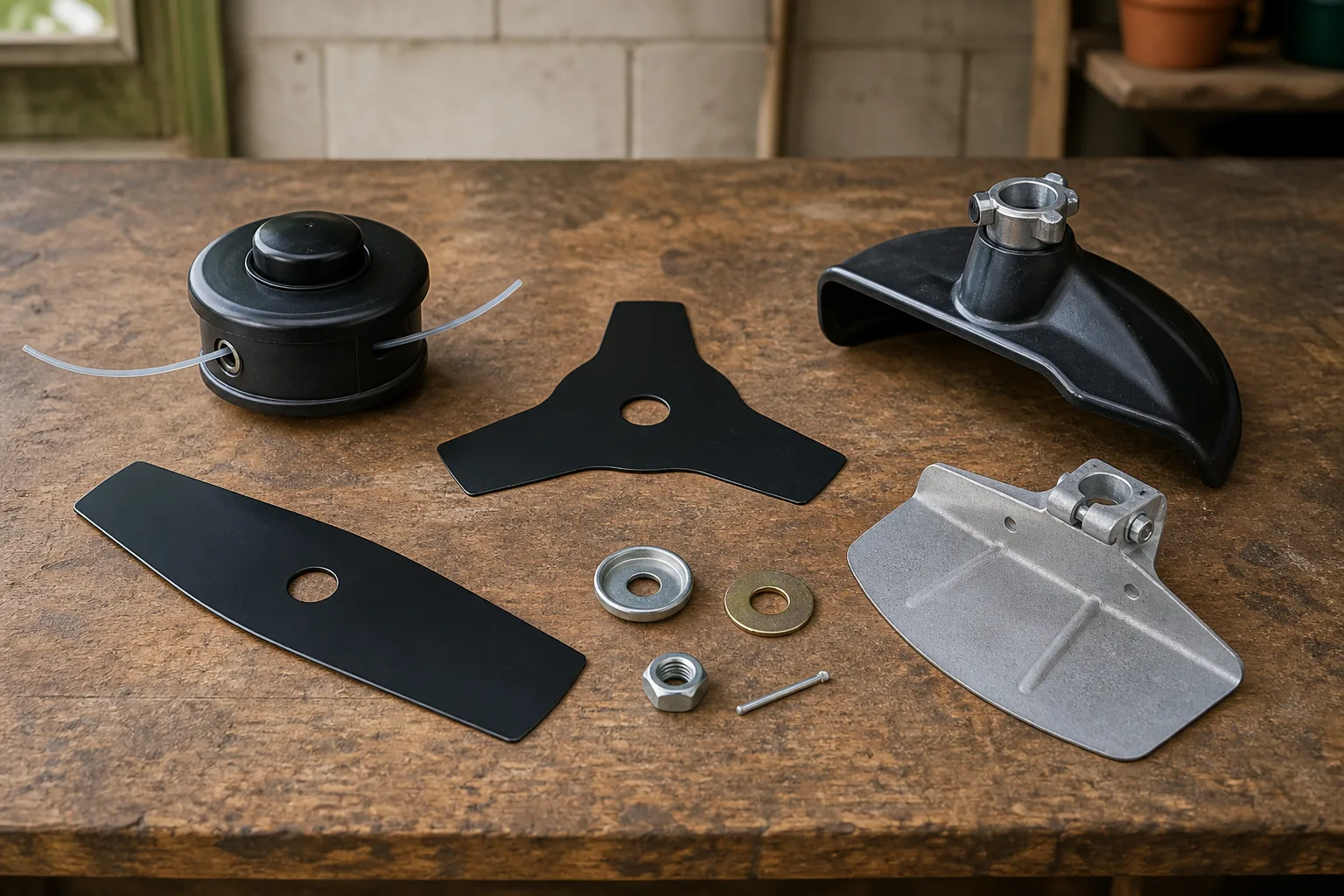
A rigid blade transfers impact into the gearbox, shaft, handles, and operator. A straight, solid drive shaft is common on purpose-built brush cutters because it supports the torque and attachment mounting needed for metal blades. Some split-shaft powerheads accept a brush-cutter attachment, but compatibility is model specific. A blade that fits the arbor is not automatically approved.
The guard has to match the attachment. A string guard may include a line-cutting knife and a shape intended for flexible line. A metal blade needs the specified deflector and mounting hardware. The thrust plate, support flange, and locking nut must be installed in the order shown in the manual. Missing or improvised parts can let the blade run off center.
The STIHL trimmer and brush-cutter safety manual warns about blade thrust, or kickout, when a rigid blade contacts resistant material in an unfavorable part of its rotation. It also separates grass blades, brush knives, and circular saw blades by intended material. Those limits are attachment-specific, so a general buying guide cannot replace the selected product’s manual.
Loop handle or bicycle handlebar
A loop handle keeps the tool narrow and can be convenient around trees, beds, and gates. It is common on string trimmers and some lighter blade-capable machines. The operator controls rotation with a smaller hand separation, which can become tiring during wide clearing sweeps.
A bicycle handlebar gives both hands a broad stance and works with a full harness to guide the head in an arc. It is usually the better layout for sustained grass or brush clearing on open ground. The bar must adjust so the cutting attachment hangs in the correct position without the operator lifting it with the arms.
Check transport and storage. Wide bars may fold or rotate for a vehicle, but cable routing can limit movement. A narrow shed aisle or small car can turn a comfortable field machine into an awkward ownership problem. Compare folded dimensions and the approved hanging point before buying.
The harness carries the machine
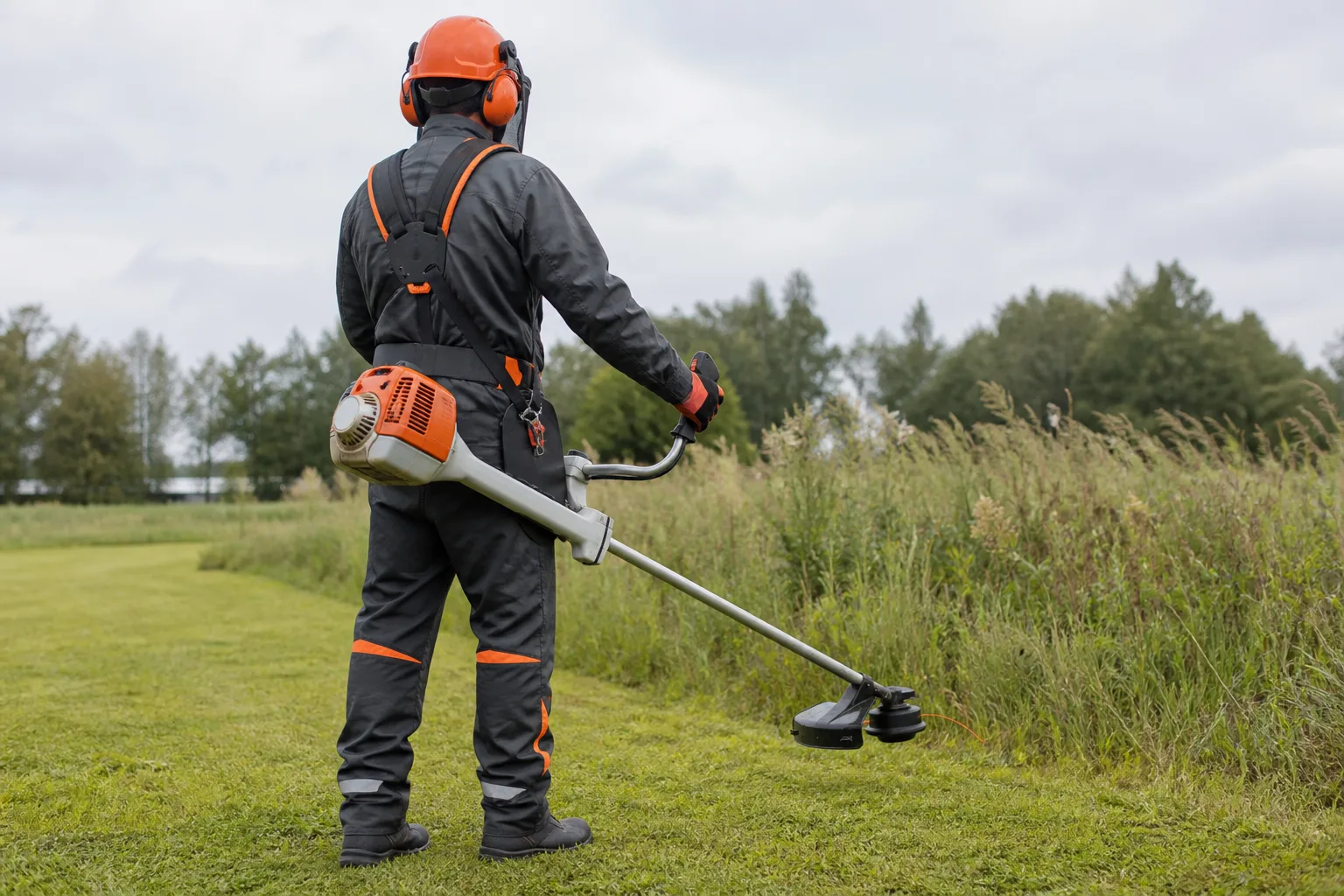
A shoulder strap prevents a tool from falling. A balanced harness does more: it transfers load to both shoulders and the hips, sets the hanging height, and helps keep the attachment away from the operator. Models intended for circular saw blades may require a specific harness and handle arrangement.
Look for a quick-release mechanism that is easy to reach while wearing gloves. The hook and suspension point should let the machine hang level with the blade just above the working height. The official Husqvarna 336FR support page, for example, lists a supplied harness along with multiple approved cutting attachments and publishes weight without cutting equipment. That last detail is important: listed tool weight may omit blade, guard, fuel, and harness.
Try to estimate ready-to-work mass, not bare-machine mass. Add a full battery or fuel, cutting equipment, guard, and any adapter. Balance can matter more than a one-pound catalog difference. A nose-heavy head keeps pulling the arms down even when the total weight looks reasonable.
Power source, torque, and duty cycle
Gas remains common for long clearing sessions and remote land because refueling is quick. It brings starting procedure, exhaust, fuel storage, noise, and engine maintenance. Battery machines start easily and reduce local exhaust, but sustained blade work can empty packs faster than light trimming. Corded tools are rarely a practical answer for brush because the work area and cutting attachment make cable management difficult.
Do not compare voltage, cubic centimeters, or watts across unrelated designs as if they were one scale. Look for the approved blade list, shaft output, attachment speed, weight, and the manufacturer’s stated application. For battery tools, compare watt-hours and the number of compatible packs you can rotate. For gas, compare tank volume, fuel mix or oil system, and expected service access.
YF-061 will own the full battery versus gas comparison. For this purchase, the key question is whether the chosen power source can complete your normal work block with the approved attachment. A machine used for 20 minutes around a garden has a different requirement from one clearing an acre of regrowth.
Noise, vibration, and fatigue are specifications
Brush work is physically demanding. Published vibration values help compare machines, though test standards and operating conditions need to match. Anti-vibration mounts can reduce the transfer from engine and blade to the handles. Worn or unbalanced attachments can undo that benefit.
Noise belongs in the buying decision. The NIOSH occupational noise overview explains that repeated loud sound can damage hearing and that prevention begins by reducing exposure. Homeowners are not using an occupational exposure table as a personalized medical rule, but published sound pressure still signals the need for appropriate hearing protection and shorter work blocks.
Controls should be reachable without changing grip. A throttle lock that requires an awkward wrist angle becomes more noticeable after an hour. Check whether the engine heat, battery housing, or exhaust sits near the body in the harness position. Manuals often specify rest intervals, inspection points, and maximum accessory speed.
Terrain changes the machine you need
On a level field, a heavy handlebar machine can hang comfortably from a harness. On a steep bank, the operator may fight the suspension point while stepping around brush. A loop handle can feel more agile, but it offers less leverage with a rigid blade. Sometimes the right answer is to divide the property between two tools.
Hidden rocks, fencing, irrigation tubing, and metal stakes can make a metal blade a poor choice. Clear debris by hand first. Keep bystanders and animals outside the manual’s exclusion zone. The OSHA landscaping hazard overview groups struck-by, noise, vibration, electrical, and equipment hazards as problems that require assessment, training, and suitable protection.
If the job is breaking hard ground rather than cutting standing growth, use a different machine. The rear-tine tiller guide covers soil preparation, while the hard-soil tilling guide explains a staged approach. Do not drive a brush blade into soil to imitate cultivation.
Maintenance and parts support
A blunt blade increases effort and can vibrate. A damaged or cracked blade must be removed from service. Check the manual for inspection, sharpening, balancing, and replacement rules. You may need a locking pin, socket, file, blade balancer, grease, air filter, spark plug, or battery diagnostic access.
Inspect the gearbox service point and the shaft coupling if the machine splits. Ask whether the guard, thrust washer, blade nut, handle hardware, harness clip, and fuel or battery parts are sold separately. A local dealer can be useful for a machine that needs regular blade and gearbox support.
For woody branches that exceed the approved cutter limit, a chipper or saw may fit the waste stream better. The electric wood chipper guide covers small processed branches. The wood chipper versus chipper shredder comparison separates branch chipping from soft leaf and garden debris.
Brush cutter or another tool
Buy a brush cutter when dense grass, brambles, or approved small woody stems are a recurring task. For lawn-edge cleanup and light weeds, a string trimmer is usually lighter and easier. For maintained grass over a large area, mowing is more efficient. A robotic mower can maintain suitable lawn but cannot reclaim tall brush; the robotic lawn mower guide explains the site limits.
Rental may be sensible for a one-time cleanup. It also gives you a chance to learn whether a full harness and handlebar layout fit your body. Rental does not remove the need for training, the correct guard, or a site inspection.
Pre-purchase checklist
- List the thickest recurring material and the obstacles around it.
- Confirm every cutting attachment in the current machine manual.
- Match the guard, mounting hardware, handle, and harness to the blade.
- Compare ready-to-work weight, balance, vibration, and sound pressure.
- Estimate fuel or battery needs for one normal work block.
- Measure transport and storage space with the handlebar fitted.
- Check quick release, parts support, blade service, and gearbox maintenance.
- Plan eye, face, hearing, hand, leg, and foot protection from the manual and site hazards.
Compare brush cutters on Amazon (paid link). Before ordering, download the exact manual and confirm approved blades, guards, arbor hardware, harness, handle configuration, cutting limits, ready-to-work weight, maintenance, and parts availability.