Disclosure: This page contains affiliate links. As an Amazon Associate, Yard Foundry earns from qualifying purchases.
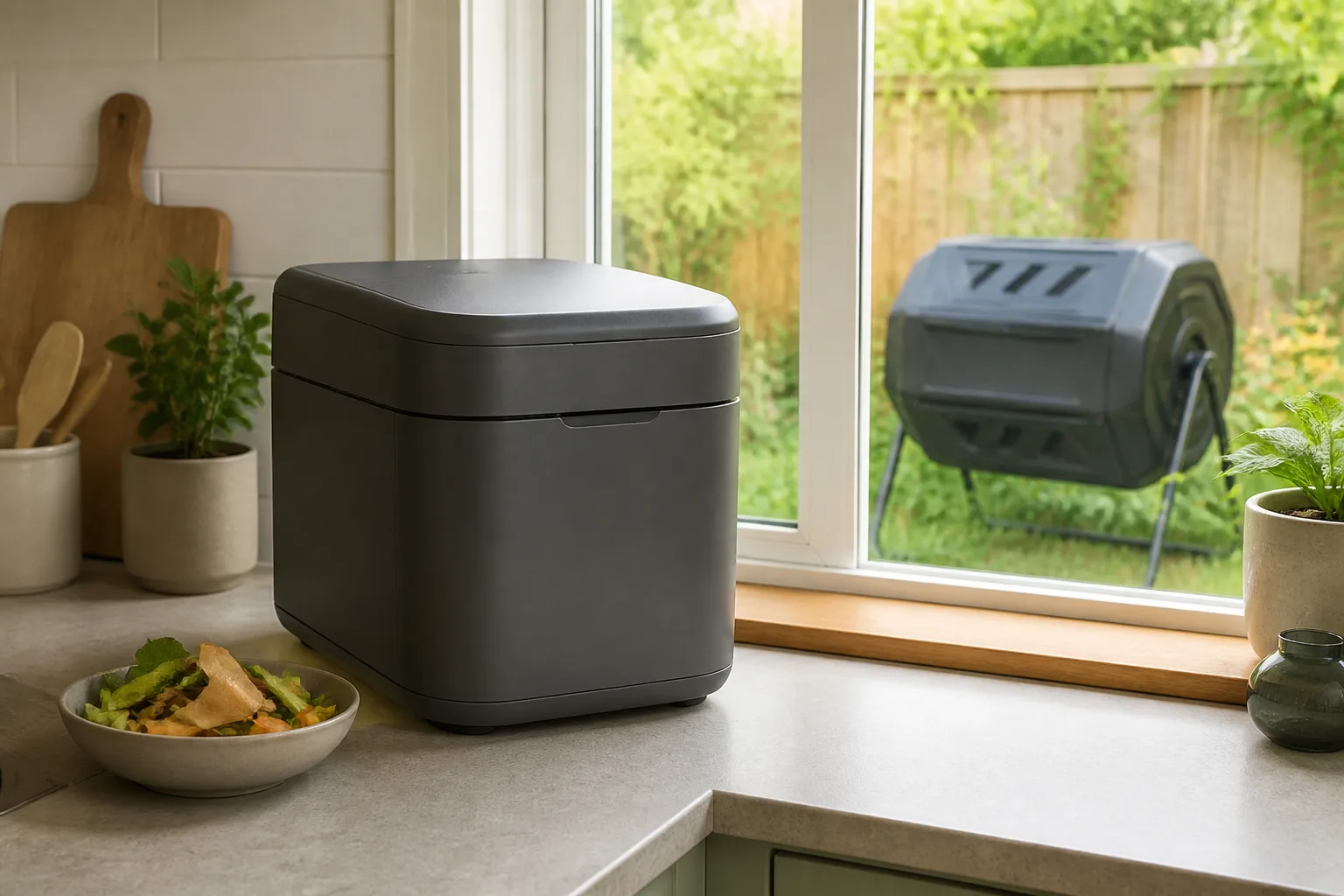
The choice between an electric composter vs compost tumbler depends on the output you expect. Most countertop machines grind and dry food scraps into a smaller, lighter material. They do not create finished compost. A tumbler supports aerobic decomposition outdoors, so it can produce a soil amendment, but it needs browns, moisture, time, and enough space for a batch. Choose the appliance for convenient indoor pre-processing. Choose the tumbler when you have an outdoor site and want to manage the full composting process. For many households, the deciding constraint is where the next batch goes.
This comparison is research based, not a hands-on test. Yard Foundry has not operated, timed, or measured the appliances and tumblers discussed here. Cycle length, energy use, accepted materials, filter life, noise, warranty coverage, and finished-batch timing must be checked for the exact model.
Electric composter vs compost tumbler at a glance
| Question | Countertop electric appliance | Outdoor compost tumbler |
|---|---|---|
| What does it do? | Grinds and dehydrates scraps, sometimes with a heated cycle | Holds and mixes an active aerobic compost batch |
| Is the output finished compost? | Usually no; it is dried, reduced food material that needs further treatment | Potentially, after decomposition and curing are complete |
| Where does it work? | Indoors near a suitable electrical outlet | Outdoors on a stable, washable surface |
| What must you add? | Model-approved scraps; some units use additives or replaceable filters | Greens, carbon-rich browns, moisture, and air |
| Main routine | Load, run a cycle, empty, clean, and manage the output | Build a balanced batch, turn it, correct moisture, then cure it |
| Main hidden cost | Electricity, filters, additives, and proprietary replacement parts | Space, stored browns, physical handling, and a second destination while curing |
The labels used in retail listings can blur these differences. Read the process description rather than relying on the word “composter.” The EPA’s home composting guidance states that residential grinding and dehydrating appliances reduce the volume and weight of scraps but do not produce compost. Their dried output can enter a composting system or an appropriate collection program.
What an electric kitchen composter makes
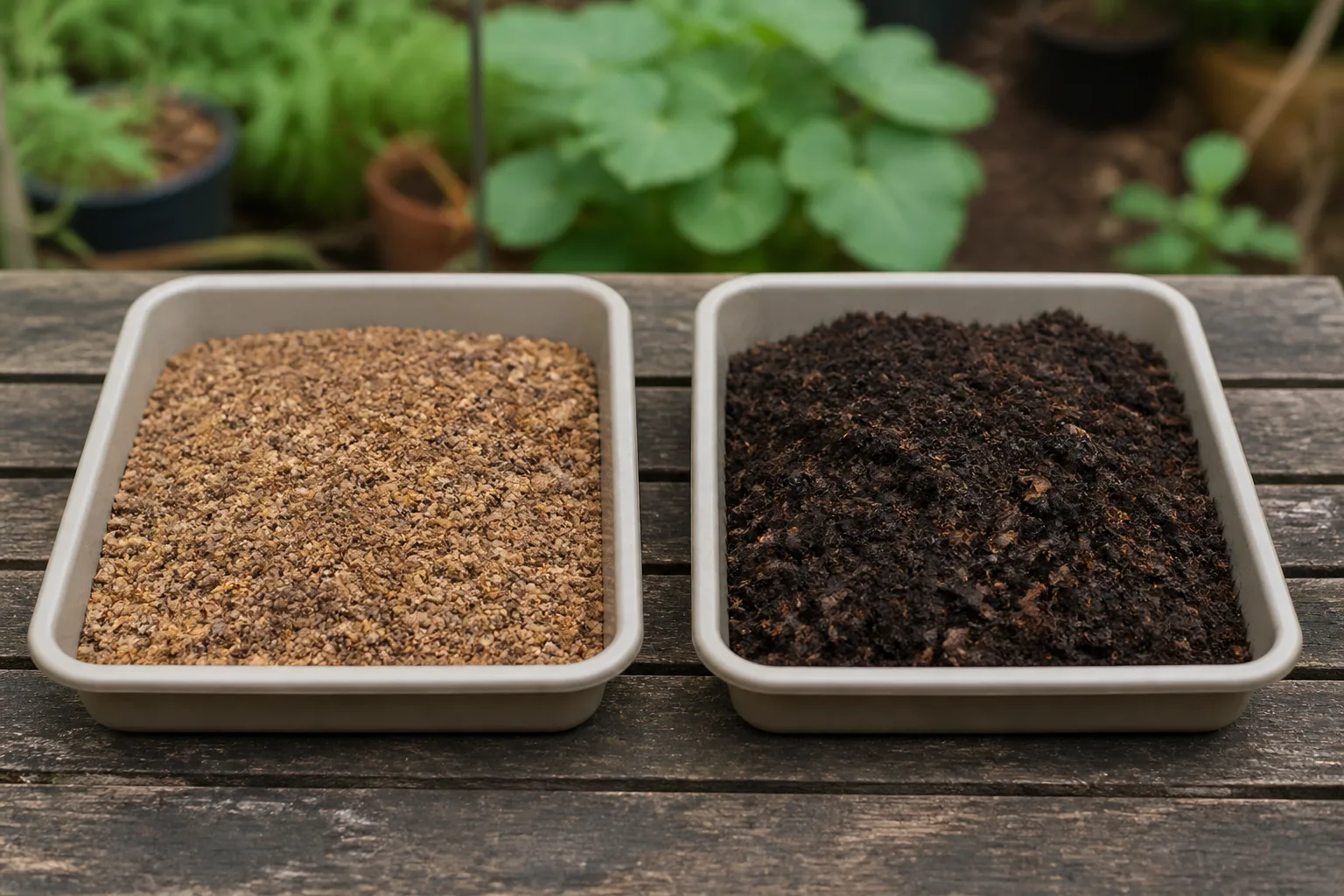
A typical countertop unit cuts scraps into smaller pieces while heat and airflow remove water. The result occupies less bin space and may be easier to store than wet peels. It can also reduce the immediate odor and mess of keeping scraps in a kitchen container, provided the appliance is cleaned and maintained as directed.
Drying is a physical change, not proof that microorganisms have completed decomposition. The material may still contain readily available carbon and nutrients. Once it gets wet, biological activity can resume. The EPA’s overview of food-scrap pre-processing technologies says this material is not biologically stable and should be composted, cured, or otherwise treated before use.
That distinction matters in a raised bed. Burying a large amount of incompletely processed food around roots can draw insects, develop odor, and change nutrient availability while it breaks down. Follow the appliance manual and local organics rules. If the manufacturer suggests mixing small amounts into soil, treat that as model-specific direction, not a universal property of every dried output.
What a compost tumbler produces
A tumbler is a container for aerobic composting. It gives you a way to mix the batch without moving it with a fork. Microorganisms still need the same ingredients they need in a pile: carbon-rich browns, nitrogen-rich greens, oxygen, and suitable moisture. The shell can make animal access less convenient and keep the work at a comfortable height, but it does not automate the biology.
Finished compost should be dark, loose, earthy smelling, and free of recognizable food scraps. It also needs a curing period after the active phase. The EPA describes a well-managed backyard pile as a process measured in months, not hours. Small tumbler chambers can take longer in cool weather because they do not hold heat as well as a large pile.
A tumbler also has a capacity ceiling. Once a single chamber is full, new scraps need another destination. Dual chambers make that handoff easier, though each side has less thermal mass. Yard waste can overwhelm the opening during fall cleanup. If branches and thick stems dominate your waste stream, an electric wood chipper buying guide is more relevant than another food-scrap appliance.
Compare the daily routine, not the fastest advertised cycle
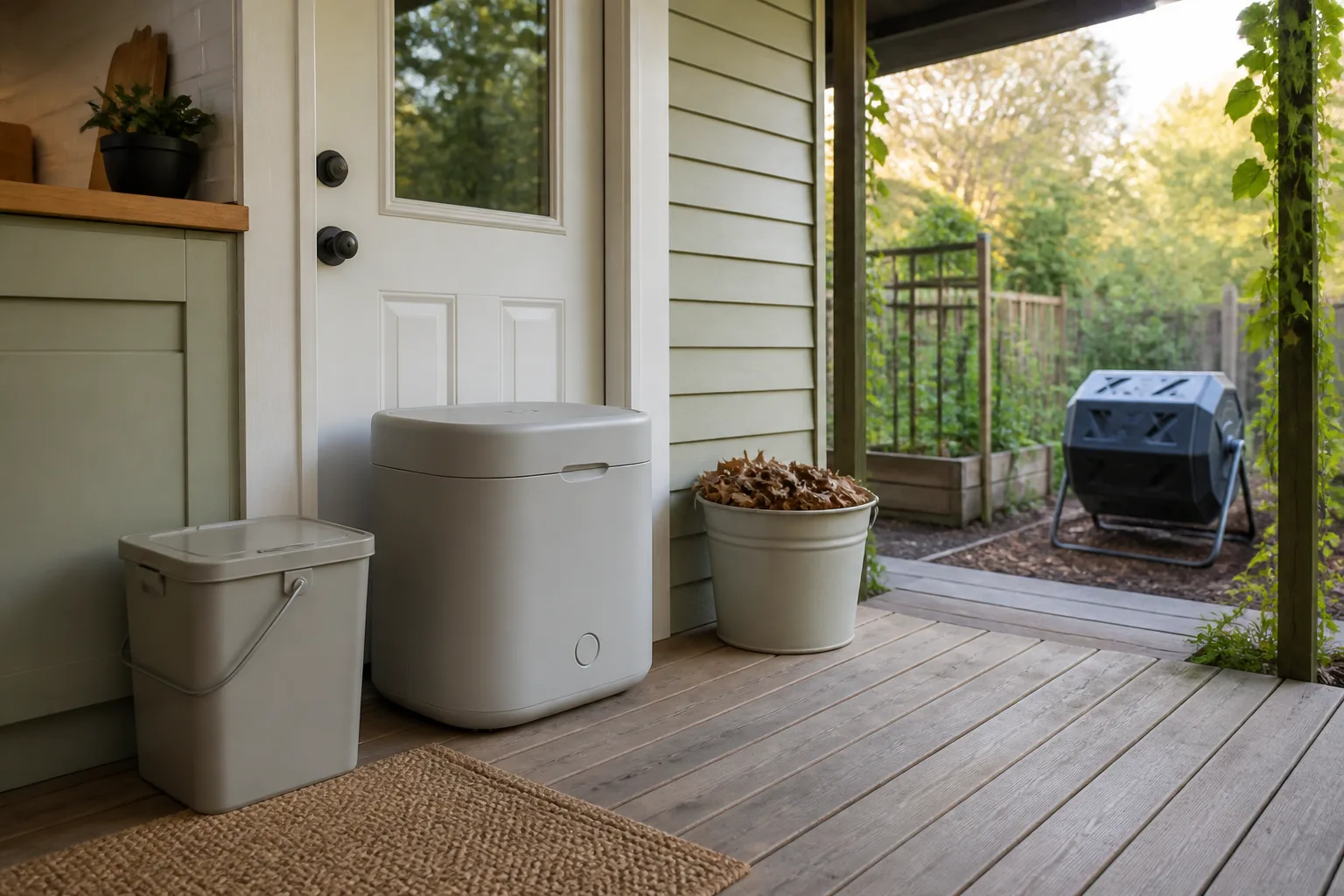
A countertop machine asks for frequent small decisions. You need to know which scraps are allowed, how full the bucket may be, whether liquids must be drained, and when a filter or additive is due. The cycle can finish overnight, yet the job is not finished until the output has a responsible local destination.
The tumbler routine is slower and less appliance-like. Kitchen scraps should be covered with dry leaves, shredded plain cardboard, or another approved brown. The mix is turned occasionally and checked for water. A sour odor often points to too much moisture or too little air. A dry, unchanged batch needs water or more nitrogen-rich material.
Ask which habit fits your household. Someone in an apartment may value a small machine that makes weekly organics drop-off cleaner. A gardener with stored leaves may prefer to walk scraps to a tumbler. A large household could use both, but the electric unit does not remove the need for the outdoor curing step if the goal is genuine compost.
Space, weather, noise, and odor
An electric unit uses counter or floor space and needs the clearances listed in its manual. Heated appliances should not be tucked into an unventilated cabinet. Consider fan noise, cycle duration, steam or warm air, and the route for emptying the bucket. A replaceable carbon filter can help with odor, but it creates a recurring cost and another part that may become unavailable.
A tumbler needs a firm outdoor pad with room for the barrel to rotate. Put it where a bucket can fit below the door and where runoff will not stain a deck. Winter slows a small batch. Full summer sun can make dark plastic and handles unpleasantly hot. The better location is convenient in rain, close to browns and water, and away from doors or windows where occasional odor would be unwelcome.
Neither system is odor free when mismanaged. Wet food left in an unplugged countertop bucket can smell. A tumbler loaded with greens and no dry carbon can turn anaerobic. Claims such as “odorless” deserve a close look at the conditions and maintenance behind them.
Operating cost and repair risk
The purchase price is only the first line. For an electric appliance, list the rated power, likely cycles per week, filter interval, additive requirement, cleaning supplies, and warranty length. Check whether the bucket, cutting assembly, filter, and lid seal can be ordered separately. A low price loses its appeal if one worn proprietary part retires the whole unit.
A tumbler does not draw electricity, but it has mechanical wear points. Latches, axle bushings, cranks, vents, and panel seams take the load of wet material. Replacement hardware may be generic, while a molded door rarely is. A stronger frame and accessible fasteners are worth more than a decorative thermometer that cannot be calibrated.
Do not compare electricity with zero cost. The outdoor system may require a pad, a scrap caddy, a supply of browns, and a second bin for overflow or curing. The indoor machine may save freezer or trash space, which can be useful even when it is not the cheapest path to compost.
Food prevention comes before processing
Neither product should become permission to waste edible food. The EPA Wasted Food Scale places prevention, donation, and upcycling above composting. Meal planning, freezing leftovers, and using edible stems can reduce the volume that any machine or tumbler must handle.
After that, separate unavoidable scraps by destination. A local collection service may accept meat, dairy, and certified compostable items that a backyard system cannot handle safely. Rules differ by program. Check the accepted-material list before buying equipment around an assumption.
Which option fits a garden?
Choose an electric food-scrap recycler when indoor convenience is the primary problem, outdoor space is unavailable, and you already know where the dried output will go. It can be useful for reducing wet storage volume. It is a poor fit if you expect finished compost straight from the bucket or do not want recurring filters and appliance maintenance.
Choose a tumbler when you have outdoor room, a dependable supply of browns, and a use for mature compost. It suits regular fruit and vegetable scraps better than huge waves of leaves or woody debris. The barrel still needs monitoring, and a curing bin may make the workflow smoother.
If your goal is to fill a new bed, compost will be only part of the volume. Check the raised bed soil calculator before ordering soil, then use the raised garden bed kit guide to compare depth and construction. The wood versus metal raised bed comparison can help when the bed itself is still undecided.
Questions to answer before you buy
- Do you want reduced scraps, or finished compost for soil?
- Where will every batch of output go?
- Which materials does the exact manual allow or exclude?
- Can your household supply enough dry browns for outdoor composting?
- How much indoor counter space or outdoor working clearance is available?
- What are the energy, filter, additive, hardware, and replacement-part costs?
- What happens during vacation, winter, or a seasonal surge of yard waste?
Compare electric kitchen food recyclers on Amazon (paid link). Before ordering, read the current manual for accepted inputs, rated power, ventilation clearance, filter schedule, output handling, cleaning, parts availability, and warranty exclusions.