Disclosure: This page contains affiliate links. As an Amazon Associate, Yard Foundry earns from qualifying purchases.
This guide explains system sizing and component matching. It is not a design certification, and Yard Foundry did not field-test every pump kit.
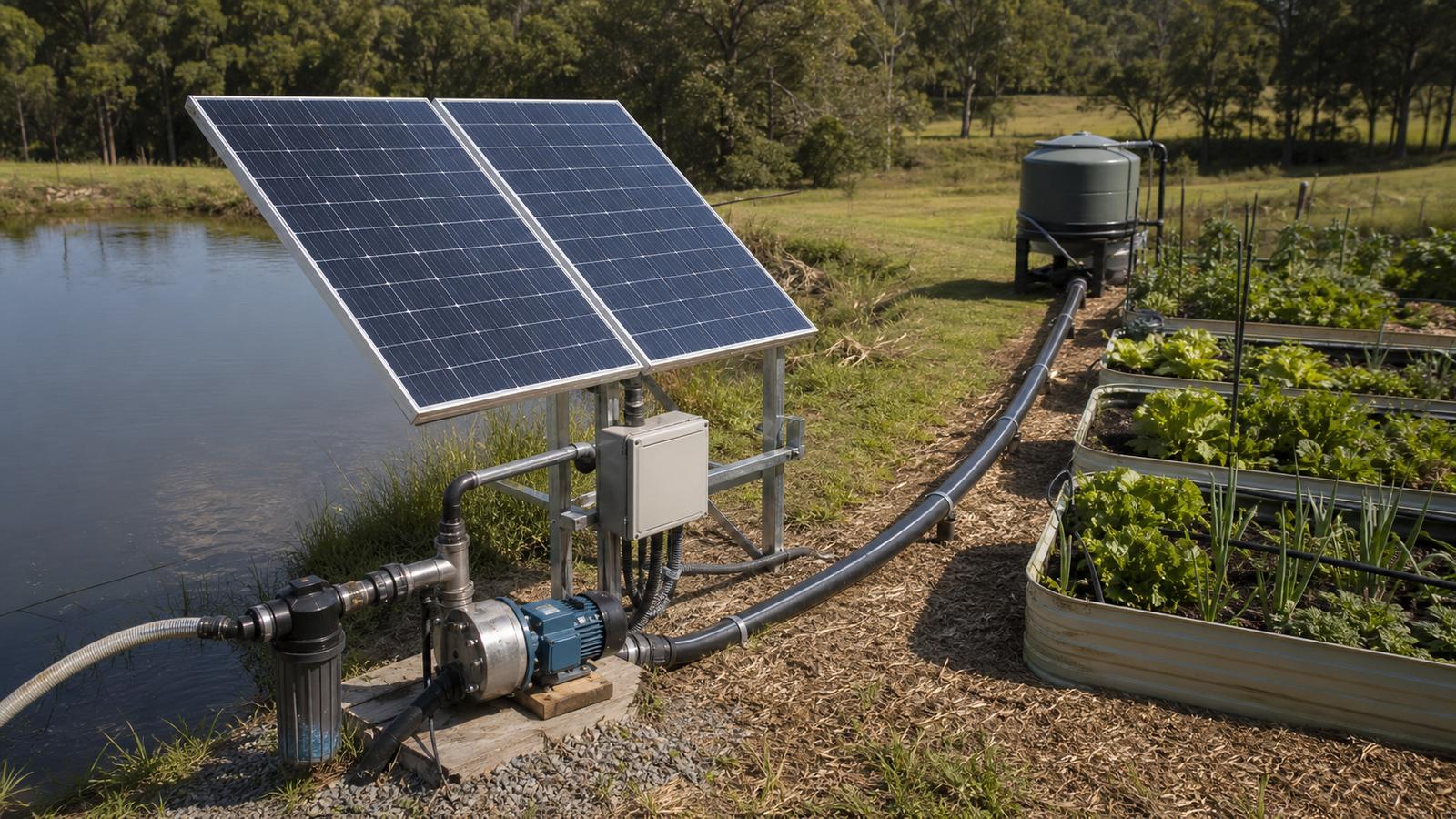
A solar pump can move water from a pond, well, stream, or storage tank without extending utility power across a property. The useful system is rarely just a pump and panel. Lift, pipe friction, daily water demand, sunlight, filtration, storage, and irrigation pressure all have to agree.
A kit can simplify component matching, but the buyer still needs to calculate the job.
See solar irrigation pump kits on Amazon
Calculate daily water demand
Start with gallons needed per day, not pump horsepower. List each irrigation zone, its flow rate, and planned run time. Include greenhouse use, livestock, or tank cleaning only if the system will serve them.
Peak midsummer demand matters most. A system sized around cool spring weather may fall behind when days are hot, plants are large, and the water source is lower.
Total dynamic head is the central number
Vertical lift is measured from the water surface to the discharge point, not simply from the pump to the ground. Add pressure required by the irrigation equipment and friction loss through pipe, fittings, filters, and valves.
Long narrow pipe can consume surprising pressure. Increasing pipe diameter often improves performance more cheaply than buying a larger pump.
Surface pumps and submersible pumps
A surface pump stays accessible for service but has strict suction limits and may need priming. It suits shallow sources and tanks when placed close to water level.
A submersible pump pushes water from inside a well, pond, or tank. It avoids suction problems and can handle greater lift, but retrieval and cable protection require planning. Water quality and the manufacturer’s permitted source type matter for either design.
Pump selection starts with required flow and total dynamic head, then uses the manufacturer’s pump curve to find the operating point and power requirement. The USDA Natural Resources Conservation Service shows that sequence in its technical note on solar-powered water pumping.
Understand the pump curve
A single maximum-flow number is nearly useless without the head at which it was measured. Flow drops as lift and pressure increase. Find the pump curve and locate the expected operating head. That point should still deliver the required flow.
Maximum head is the point where flow approaches zero. It is not a practical design target.
Direct solar versus battery storage
A direct-solar pump runs when sunlight is available. It is simple and efficient when water can be pumped into a storage tank during the day, then used later. A tank is often a better “battery” than an electrical battery.
Battery systems can pump outside sunny hours and may hold irrigation pressure, but they add cost, replacement cycles, charge controls, fuses, and enclosure needs. Use batteries when the operation truly requires them.
Panel and controller matching
Pump voltage, controller limits, panel open-circuit voltage, operating current, and temperature conditions must match. A kit reduces guesswork, yet cable length and connector weatherproofing still deserve attention.
Mount panels away from afternoon shade and allow airflow behind them. Seasonal sun angle changes. A spot that looks clear in summer may be shaded by a building during spring planting.
Storage tanks make systems calmer
A tank separates irregular solar pumping from irrigation schedules. The pump fills storage when energy is available; gravity or a separate pressure pump feeds the garden later.
Include overflow routing, screened vents, a drain, freeze protection where needed, and a stable base designed for the full water weight. Keep opaque tanks out of excessive heat when possible to discourage algae.
Filtration and source protection
Drip emitters need clean water. Pond and rainwater systems may require an intake screen, settling stage, and serviceable filter. Place the intake away from bottom sediment and floating debris.
Wells, streams, and ponds can be regulated. Water rights, environmental restrictions, and local well rules may apply even when the pump is small.
Drip irrigation is usually the easiest partner
Low-pressure drip zones use water efficiently and can work well from a raised tank. Check the minimum pressure for filters, regulators, valves, and emitters. Long rows need careful pipe sizing and pressure balance.
High-pressure sprinklers demand more pump power and may be a poor match for a modest direct-solar kit.
Protection and maintenance
- Use dry-run protection when the source can fall.
- Add low-tank or float controls where needed.
- Protect cables from animals, mowers, and UV exposure.
- Provide disconnects and overcurrent protection specified by the manufacturer.
- Flush filters and irrigation lines on a schedule.
- Plan winter draining or freeze protection before installation.
How to compare solar irrigation pump kits
Calculate daily gallons, total dynamic head, and required flow. Choose the pump from its curve. Then size the solar array and storage strategy around that pump. Reversing the order often produces a nice panel attached to an underperforming water system.
If the system will supply a greenhouse, combine this plan with the foundation and access decisions in our polycarbonate greenhouse kit guide.