Disclosure: This page contains affiliate links. As an Amazon Associate, Yard Foundry earns from qualifying purchases.
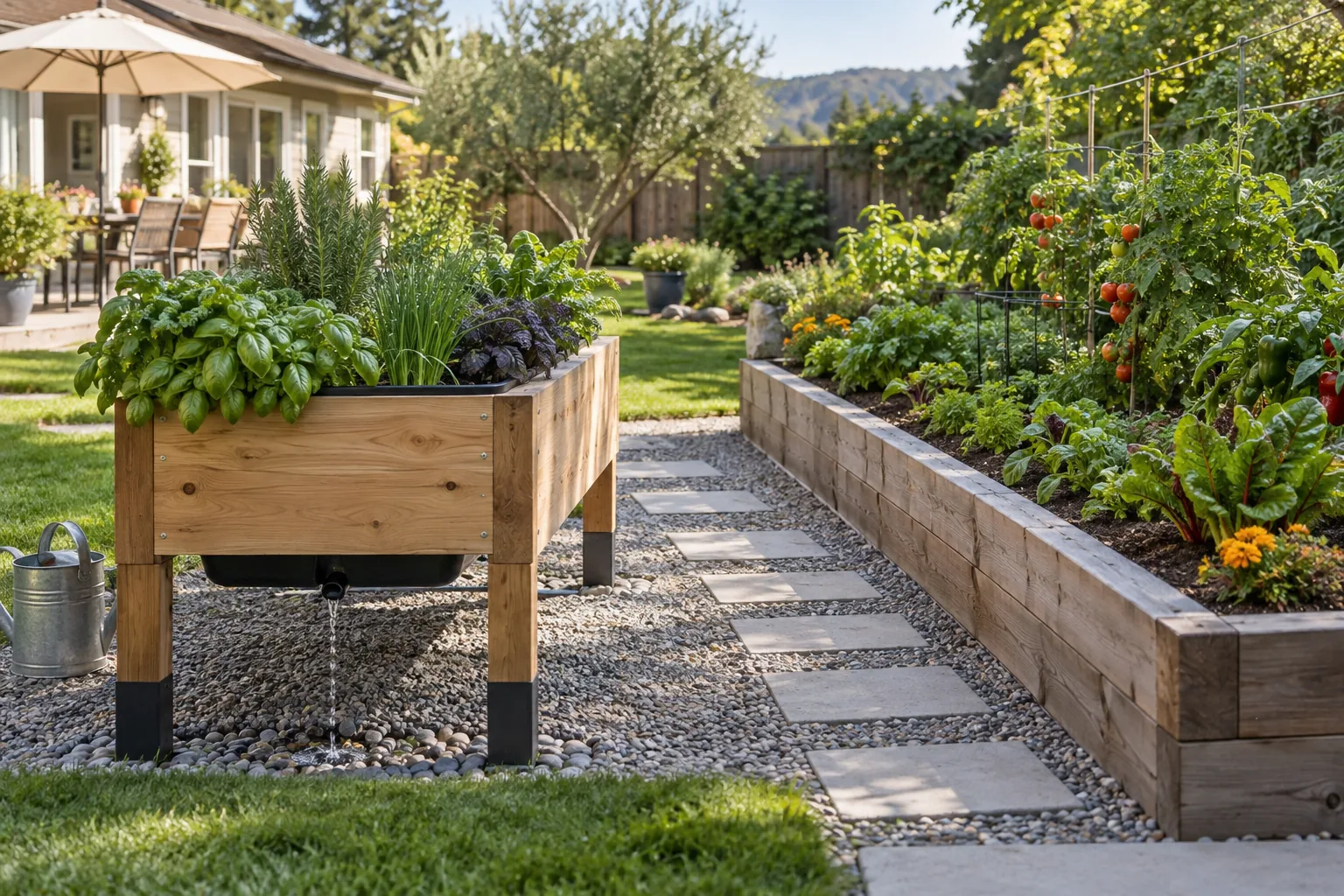
An elevated vs ground raised bed decision changes access, soil volume, irrigation, root space, stability, and winter exposure. A waist-high planter can reduce bending, but it behaves more like a large container. A ground-level raised bed holds more soil and connects with the soil below, but it still requires reaching and kneeling.
This guide is based on extension guidance, installation manuals, and published specifications. Yard Foundry has not physically tested the equipment discussed here. Confirm every load, clearance, electrical detail, and compatibility requirement with the current manual for the exact product you buy.
Which raised-bed style fits the job?
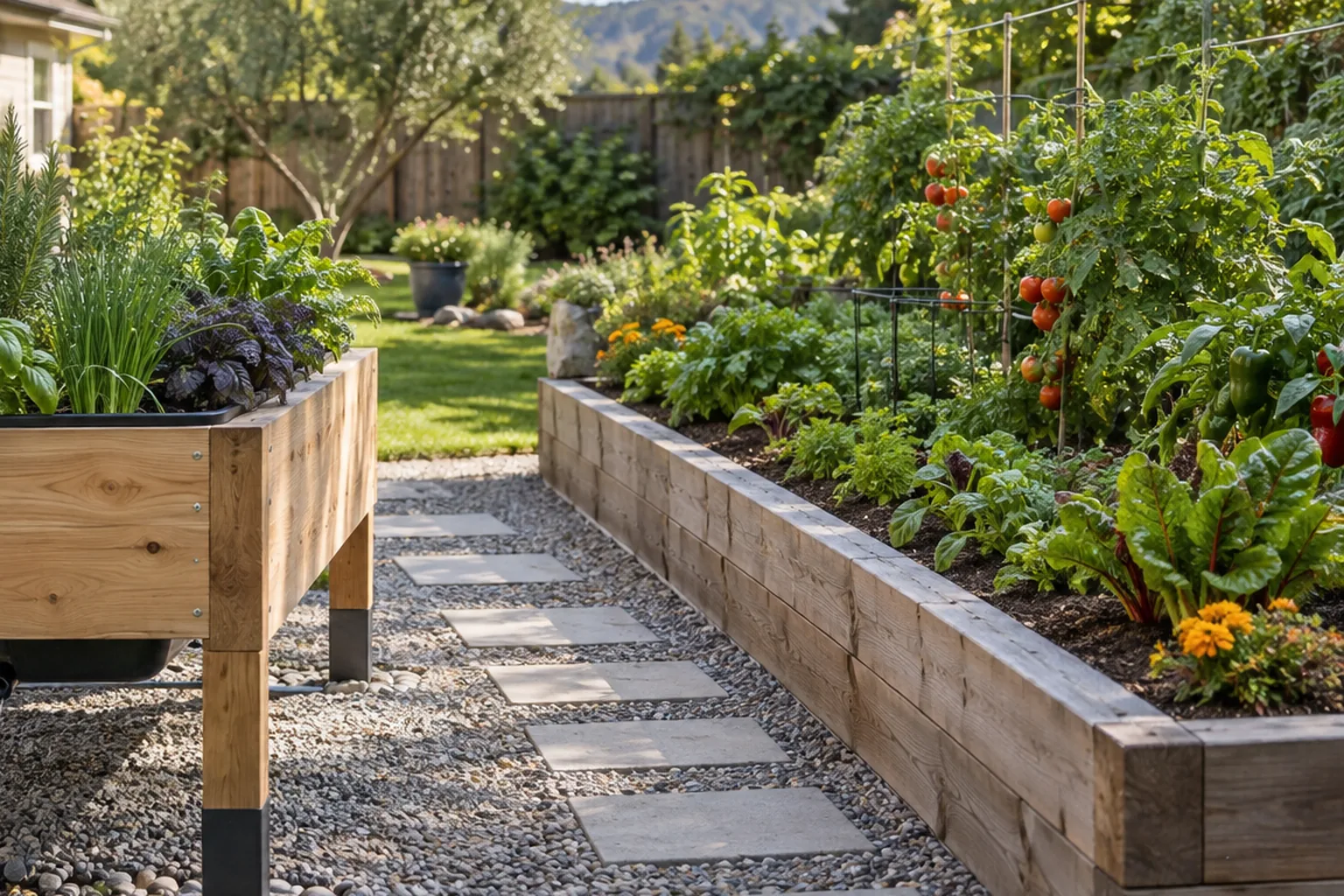
Choose an elevated planter for patios, small herbs, greens, and gardeners who want the work surface higher. Choose a ground-level raised bed for deep-rooted crops, larger soil volume, season-to-season moisture stability, and easier integration with trellises or covers. Use a mixed layout when accessibility and crop capacity both matter.
Height alone does not make a bed accessible if the width, path, lip, and approach are wrong. The broader premium raised garden bed guide explains the surrounding decision. This page stays with one narrower job: matching bed structure to access and growing volume.
Start with the gardener and the crop list
Measure comfortable reach from the actual working position. A high planter that is too wide can be harder to use than a lower narrow bed. Leave knee, toe, mobility-device, and tool clearance where relevant.
List the crops by root depth, mature top weight, and trellis needs. Shallow planters suit many greens and herbs, while tomatoes, large perennials, and tall supports need more root volume and structural stability.
University of Minnesota Extension notes the access benefits and faster drying of containerized raised beds in Raised bed gardens. That tradeoff is central to elevated planters because their soil is separated from the ground.
Compare access, soil, and structure
| Decision point | What to check | Why it matters |
|---|---|---|
| Working height | Standing, seated, or kneeling reach | Affects comfort and usable bed width |
| Root volume | Contained planter or soil connected to ground | Changes crop choice and moisture reserve |
| Support | Legs, braces, and floor panel or perimeter walls | Elevated wet soil creates a concentrated load |
| Water | Faster container drying or deeper reserve | Changes irrigation frequency |
| Season | More exposed or ground-buffered soil | Elevated soil changes temperature faster |
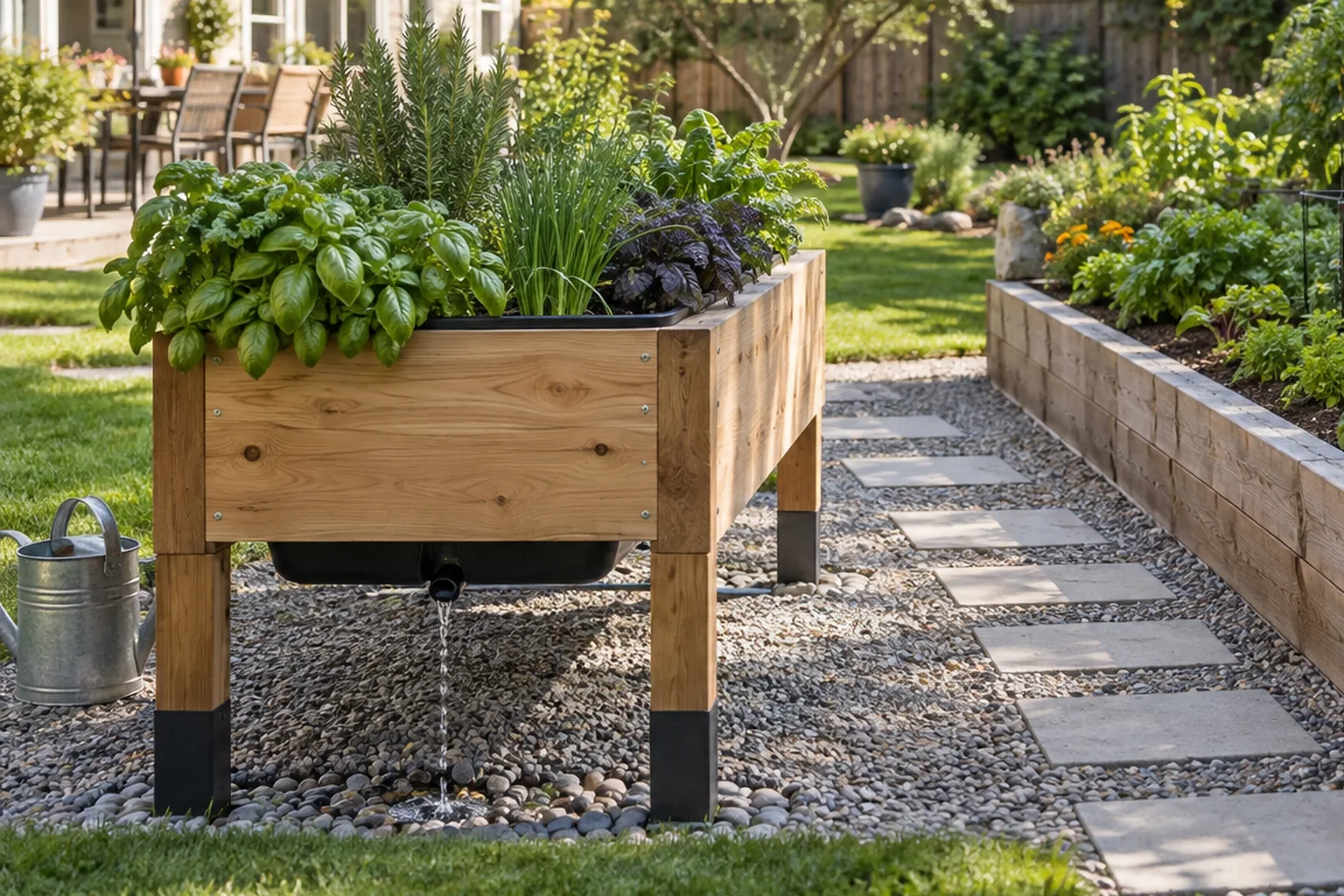
An elevated bed is not simply a tall ground bed. Its bottom, legs, fasteners, and center bracing carry the full wet load above grade.
Working height
Start with standing, seated, or kneeling reach. Affects comfort and usable bed width. A specification may describe a ceiling rather than a comfortable working point, so read the footnotes before relying on it. Write the confirmed figure beside the measurement from your yard.
Root volume
Contained planter or soil connected to ground. Changes crop choice and moisture reserve. Give this item its own line on the comparison sheet. If the product page and current manual disagree, use the manual or ask the manufacturer to explain the difference.
Support
Then look at legs, braces, and floor panel or perimeter walls. Elevated wet soil creates a concentrated load. Note the conditions attached to the number, including the selected accessory, surface, weather, load, or operating mode. Those details often explain why two similar listings behave differently.
Water
Faster container drying or deeper reserve. is easy to skim past. Changes irrigation frequency. Confirm whether the figure applies to the standard setup or an optional configuration, then compare it with the tightest condition on your site.
Season
Finish with more exposed or ground-buffered soil. Elevated soil changes temperature faster. A blank or vague answer is a reason to pause, especially when it affects safety, fit, or a costly accessory. Get the answer in writing before ordering.
Look past the purchase price
Make a second budget for everything that arrives after the main product: fittings, anchors, electrical or water work, delivery, consumables, replacement parts, and sheltered storage. That list keeps elevated vs ground raised bed from looking cheaper on paper than it will be in the yard.
Warranty length can be misleading. Check what happens after weather damage, an installation change, skipped maintenance, or use of a third party part. Download the current paperwork and keep it with the receipt.
Now find the parts diagram. If a small damaged piece requires a complete assembly, include that risk in the comparison. Easy access for cleaning and adjustment matters too; neglected service points turn small chores into repairs.
Calculate soil and support load
Calculate interior length, width, and soil depth. Convert cubic feet to cubic yards for ground beds and check bag volumes for smaller elevated planters.
Estimate wet weight using the soil supplier’s data rather than a universal number. Add water, plants, trellises, and the gardener leaning on the edge.
Check the patio, deck, pavers, or soil under each leg. Concentrated leg loads can settle or damage a surface even when the total weight sounds modest. If the numbers lead to a larger system than expected, revisit the assumptions before downsizing the equipment. Our raised bed soil calculator can help with that adjacent calculation.
Plan drainage and irrigation
Elevated beds need drainage openings that cannot clog and a path for water that will not stain a deck or create a slippery walkway.
A ground bed should drain through its soil profile without becoming a bathtub. Remove compaction and construction debris, and avoid impermeable liners unless there is a specific reason.
Use irrigation that can be isolated by bed. Smaller elevated volumes may need more frequent watering, while deep ground beds can be watered less often and more deeply. This is also where the raised bed depth guide becomes useful.
Common mistakes that make a good product disappoint
- Choosing height without checking reach across the bed
- Ignoring the wet weight carried by legs and bottom panels
- Growing deep-rooted crops in a shallow elevated planter
- Letting drainage discharge onto a walking surface
- Assuming one irrigation schedule fits both bed types
Mock up the height and width with boxes or a table before buying. A five-minute reach test often reveals more than a product photo.
Put the decision on one sheet
A short comparison sheet prevents details from getting lost between browser tabs. List the yard condition, the manual limit, and where you found the answer. Circle any gap involving structure, electricity, water, moving parts, slopes, or clearances and resolve it before checkout.
The order that keeps rework down
- Define working position and comfortable reach
- List crop root and trellis needs
- Calculate soil volume and wet load
- Verify leg, floor, and site capacity
- Plan drainage discharge
- Divide irrigation by bed type
- Choose a mixed layout if one style cannot do both jobs
Compare elevated raised bed planters on Amazon (paid link). Use the results to build a shortlist, then leave Amazon and verify the current manual, dimensions, warranty conditions, and replacement-part path on the manufacturer’s site.
Verify soil depth, internal dimensions, drainage, center support, and replacement liner or panel availability. Overall height alone is not enough.
Questions homeowners ask before committing
How deep should an elevated raised bed be?
Depth depends on the crop and the usable internal soil profile. Check the planter’s actual soil depth, not overall height including legs.
Can an elevated bed sit on a deck?
Only if the deck capacity, leg loads, drainage, and surface protection are verified. Wet soil is heavy and water must leave safely.
Do elevated beds need more water?
Often yes because the smaller exposed soil volume dries faster. Mulch and irrigation scheduling can reduce swings.
The Yard Foundry take
Elevated beds improve the working height and fit small spaces, while ground-level raised beds offer deeper, more stable soil volume. Choose by reach, roots, wet load, and water management rather than appearance alone. Before placing an order, compare that plan with the raised bed drip irrigation layout so the new purchase fits the rest of the yard rather than solving one problem and creating another.