Disclosure: This page contains affiliate links. As an Amazon Associate, Yard Foundry earns from qualifying purchases.
This is a research-based buyer’s guide. Yard Foundry did not feed identical material through every chipper or verify each advertised capacity in a controlled test.
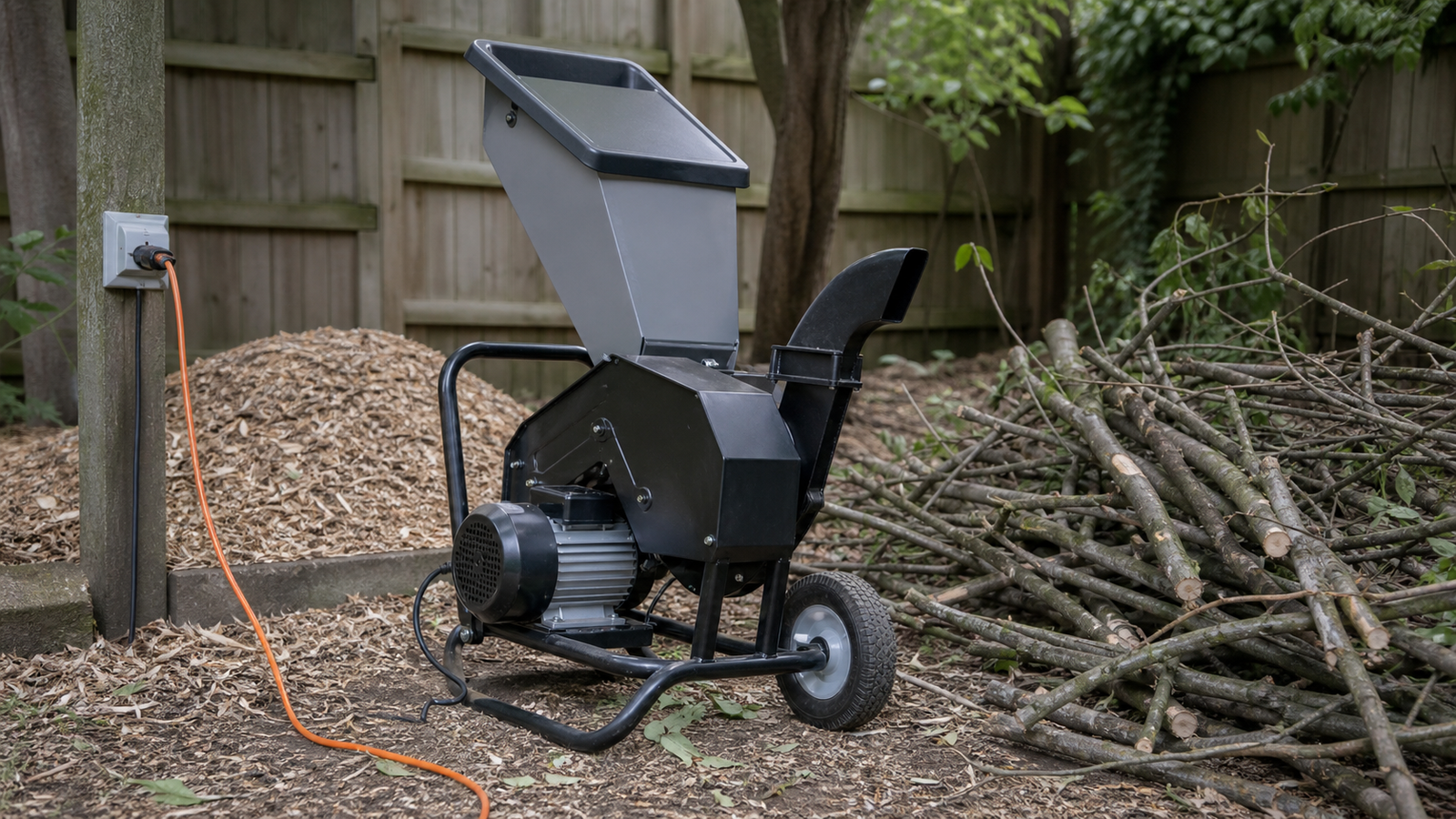
An electric chipper is appealing because it starts without fuel, runs more quietly than a gas machine, and asks for less maintenance. It still has firm limits. Wet vines, forked branches, fibrous palm material, and oversized hardwood can turn a productive afternoon into repeated jam clearing.
Buy around the material you actually prune, not the largest branch shown in a product photo.
See heavy-duty electric wood chippers on Amazon
Start with the pile
Sort a typical pruning pile into straight branches, leafy twigs, fibrous stems, and soft green waste. Chippers handle woody branches best. Shredding broad leaves and stringy material requires a design made for it, and some compact units simply aren’t.
Measure branch diameter near the thick end. Advertised maximum capacity is usually an upper limit under favorable conditions. Routine work goes faster when most branches are comfortably below it.
Disc, drum, and cutting-wheel designs
Compact homeowner machines often use a fast rotating disc or cutting wheel with replaceable blades. Larger electric models may use a drum or roller feed. The cutting system influences chip size, self-feeding behavior, noise, and jam access.
Look for clear instructions on blade sharpening, replacement, and adjustment. A machine with affordable blades and simple access can outlast one with better headline specifications but no parts route.
Power supply is part of the tool
Small corded chippers may run from a standard household circuit. Higher-output machines can require a dedicated higher-voltage circuit. Confirm voltage, amperage, plug type, and extension-cord limits before ordering.
Voltage drop across a long undersized cord reduces performance and can overheat equipment. Place the chipper close to proper power and bring branches to it when possible. Outdoor circuits need the protection required by local electrical rules.
Feed opening and branch shape
A wide hopper is convenient for leafy twigs, but the narrowest internal opening controls what passes. Side shoots snag on safety baffles. Pruning branches into straighter pieces before feeding often saves more time than forcing a tangled limb through the hopper.
Some units pull material steadily. Others need the operator to guide each branch. Never push material with hands past the safe opening. Use the supplied paddle and follow the manual.
Reduction ratio and chip quality
A claimed reduction ratio is difficult to compare across different material. Dry branches produce compact chips, while leafy brush holds air. Focus on whether the output suits your purpose. Coarse chips work well on paths and beneath shrubs. Fine material breaks down faster in compost.
If clean decorative mulch is the goal, test expectations first. Small electric machines may produce mixed strips, chips, and leaves rather than uniform landscaping mulch.
Jam clearing
Every chipper eventually jams. Safe access matters. The machine should disconnect from power before covers open, and the cutting assembly should be reachable without a complicated teardown.
Reverse feed is useful on roller machines. On blade-disc models, easy chute access and a supplied tool may matter more. Read owner reports specifically for jam clearing, not just cutting speed.
Mobility and collection
A steel machine can be awkward despite having wheels. Check handle height, balance, wheel diameter, and whether it can cross gravel or lawn. A stable stance matters because feeding long branches creates side loads.
Collection bags keep chips contained but can clog the discharge if overfilled. A rigid bin or open pile may work better for continuous processing.
Electric or gas?
Electric is a comfortable fit for regular pruning near a power source. Gas remains better for remote work, thick hardwood, and large storm debris. Renting a commercial chipper makes sense for a one-time pile that would overwhelm a homeowner unit.
Don’t buy a compact electric model to avoid renting a machine that is honestly better suited to the job.
Never reach into a chipper or open an access cover until the cutting system has fully stopped and the machine is de-energized according to its manual. OSHA’s chipper safety card identifies caught-in injuries, thrown material, hearing damage, and maintenance lockout as core hazards.
Safety and protective equipment
- Wear eye and hearing protection, gloves, sturdy footwear, and close-fitting clothing.
- Keep faces and hands away from the feed opening.
- Stand to the side when feeding long material.
- Disconnect power before clearing or servicing.
- Keep children and bystanders outside the work zone.
- Never chip metal, stones, treated lumber, or unknown debris.
How to compare electric wood chippers
We would prioritize honest routine capacity, replaceable blades, straightforward jam access, a stable frame, and a power requirement the property can support. A published parts diagram is a strong sign. Maximum diameter and reduction-ratio numbers come later.