Disclosure: This page contains affiliate links. As an Amazon Associate, Yard Foundry earns from qualifying purchases.
This is an editorial comparison of machine layout and buying criteria, not a hands-on test of each tiller.
A rear-tine tiller is a serious machine for opening compacted ground, preparing a sizable vegetable plot, or mixing amendments into established soil. It is also heavy, noisy, and expensive enough that the wrong choice can become a shed ornament.
The useful question isn’t which tiller has the biggest engine. It is whether the tine action, gearing, tires, and balance match your soil and the work you actually plan to do.
See current rear-tine tillers on Amazon
Rear-tine versus front-tine
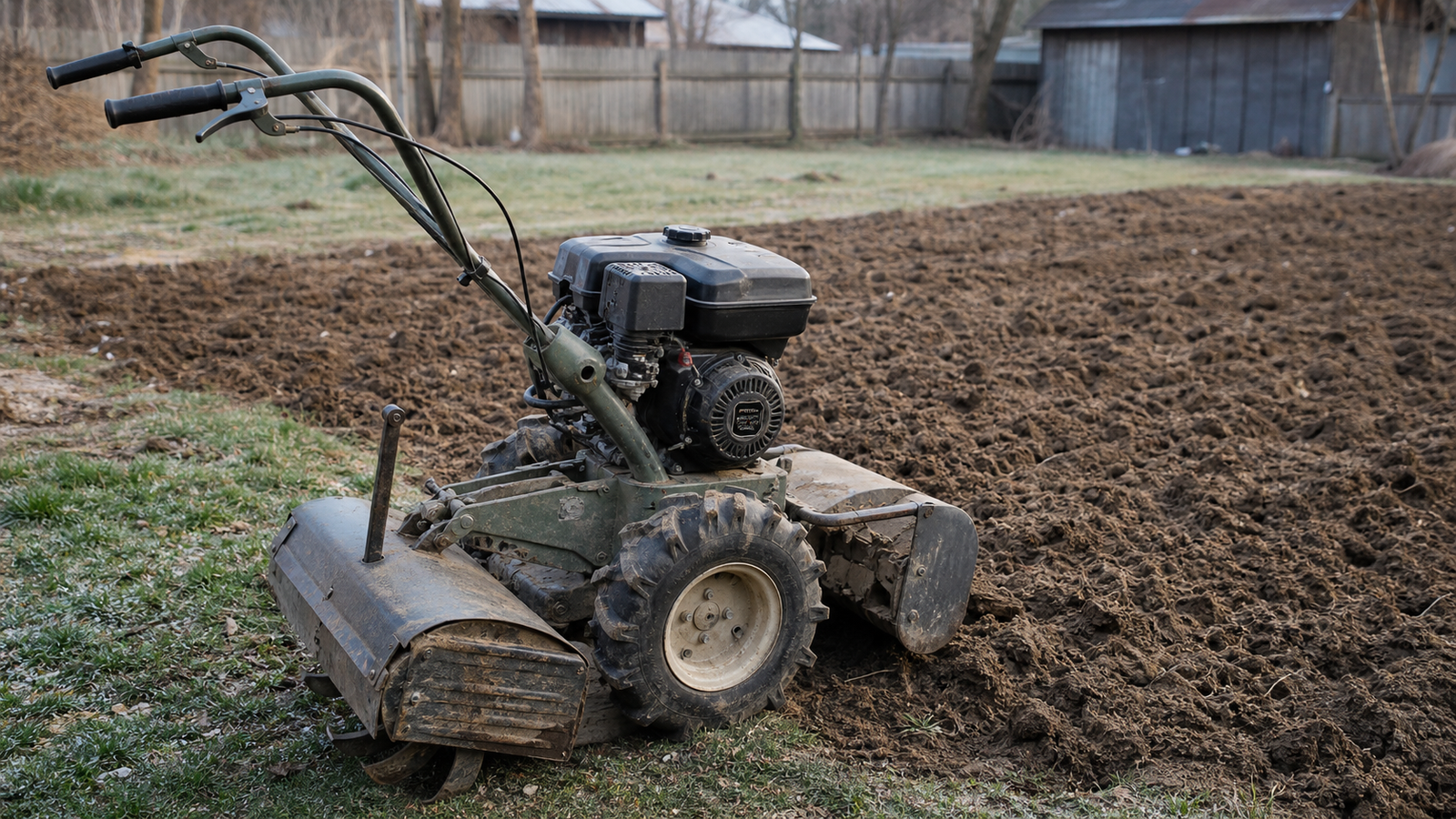
On a rear-tine machine, powered wheels sit ahead of the tines. The wheels control travel while the tines work the soil behind them. This layout is steadier in hard ground than a light front-tine cultivator that pulls itself forward with the tines.
Front-tine machines remain useful for small, previously worked plots. A rear-tine tiller earns its storage space when the area is larger, the ground is tougher, or repeated seasonal preparation is expected.
Forward, counter, and dual rotation
Forward-rotating tines turn in the same general direction as the wheels. They move smoothly through loose or previously tilled soil and are comfortable for seedbed finishing.
Counter-rotating tines turn against the direction of travel. They bite aggressively into hard, unbroken ground while the powered wheels hold the pace. The machine may feel more planted, though buried stones and roots still produce sudden reactions.
Dual-rotation models let the operator switch modes. That flexibility is useful if the same tiller will break new ground in spring and refine beds later. It adds controls and mechanical complexity, so check how the changeover works.
Transmission and reverse
Multiple forward speeds help match ground conditions. A low working gear is more useful than a high transport claim. Reverse makes a heavy machine easier to extract from corners, fences, and soft patches.
Find out whether the wheels can freewheel when the engine is off. Moving a several-hundred-pound tiller into storage is unpleasant if the transmission resists every step.
Tilling width and depth
A wide pass covers open ground quickly but needs turning room. Narrow plots, gates, and permanent beds may suit an adjustable-width machine. Published maximum depth describes capability under favorable conditions, not what should happen in one pass.
Hard ground is better worked gradually. Shallow first passes reduce shock loads and expose hidden debris. Deep repeated tilling can also damage soil structure, so use the tool for a defined job rather than as an automatic annual ritual.
Engine size isn’t the whole story
Torque, gearing, weight over the tires, and tine design determine how power reaches the soil. A large engine on a poorly balanced frame can still hop or dig unevenly.
Check starting method, air-filter access, oil drains, fuel shutoff, and local service support. Routine maintenance should not require removing half the machine.
Traction and balance
Large agricultural-tread tires help on loose ground. Adjustable depth stakes and drag bars control how firmly the tines bite. Handle height should suit the main operator because fighting a low handle for an hour is exhausting.
Try to see the machine in person if possible. Control effort, reach, vibration, and the force needed to turn are difficult to judge from specifications.
Transport and storage
Measure gate widths, trailer ramps, and shed doors. Note machine weight and whether loading ramps are rated for it. Drainage, ventilation, and fuel storage practices matter inside a small shed.
A protective cover helps with dust, but don’t cover a hot engine or trap moisture around metal surfaces.
Safety points that belong in the purchase decision
- Choose controls that stop tine power when released.
- Wear eye, hearing, hand, and sturdy foot protection.
- Walk the plot and remove wire, stakes, rocks, and irrigation lines.
- Never clear wrapped debris with the engine running.
- Keep bystanders well away from the work area.
- Follow the manual for slopes and transport.
A tiller is useful for opening some new plots, but repeated intensive tillage can break soil aggregates and contribute to later compaction and erosion. The University of Minnesota Extension outlines those tradeoffs and lower-disturbance alternatives in its guide to reducing garden tillage.
Who should rent instead?
If you are opening one small plot and don’t expect to till again, renting a commercial machine may be cheaper and avoids maintenance. Ownership makes more sense for larger gardens, repeated projects, or rural properties where rental pickup is inconvenient.
How to compare rear-tine tillers
We would put dependable low-speed control, reverse, sensible service access, and local parts support ahead of maximum width. Dual rotation is attractive for mixed work. For consistently hard new ground, a well-balanced counter-rotating model is the straightforward choice.