Disclosure: This page contains affiliate links. As an Amazon Associate, Yard Foundry earns from qualifying purchases.
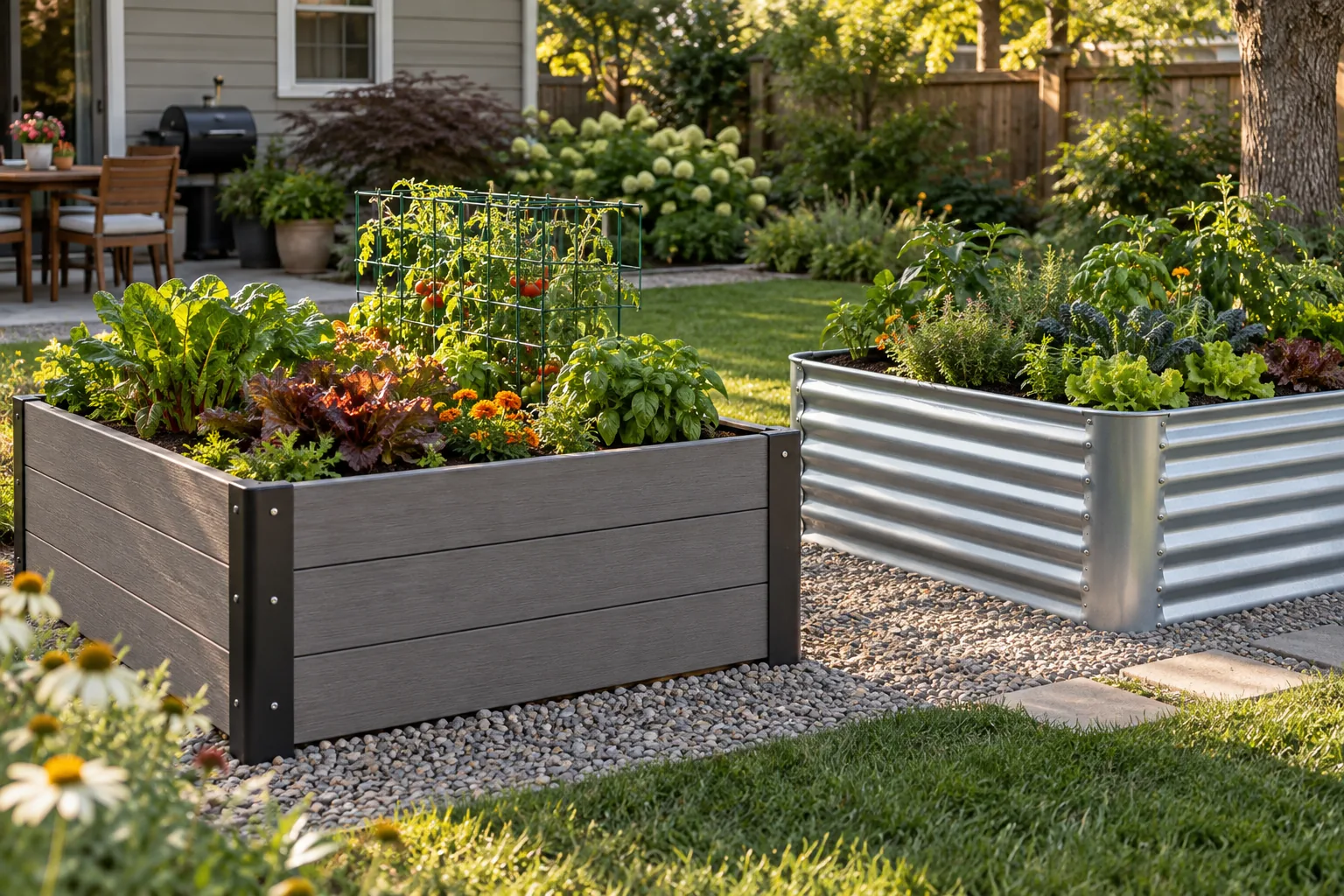
Composite vs metal raised garden beds is a useful comparison when low upkeep matters more than the lowest initial price. Metal beds rely on panel shape, coating, edges, and connectors for stiffness. Composite beds rely on board span, expansion allowance, corner joints, and internal bracing. Either can last, but weak hardware can undo a durable wall material.
This guide is based on extension guidance, installation manuals, and published specifications. Yard Foundry has not physically tested the equipment discussed here. Confirm every load, clearance, electrical detail, and compatibility requirement with the current manual for the exact product you buy.
Composite or metal raised beds: the short answer
Metal is often the lighter, thinner, and more modular choice. Composite can provide a thicker board-like appearance and a less metallic touch surface, but long spans need bracing and the material can move with temperature. Choose the complete structure by wall deflection, corner design, coating or board formulation, replacement parts, and safe edges rather than by material name alone.
Garden soil exerts steady outward pressure, especially after watering. The broader wood vs metal raised bed comparison explains the surrounding decision. This page stays with one narrower job: how the bed walls and connectors age under soil load.
Inspect the structure behind the finish
A corrugated metal panel gains stiffness from folds, while a flat panel of the same thickness may bow. Composite boards gain stiffness from cross section and support spacing. Compare the assembled wall, not a loose sample.
Look at corner posts, mid-span braces, top rails, fastener access, and the way stacked tiers connect. If the manual warns against moving a filled bed, decide on the final location before assembly.
University of Minnesota Extension discusses metal and other raised-bed materials in Raised bed gardens. The guidance supports comparing materials and noting that taller beds dry faster; exact product chemistry and load capacity still come from the manufacturer.
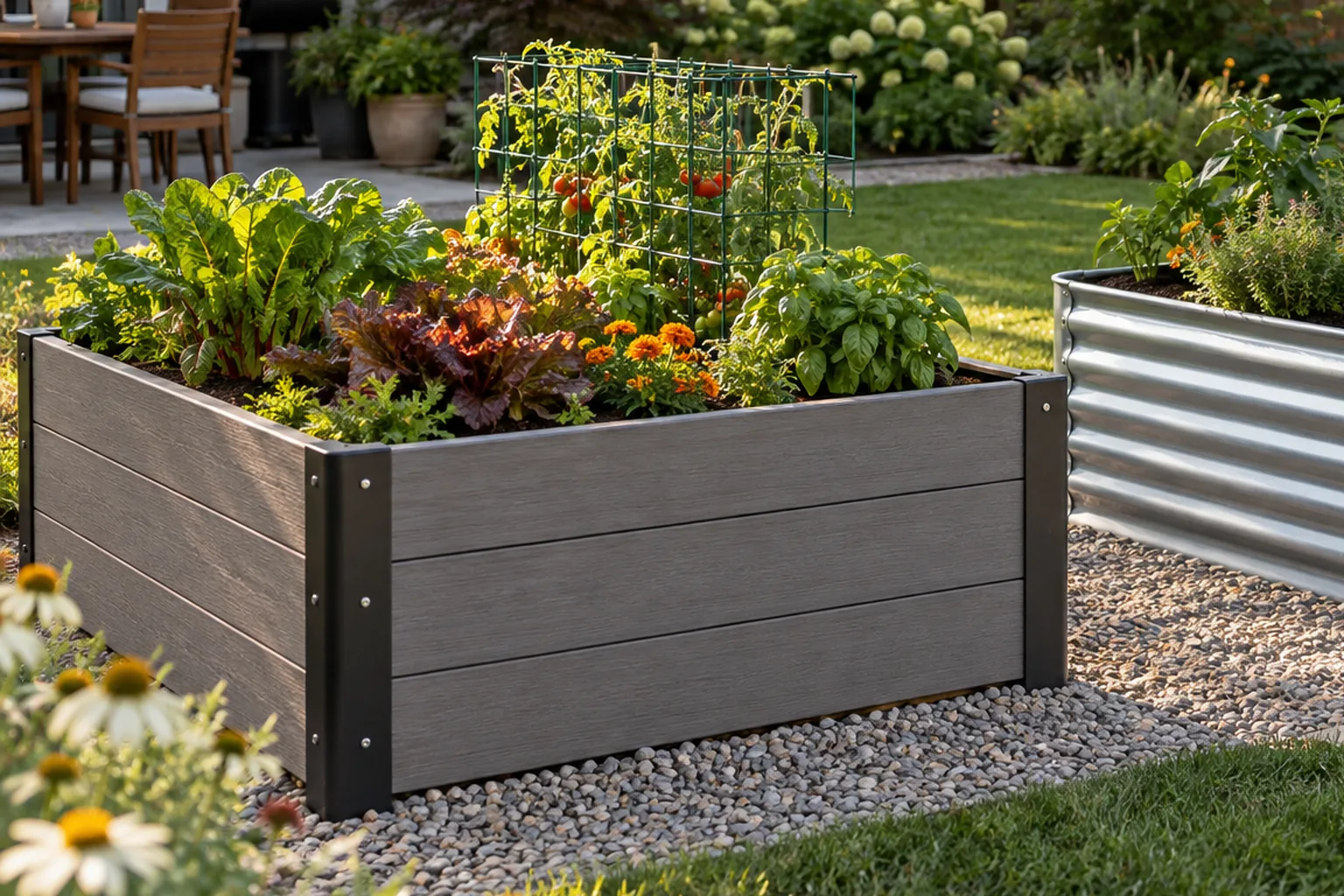
Compare the complete bed, not just the wall material
| Decision point | What to check | Why it matters |
|---|---|---|
| Stiffness | Panel profile, board span, braces | Limits bowing under wet soil |
| Surface | Coating, cap, and exposed edges | Affects corrosion, touch, and safety |
| Movement | Thermal expansion and joint design | Tight joints can distort as temperature changes |
| Assembly | Fastener count and tool access | Complex hardware raises error risk |
| Repair | Replaceable panels, boards, and connectors | One damaged part should not scrap the bed |
Premium pricing makes sense when it buys better bracing, protected edges, reliable connectors, and a clear parts path. A decorative finish without structural detail adds little value.
Stiffness
Start with panel profile, board span, braces. Limits bowing under wet soil. A specification may describe a ceiling rather than a comfortable working point, so read the footnotes before relying on it. Write the confirmed figure beside the measurement from your yard.
Surface
Coating, cap, and exposed edges. Affects corrosion, touch, and safety. Give this item its own line on the comparison sheet. If the product page and current manual disagree, use the manual or ask the manufacturer to explain the difference.
Movement
Then look at thermal expansion and joint design. Tight joints can distort as temperature changes. Note the conditions attached to the number, including the selected accessory, surface, weather, load, or operating mode. Those details often explain why two similar listings behave differently.
Assembly
Fastener count and tool access. is easy to skim past. Complex hardware raises error risk. Confirm whether the figure applies to the standard setup or an optional configuration, then compare it with the tightest condition on your site.
Repair
Finish with replaceable panels, boards, and connectors. One damaged part should not scrap the bed. A blank or vague answer is a reason to pause, especially when it affects safety, fit, or a costly accessory. Get the answer in writing before ordering.
Count the cost after delivery
The box price leaves out plenty: mounting hardware, utility connections, delivery, disposal, routine service, wear parts, and storage. With composite vs metal raised garden beds, the cheaper choice can become expensive when a proprietary part is hard to find or ordinary maintenance needs awkward access.
Read the warranty exclusions, not just the term printed in large type. Look for conditions tied to installation, weather, maintenance, registration, and nonstandard parts. Save the manual, parts diagram, receipt, and product page while they are still easy to find.
A parts diagram tells you almost as much as a feature list. Identify the pieces likely to wear or take damage, then check whether you can replace them individually. Equipment that can be cleaned, adjusted, and repaired in place is usually easier to live with for several seasons.
Choose dimensions around reach and soil load
Keep a bed reachable from the accessible sides. A bed against a fence should be narrower than one approached from both sides. Avoid designing around a length that forces you to step on the soil.
Taller walls increase soil volume, drying, and outward load. Calculate the fill before buying, then check whether the base and site can support the weight.
Measure irrigation fittings, cover hoops, trellis brackets, and corner clearances. Proprietary top rails can make useful accessories harder to attach. If the numbers lead to a larger system than expected, revisit the assumptions before downsizing the equipment. Our raised bed soil calculator can help with that adjacent calculation.
Build a stable, serviceable bed
Level the footprint and remove sharp stones that can twist the lowest rail. Follow the brace sequence in the manual before adding soil.
Use gloves around unfinished metal edges and do not substitute fasteners that may react with the coating. For composite, preserve the specified expansion gaps and support intervals.
Fill in shallow lifts and watch for wall movement. Correct a loose brace before the bed is full and difficult to empty. This is also where the raised bed depth guide becomes useful.
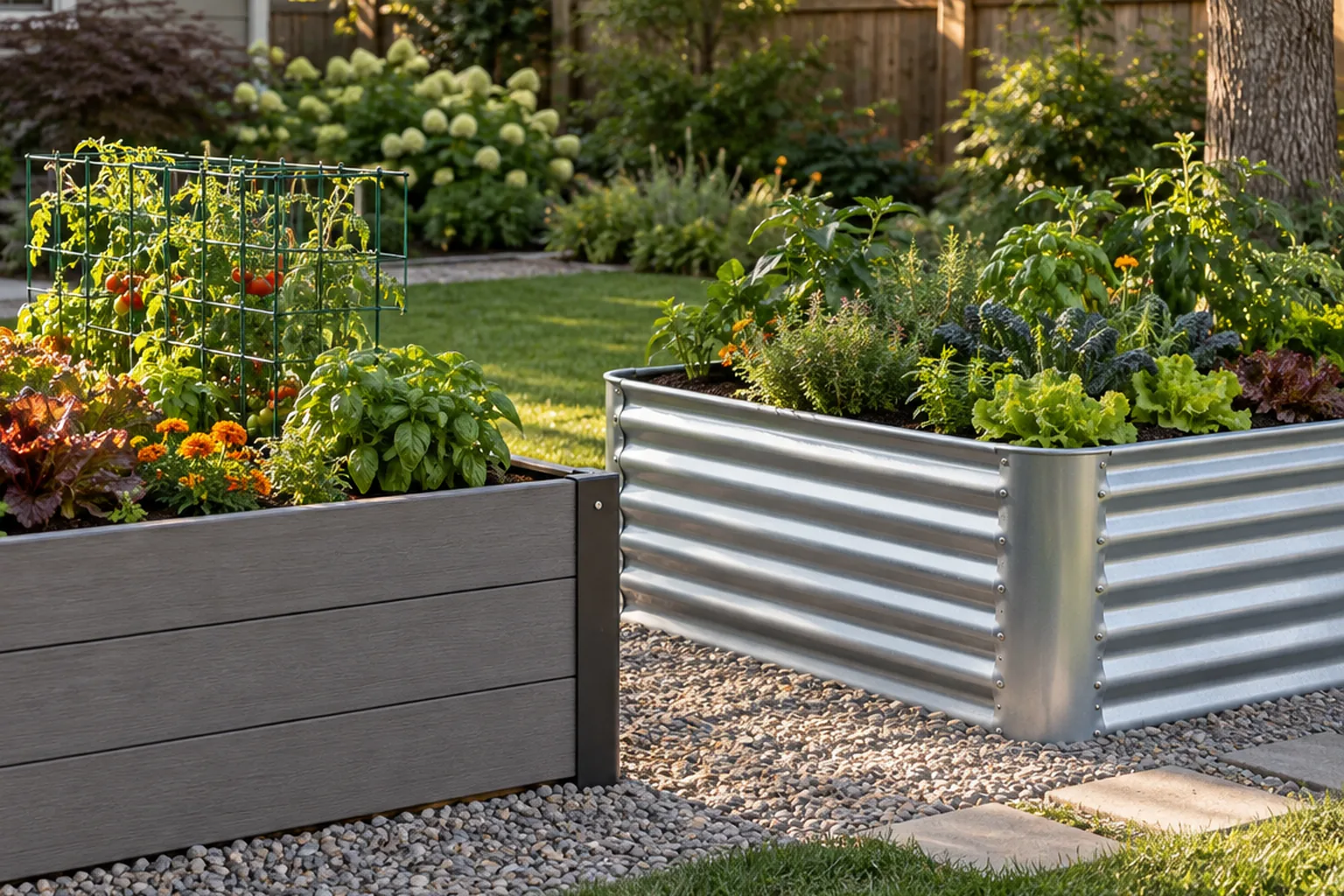
Common mistakes that make a good product disappoint
- Assuming all galvanized or composite products use the same material
- Ignoring mid-span braces on long walls
- Buying a tall bed without pricing the soil fill
- Blocking fasteners that may need future tightening
- Placing the bed where only one long side is reachable
A bed is easiest to correct while empty. Dry assemble it, square the corners, check reach, and verify irrigation and cover attachments before filling.
Make a one page fit check
Put your site measurements in one column and the documented limits in the other. Mark each line pass, uncertain, or fail. Treat uncertain as unfinished, not acceptable. Ask the manufacturer a narrow question that names the exact model and site condition.
A sensible buying and setup order
- Compare assembled wall stiffness
- Inspect edges, coatings, and corner hardware
- Calculate soil volume and wet load
- Check reach from all accessible sides
- Confirm brace and expansion instructions
- Ask about replacement panels and connectors
- Choose the bed that remains repairable
Compare composite and metal raised bed kits on Amazon (paid link). Use the results to build a shortlist, then leave Amazon and verify the current manual, dimensions, warranty conditions, and replacement-part path on the manufacturer’s site.
Use marketplace listings to compare footprints and kit contents, then verify materials, coating, brace layout, and warranty language in the manufacturer’s documentation.
Questions homeowners ask before committing
Do metal raised beds overheat soil?
Sun can warm exposed metal, but root-zone temperature also depends on soil volume, moisture, mulch, color, and climate. Very small beds respond faster than large volumes.
Does composite rot?
Composite formulations differ. They do not behave exactly like untreated wood, but ultraviolet exposure, heat, fasteners, and unsupported spans still affect service life.
Should I line the sides?
A liner may protect a surface or contain soil at joints, but it can also trap water. Use only materials suitable for the application and follow the bed maker’s guidance.
The Yard Foundry take
Metal suits buyers who want thin modular walls and strong formed panels. Composite suits buyers who prefer a board-like look and accept careful bracing and expansion details. The better bed is the one with the more convincing structure and repair path. Before placing an order, compare that plan with the premium raised garden bed kit guide so the new purchase fits the rest of the yard rather than solving one problem and creating another.